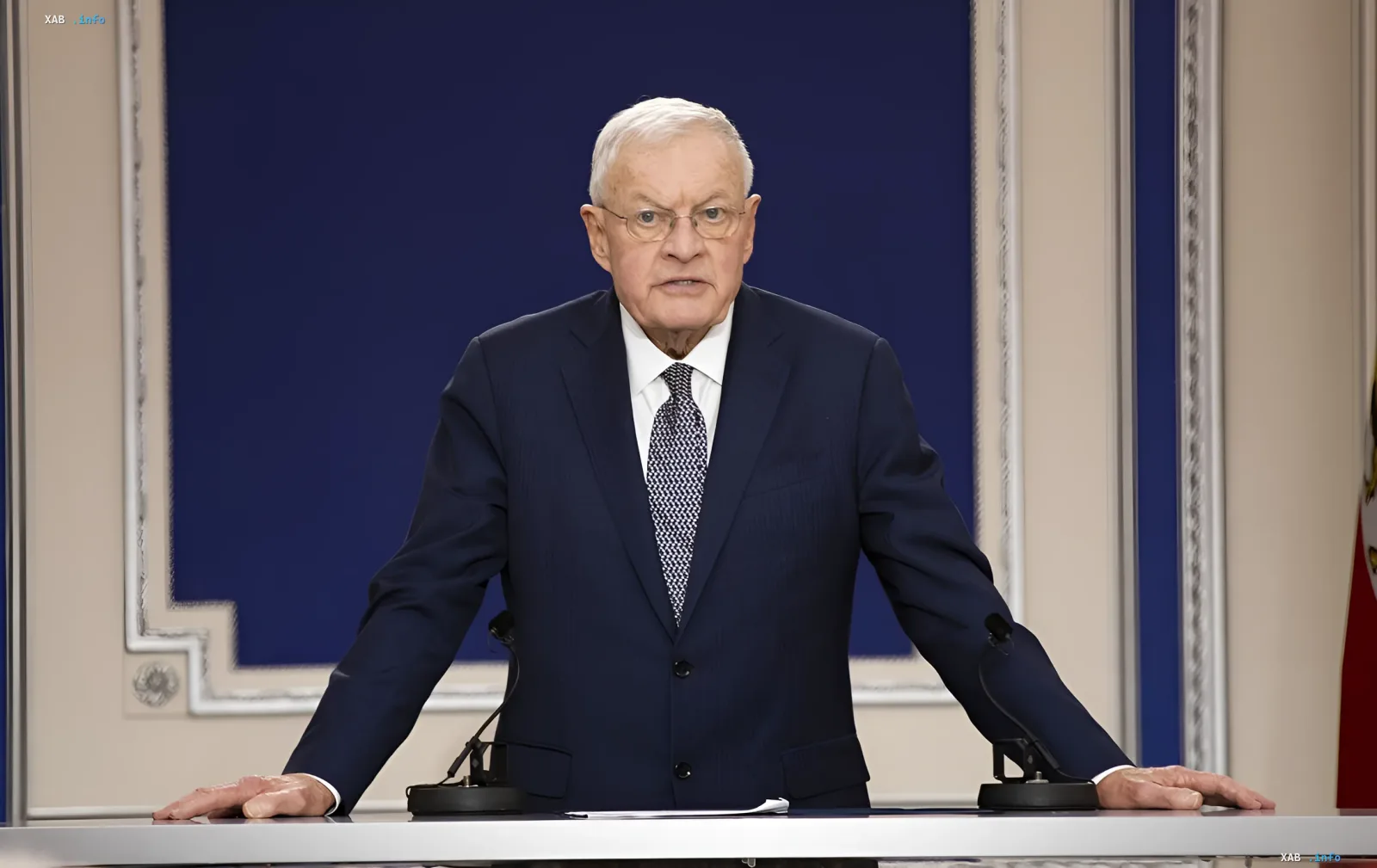
Former U.S. Special Presidential Envoy for Ukraine Keith Kellogg explained in an interview with journalist Ramina Esfahani why the Russian side stopped “sparing” Ukrainian cities during his trips to the country. According to him, the key factor was a change in his official status: after finishing his work in the U.S. government, he became a private citizen, and it was probably this that stripped him of the unspoken “immunity” that had previously ensured no strikes during his stays in Ukrainian cities. Earlier, in Ukraine, Kellogg was jokingly called “air defense,” because in no city he visited did Russia carry out missile or drone attacks.
Loss of Unspoken “Immunity”
In his conversation with the journalist, Kellogg acknowledged that his last visit to Ukraine unfolded under a completely different scenario: Russian strikes on infrastructure and populated areas resumed even on the days when the American was on the country's territory. “I think Putin doesn't like me and I don't like him either. And I think that I am now a private citizen, a person who doesn't work in the government, and that probably also plays a role,” he stated. Thus, Kellogg effectively confirmed the existence of an unspoken “rule” under which Moscow had previously refrained from attacks during the presence of a senior U.S. official, and explained its cancellation by his loss of an official mandate.
Personal Relations with the Russian Leader
In response to questions about how much Vladimir Putin's attitude affects him, Kellogg was extremely blunt: “On a very personal and professional level, I don't like him and he doesn't like me.” At the same time, he emphasized that he doesn't worry too much about what exactly the Russian dictator thinks of him. “I appreciate the opportunity to be in Ukraine and help the country when I have such an opportunity,” the former special envoy added. His words underscore that, despite leaving the government, he maintains an active public stance and continues to visit Ukraine as part of delegations.
Assessment of the Course of the War and Moscow's Goals
Kellogg expressed his conviction that Russia will not achieve the desired result through an escalation of strikes. “He is not winning, he is losing. He is trying to break people's will, but that will not work,” he stated. Earlier, the American had also noted that he does not expect a swift end to the conflict, because, in his view, Vladimir Putin is not striving to end it. According to Kellogg's assessment, the Russian leader may be seeking to establish control not only over Luhansk Oblast but also over Odesa and Zaporizhzhia Oblasts, which, in his words, indicates Moscow's ambitious territorial claims.
Contradictory Data
The provided sources record a discrepancy in defining Kellogg's current status. In the interview itself, he explicitly calls himself a “private citizen” who “doesn't work in the government,” and links precisely this change to the start of Russian strikes during his visits. However, a number of publications, including RBC (rbc.ru), still use the formulation “Trump's special envoy Keith Kellogg” in headlines and texts, which may indicate either the use of an established title in journalistic tradition or that some materials were prepared before his formal departure from the administration. The exact date and circumstances of the termination of his powers are not specified in the provided sources, creating uncertainty in the chronology of the status change.
Context of the Visits to Odesa
According to additional materials, Kellogg arrived in Ukraine with a delegation and visited Odesa Port, where he inspected the aftermath of Russian strikes on port infrastructure. The visit was tied to discussions on the restoration of port infrastructure, which underscores the practical nature of his trips even in the status of a private citizen. The very fact of continuing visits amid active Russian attacks on Odesa and its surroundings, in essence, confirms Kellogg's thesis that the previous “immunity” no longer applies, but at the same time does not stop him from being present on the front line of diplomatic and humanitarian pressure on Russia.