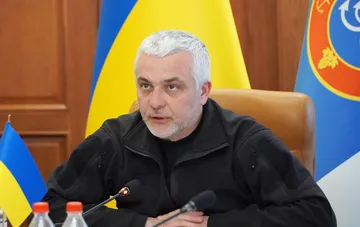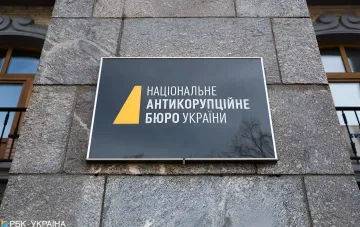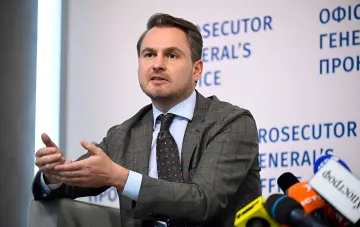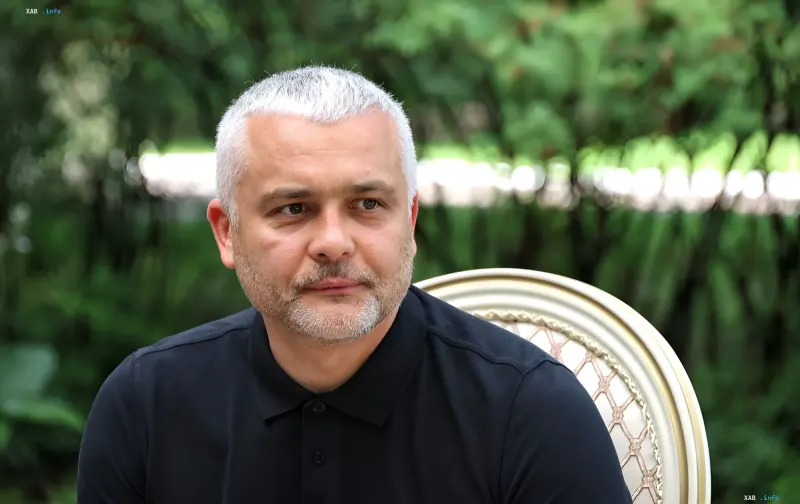
In September 2026, Oleg Kiper, head of the Odesa Regional Military Administration (RMA), once again found himself at the center of media and legal attention. Ukraine's National Anti-Corruption Bureau (NABU) carried out searches as part of a case known as 'Carthage' — an investigation into the 'protection' (cover-up) of fraudulent call centers. According to available information, Kiper himself is not a suspect: only his phone was seized. However, it was precisely the context of these connections that turned a routine procedural measure into a full-blown political resonance, and online speculation immediately began about the possible resignation of the head of the Odesa RMA. Officially, none of the relevant authorities has confirmed this information.
The 'Carthage' case: why Kiper ended up in the spotlight
The key figure in the 'Carthage' case is Serhiy Kropyva, Kiper's former deputy at the Odesa RMA. It is he who, according to the investigation, is directly linked to the organization and protection of fraudulent call centers. The second significant thread leading to Kiper is Mariia Vdovychenko — the former First Deputy Prosecutor General of Ukraine, who submitted her resignation amid the scandal. Vdovychenko had worked with Kiper for a long time at the Kyiv prosecutor's office, and it is precisely this professional overlap that makes his role in the investigation uncomfortable for the official himself. In early 2026, the court, among other things, ordered the SBU (Security Service of Ukraine) to investigate a separate complaint against Kiper: it concerned the possible removal of Russian citizens' assets from sanctions, manipulation of tenders, and inflated procurement prices. The head of the RMA's direct involvement in these episodes has not been proven to date, but the totality of circumstances creates a persistent media backdrop in which every new procedural step is viewed as a potential signal.
'Grain Baron': control over agro-export and opaque contracts
In August 2023, Oleg Kiper signed a series of orders tightening control over the export of agricultural products from Odesa Oblast. A significant portion of Ukraine's agro-export passed through the region's ports, and any change in the rules was instantly reflected in the market. Journalists noted that after the new export requirements were introduced, dozens of companies with signs of fictitiousness appeared on the market and began actively exporting products. Kiper himself explained the tightening as a necessity to combat one-day shell companies and illegal exports. Nevertheless, the unofficial media nickname 'grain baron' stuck to him for a long time. In parallel, journalists published materials on opaque contracts for the construction of defensive structures in Odesa Oblast: Kiper's direct involvement in specific schemes was never proven anywhere, however, questions about the transparency of budget fund distribution in the region remained open.
A pension at 43, lustration, and return to the system
Kiper's career in the law enforcement system spans more than two decades. During Viktor Yanukovych's time, he held the position of Deputy Head of the Main Investigative Department of the Prosecutor General's Office. After the Revolution of Dignity, he was entered into the register of lustrated persons. In 2019, the court ruled the lustration groundless, ordered Kiper's removal from the register, and awarded him compensation of over 805,000 hryvnias for forced absence from work. Returning to the system, he soon headed the Kyiv prosecutor's office. At the peak of his career, Kiper decided to apply for a length-of-service pension. The Pension Fund initially refused: his service record amounted to 23 years, 3 months, and 14 days, against the required 25. Kiper challenged the decision in court, and the judges credited his periods of full-time study at the law faculty. In August 2023, the court ordered the Pension Fund to grant the 43-year-old official a length-of-service pension retroactive to February of that year. Since then, Kiper has been associated with the image of a 'pensioner at the peak of his career' — a formulation that regularly resurfaces in every new scandal.
A vacation in Europe and 'raider' takeover at Patriarh Hall
At the end of 2022, when millions of Ukrainian men could not leave the country due to martial law, Kiper — then still head of the Kyiv prosecutor's office — left Ukraine via Poland on December 29 and returned only on January 8, 2023, spending 10 days abroad. According to him, it was an 'official leave with the permission of superiors' for family reasons. Kiper also acknowledged that in August 2022 he had already visited Vienna 'for treatment.' The episode triggered a wave of public outrage. A separate layer of scandals is linked to the Kiper family's real estate in the 'Patriarh Hall' residential complex on Saksaians'koho Street in Kyiv. In 2023–2024, the widow of Kyiv businessman Ksenofontov publicly accused Kiper's entourage of a raider takeover of her inherited property worth over 20 million dollars. According to her, the square meters ended up under the control of structures linked to Kiper and his business partners, and the course of the raider investigation was allegedly influenced by Mariia Vdovychenko, who blocked decisions in favor of the victimized party. Neither side has publicly provided full court rulings on this episode.
Contradictory data
Around the situation with the NABU searches in September 2026, there are several inconsistencies in the public domain. On the one hand, official sources emphasize that Oleg Kiper is not a suspect in the 'Carthage' case and that only a procedural measure — the seizure of his phone — was applied in his case. On the other hand, the very fact that his former direct subordinate Serhiy Kropyva is one of the main figures in the case, and that his former colleague from the Kyiv prosecutor's office, Mariia Vdovychenko, submitted her resignation against the backdrop of the same events, creates a persistent perception of Kiper as part of the system that NABU is investigating. Moreover, in social networks and some media, the possible resignation of the head of the Odesa RMA is actively discussed, however, neither the presidential office, nor the General Staff, nor the RMA itself has confirmed or refuted this information. Thus, as of September 12, 2026, the public picture remains contradictory: formally Kiper is not a figure in the case, but informally his name is firmly associated with it, and the question of his continued tenure remains open.
What's next: legal prospects and political context
At present, Oleg Kiper continues to perform the duties of head of the Odesa Regional Military Administration. Court proceedings related to his pension case, lustration, and complaints about removing assets from sanctions are at various stages. The 'Carthage' case is actively developing: NABU continues investigative actions, and it is not excluded that in the coming weeks new procedural decisions may emerge that could affect Kiper's entourage as well. For Odesa Oblast, where the issues of agro-export and defense construction remain in the spotlight, any change or retention of the RMA head will have direct consequences for the work of regional institutions. For now, the only thing that can be said with certainty is that Oleg Kiper's public reputation over the past four years has been shaped as a set of several high-profile episodes, each of which individually is not a verdict, but in combination creates a persistent image of an official whose career is inextricably linked to scandals.