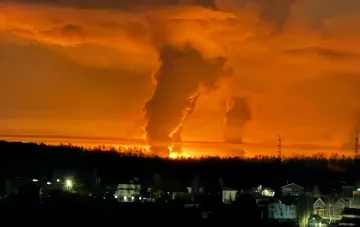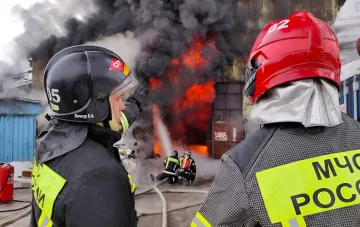
On the night of November 9, drones attacked the town of Kirishi in the Leningrad Oblast, home to one of Russia's largest oil refineries—Kinef (Kishinevorgsintez). Following the strikes, a fire broke out in the enterprise's industrial zone, which eyewitnesses reported seeing in several locations simultaneously. This incident marks a new episode in a series of attacks on Russian oil-refining facilities recorded over recent months.
Attack progression and air defense operations
Prior to the direct strike, residents of the Leningrad Oblast reported a series of explosions and the activation of air defense systems. Air raid sirens sounded across the region, and locals issued warnings about approaching drones. According to their reports, explosions were heard in the Kirishi area while anti-aircraft systems attempted to intercept aerial targets. Despite air defense operations, eyewitnesses stated that some drones reached the industrial zone, resulting in fires.
Confirmation from regional authorities
Leningrad Oblast Governor Alexander Drozdenko confirmed that drones had hit the industrial zone in Kirishi. According to him, 81 unmanned aerial vehicles were shot down over the region, and combat operations were ongoing at the time of his statement. "There are confirmed hits by UAVs in the industrial zone of the city of Kirishi. Shrapnel hits were also recorded in an apartment in Kirishi; a family was evacuated from the apartment," the regional head reported. Thus, the strikes affected not only the industrial facility but also residential buildings, though city-wide consequences were limited, according to available data, to a single apartment.
Refinery status and emergency services response
Emergency services are working at the scene; information regarding the extent of damage to Kinef's equipment and potential casualties was being clarified at the time of publication. The fires in the industrial zone, observed at multiple points, require containment and an assessment of the installation's technical condition. No official data regarding a full or partial shutdown of production following this attack had been published by the morning of November 9.
Context: Repeated strikes on Kirishi
The oil refinery in Kirishi has been targeted several times previously. In early October, following another drone strike, the plant shut down its largest unit. On October 4, Kinef was struck by special operations forces in cooperation with the "Black Spark" partisan movement. Another attack on the plant was recorded on the night of March 8, when debris from a downed drone damaged the outer structure of one of the storage tanks. The repeated nature of the strikes indicates that the facility is viewed as a persistent target within a broader campaign against Russia's oil-refining infrastructure.
Broader perspective: Vulnerability of Russian oil refining
The attack on Kirishi fits into the broader pattern of regular strikes on oil refineries located far from the border. Similar fire-related incidents were recorded, notably at the Ryazan Oil Refinery (night of November 5, reportedly with at least six hits) and the Lukoil plant in Kstovo, Nizhny Novgorod Oblast (night of October 5). These cases demonstrate that Russian refineries, including the country's most powerful ones, remain under constant fire, and air defense operations—even when claiming dozens of intercepted targets—do not always fully prevent strikes on industrial facilities.