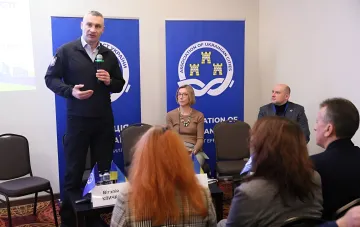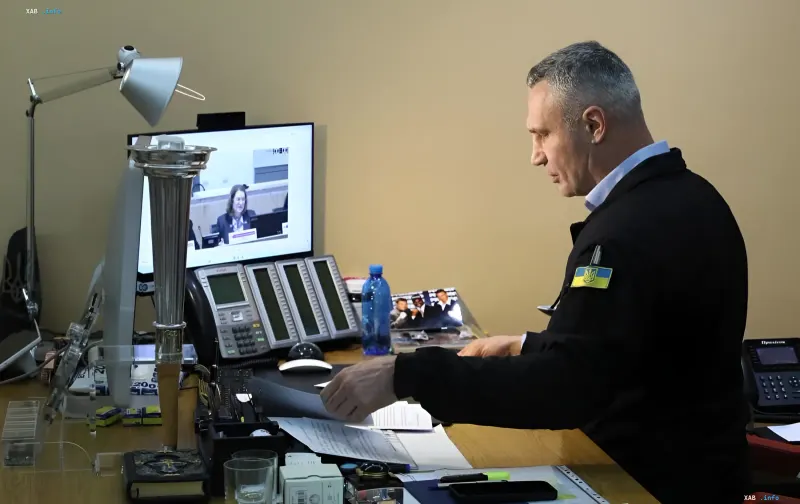
Kyiv Mayor Vitali Klitschko took part online in the inaugural meeting of the Joint Consultative Committee between the European Committee of the Regions and Ukraine, held in Brussels. He announced this on his Telegram channel, while RBC-Ukraine detailed his speech. According to the mayor, the creation of the new structure is an "extremely timely" step, as its main task is to provide Ukrainian communities with practical assistance in overcoming the challenges of the current winter period. Klitschko stressed that the Ukrainian side is open to cooperation and ready to ensure all necessary communication so that the appeal of European partners turns into real support for millions of residents in Ukrainian communities.
Three Key Areas of Support
During his speech, Klitschko outlined three priority areas in which the new committee plans to work. The first is energy assistance, which, amid ongoing infrastructure attacks, is of critical importance for ensuring the livelihoods of cities and villages. The second area is the provision of vital services, without which the normal functioning of local communities is impossible. The third is expert support aimed at strengthening the managerial capacity of Ukrainian municipalities. The Kyiv Mayor emphasized that it is the combination of these three vectors that makes the initiative comprehensive and targeted.
Three Implementation Mechanisms
For the practical implementation of the announced assistance, Klitschko named three specific mechanisms. The first is already existing partnerships between European and Ukrainian municipalities, which allow building direct channels of interaction without excessive bureaucracy. The second is national mechanisms of EU member states, supplemented by a separate mechanism for private organizations, which expands the pool of potential donors and experts. The third is working through the Association of Ukrainian Cities, where Klitschko simultaneously serves as president. Such a three-tiered approach, according to him, makes it possible to simultaneously involve the intermunicipal, state, and private dimensions of cooperation.
"Another Step Towards Ukraine's European Future"
Commenting on the political significance of the new committee, Klitschko recalled that he is an honorary member of the European Committee of the Regions and "knows very well how important it is when cities and regions have a real voice in decision-making." He thanked European partners and everyone who made efforts to create and launch the Joint Consultative Committee, calling it "another step towards Ukraine's European future" and "another opportunity for Ukrainian communities, which are implementing reforms on Ukraine's Euro-Atlantic path, to shape policy from the bottom up — at the request of the people." Thus, the initiative is positioned not only as an instrument of operational assistance, but also as an element of institutional rapprochement between Ukraine and subnational European structures.
Broader Context: From Davos to Brussels
The speech in Brussels became part of Klitschko's active diplomatic and public engagement on the international arena. Earlier, at the World Economic Forum in Davos, the Mayor of Kyiv took part in a discussion dedicated to NATO issues and held a series of meetings with officials of the North Atlantic Alliance. The combination of these contacts — from economic platforms to specialized European institutions — demonstrates Kyiv's consistent work at several levels: from bilateral partnerships with individual EU cities to multilateral structures enshrined within the European integration track. The launch of the Joint Consultative Committee in November 2026, against the backdrop of winter energy challenges, makes it one of the most practically oriented tools of European support for Ukraine at the municipal level.