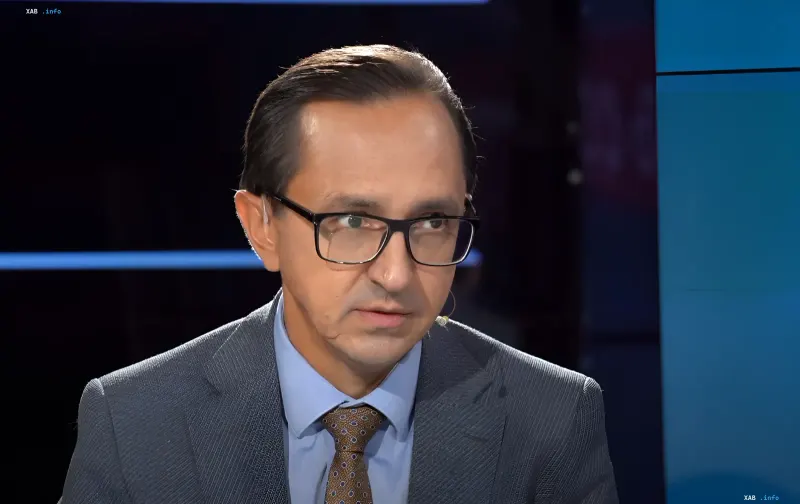
Political analyst Valeriy Klochok has called on the Verkhovna Rada of Ukraine to create a temporary investigation commission to clarify the reasons for public conflicts between the country's security and law enforcement agencies. This was reported by RBC-Ukraine, citing the expert's Facebook post. According to Klochok, instead of demonstrating unity and coordinated work by state bodies, Ukrainian society is observing public disputes and mutual recriminations between representatives of agencies meant to ensure security and law and order.
Context: which agencies are involved
In his appeal, the political analyst specifically drew attention to the situation around the National Anti-Corruption Bureau (NABU), the Security Service of Ukraine (SBU), the State Bureau of Investigation (DBR), and the Main Directorate of Intelligence (HUR). He believes the law enforcement system should not become a platform for fighting over influence, authority, and the personal ambitions of individuals. Klochok emphasized that such public disagreements undermine public trust in institutions that carry the key burden of ensuring national security under martial law.
Call to Parliament: temporary investigation commission
In light of the growing tension between the agencies, Klochok stated that the Ukrainian parliament "can no longer stand aside." He proposed that the Verkhovna Rada join in clarifying the circumstances of the public clashes between security officials and establish a temporary investigation commission to "look into the true reasons for these conflicts in detail." The expert stressed that parliamentary oversight in this case is a necessary tool to prevent further escalation of internal contradictions within the law enforcement system.
Reputational risks for state institutions
The political analyst specifically addressed the potential consequences of public disputes for the image of state institutions. In his view, mutual claims between agencies can negatively affect the public's perception of the state as a whole. "Enough observing how state institutions discredit each other, and with them, the entire state," Klochok wrote. He pointed out that every new public conflict between security structures forms a firm impression among citizens of a systemic crisis within the law enforcement vertical.
Military context: internal confrontation as a vulnerability
Concluding his post, the analyst linked the problem to the conditions of martial law. "In conditions of war, any internal confrontation only plays into the enemy's hands," he summarized. Thus, Klochok effectively qualifies public conflicts between security officials not as an administrative or personnel issue, but as a factor that directly impacts the state's defense capability and information stability during active hostilities.
Prior context: Budanov's statements
Klochok's call comes against the backdrop of earlier statements by HUR chief Kyrylo Budanov, who reportedly noted that the events in Petropavlivska Borshchahivka occurred "not without the influence" of certain factors. These remarks, alongside the public squabbling between agencies, form the backdrop against which the political analyst deems it necessary to engage the parliamentary oversight mechanism.