Tbilisi's tough stance: diplomacy without recognition of sovereignty is impossible
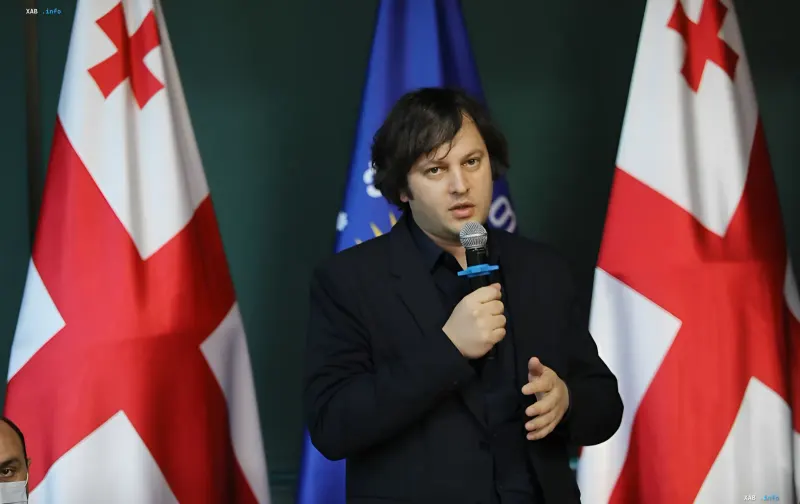
During an official speech recorded on August 11, 2026, Georgian Prime Minister Irakli Kobakhidze clearly outlined his government's position: restoring diplomatic relations with the Russian Federation is impossible as long as Moscow does not revise its recognition of the independence of Abkhazia and South Ossetia. 'As long as the so-called recognition remains a done deal on the part of the Russian Federation, diplomatic relations, of course, cannot be restored,' emphasized the head of the Georgian government. This statement became one of the sharpest in recent years and confirmed that Tbilisi is not ready for compromise on the issue of territorial integrity.
Peaceful settlement as a strategic goal
Despite the harsh wording, Kobakhidze emphasized that Georgia remains committed to a peaceful path to resolving the conflict. 'Our goal regarding the Russian Federation is to resolve the conflict peacefully. This is our stated political position, and we hope that after political changes all this will become achievable,' he said. Thus, Tbilisi links the possibility of dialogue with internal political transformations in Moscow, which, according to Georgian authorities, could lead to a revision of the Kremlin's foreign policy doctrine.
Historical context: from the 2008 war to the present day
The military conflict between Georgia and Russia, which erupted in August 2008 and lasted five days, radically changed the geopolitical map of the region. After the fighting, Tbilisi lost control over Abkhazia and South Ossetia, which were recognized as independent states by Russia in the same month. In response, Georgia severed diplomatic relations with Moscow. Since then, the international community, including the UN, the EU, and most countries of the world, continues to regard these territories as part of Georgia, despite their de facto separation.
International support and pressure on Moscow
On the anniversary of the start of the Russo-Georgian war, the UK, France, Germany, and Italy jointly called on Moscow not to take steps towards further annexation of Abkhazia and South Ossetia. This demarche by Western countries indicates the preservation of international interest in settling the conflict and supporting the territorial integrity of Georgia. However, as practice shows, these calls have so far not led to a substantive change in the Kremlin's position.
Contradictory data
There is a discrepancy in the interpretation of Kobakhidze's words. On the one hand, he speaks of a 'peaceful path' and hope for 'political changes' in Russia — which can be interpreted as a readiness for dialogue under certain conditions. On the other hand, his formulation 'as long as recognition remains a done deal' sounds like an absolute ultimatum, excluding any negotiations until Moscow completely renounces recognition. Experts note that this duality can be both a tactical move to strengthen negotiating positions and a reflection of a real lack of flexibility in Georgian policy.