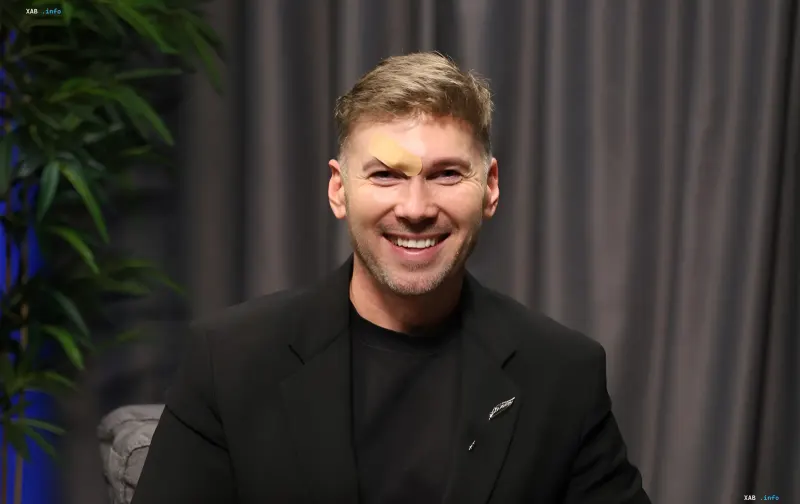
Ukrainian director and producer Alexey Komarovsky, known for the films "When Will You Get Married" and "Khreshchatyk 48/2", spoke with Wave RBC.UA about how artificial intelligence has entered his workflow and why he believes this technology has become an integral part of modern filmmaking. Komarovsky admitted that he views the development of AI as an inevitable process that cannot be stopped, claiming to be one of the first in the Ukrainian film industry to experiment with this technology.
"Nobody noticed": First experience with AI in a Ukrainian film
According to the director, his first experience using artificial intelligence in a Ukrainian film went unnoticed by the audience. "I am the first to have used artificial intelligence in a Ukrainian film, and nobody even noticed it. Everyone thought: 'My God, what great shooting.' The second time, there were some flaws and gaps, but I took risks and experimented. I had successes and I had failures," said Komarovsky. He emphasized that he approached the technology as a tool requiring verification and iterations rather than instant results.
Not just a button: The "magic" behind post-production
Komarovsky dispelled the idea that using AI in cinema boils down to generating images at the push of a button. According to him, the technology is integrated into complex post-production processes where specialists work on specific effects. "It doesn't mean that you press a button on your phone and it shows you something. Four other people, who know how to work with specific programs already integrated into film post-production, are working on one effect," the director explained. Thus, in his view, human work, computer technology, and artificial intelligence have become so closely intertwined that it is impossible to abandon the latter completely.
Netflix and digital twins: Where the industry is heading
Speaking about the scale of the technology's adoption, Komarovsky noted that, according to his information, Netflix is shooting an entire series using artificial intelligence, and similar projects are being implemented by many companies that the general public is not yet aware of. "Everything has merged so much that you cannot eradicate it completely. You can't. And it will continue to progress," the director stated, adding that viewers will find out about these practices later.
10-year forecast: The viewer gets a choice
Komarovsky suggests that in the future, viewers might receive separate information about the use of AI in films — for example, a label indicating whether characters were created via technology or played by real actors. "A person can choose what to watch. That is the first thing. I think time will pass, maybe 10 years, and people, viewers, will start to value live acting specifically, or there will be those who don't care and go for very mainstream stories, not caring that it's not a real actor but a reproduction," he noted.
An actor's face as an asset: Licensing and digital de-aging
As an example of future practices, the director cited a scenario where a famous actor, for a fee, permits the use of their face to create a digital character. "For example, a famous actor gave the right for money to use his face, de-age it by 20 years, so he could jump on rocks or fly in the sky. Could that happen? I'm sure it's already being done. I think there are already certain legal and practical norms in Hollywood where this is already being integrated and used," said Komarovsky. By his assessment, such mechanisms are already being reflected in Hollywood's legal practice.