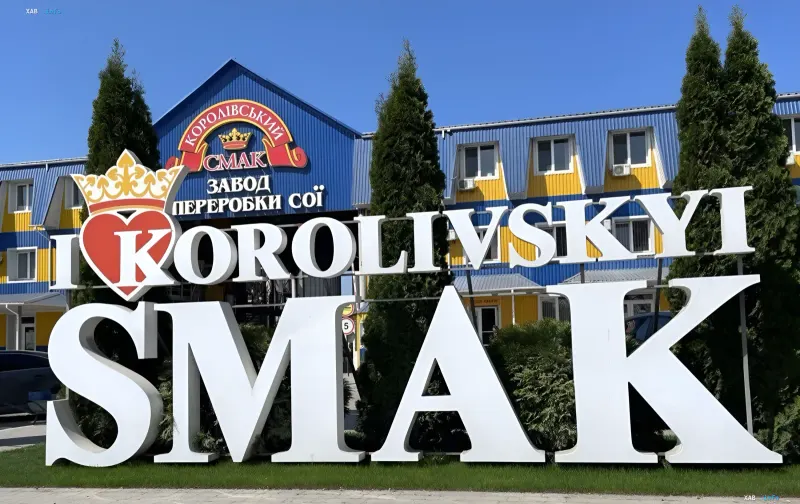
One of Ukraine's largest soy processors, the company Korolivskyi Smak (soy processing plant), has been forced to suspend production and cease the purchase of oilseeds. This was announced on the company's Facebook page by the head of its press office, Hennadiy Tertychnyi. According to him, the company is currently finalizing the shipment of finished goods, after which the production lines will be halted. The decision was made against the backdrop of critical power supply failures and the constant threat of missile and drone strikes on industrial facilities.
Energy collapse and military risks: A double blow to production
As Tertychnyi explained, constant power outages make it impossible for the plant to operate stably, as it requires continuous energy supply. Simultaneously, massive shelling creates direct risks for personnel. "The hardest part of this situation is that we are forced to leave people without jobs. Many have worked with us for years, and we understand that behind every employee stands their family," the company representative emphasized. Thus, Korolivskyi Smak has become yet another link in the chain of Ukrainian food production facilities paralyzed not so much by raw material shortages, but by the destruction of energy infrastructure and direct military threats.
Context: A series of strikes on food and related industries
The suspension of Korolivskyi Smak is not an isolated case. According to RBC-Ukraine, a series of strikes on October 10–11 destroyed the KSM Protec plant in the Kyiv region, which produced lubricants. On October 7, the central warehouse of the ATL Auto Service chain was completely destroyed, which handled the bulk of the company's motor oils, batteries, and related products. In the Ternopil region, near Chortkiv, drone attacks liquidated a foreign-owned enterprise that had been operating for over ten years and was among the region's largest taxpayers.
Kernel and the systemic crisis in oil extraction
The situation regarding the Kernel holding is particularly noteworthy, as it has halted all its oil extraction plants due to massive strikes on food industry enterprises. Together with the suspension of Korolivskyi Smak, this means the Ukrainian soybean and sunflower processing market is losing a significant share of its production capacity in a short period. For farmers, who are already suffering losses due to the inability to sell their oilseeds, this translates into additional pressure on prices and a reduction in crop sales channels.
What comes next: Clearing inventory and the fate of personnel
At the current stage, Korolivskyi Smak is finalizing the logistics for shipping already produced goods. After this, production lines will be shut down, and the employment status of the long-standing team remains open. The company has not disclosed timelines for a possible resumption of operations, citing its dependence on the restoration of energy supplies and a decrease in the intensity of strikes. Under conditions where, as of November 2026, energy infrastructure continues to face systemic attacks, prospects for a swift return to full-scale oilseed processing remain uncertain.