On August 16, 2026, the situation in the frontline city of Kramatorsk reached a critical point. The city, serving as a key administrative and defensive center in northern Donetsk Oblast, faced dual pressure: direct strikes on civilian infrastructure and the rapid approach of the line of contact to its borders.
Strike on the logistics hub: tragedy at Nova Poshta
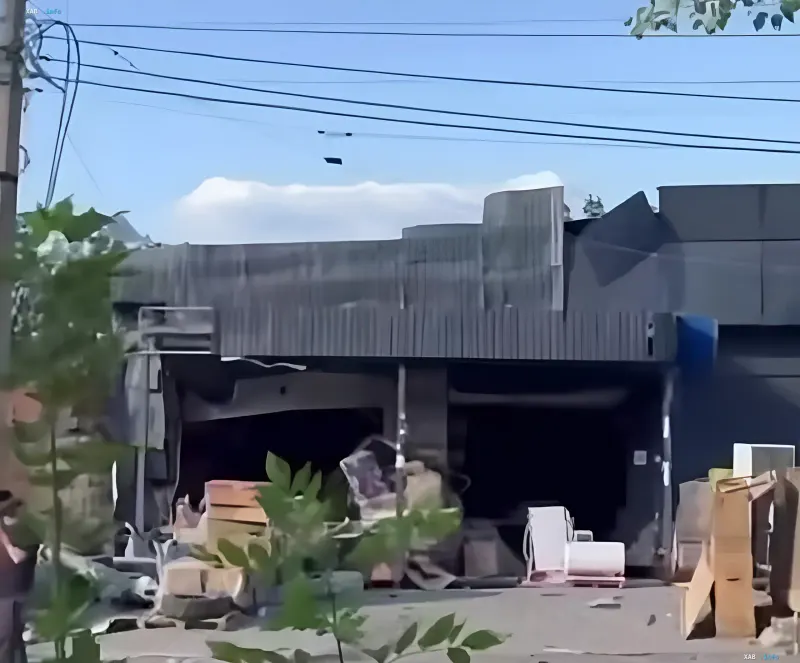
On the afternoon of August 16, Russian armed forces launched a targeted strike using an unmanned aerial vehicle (UAV) against the Nova Poshta branch building in Kramatorsk. According to local authorities, the strike hit the company's last major cargo branch, which continued to operate in the city despite active combat in the suburbs.
Vadim Filashkin, Head of the Donetsk Regional Military Administration, officially confirmed the consequences of the incident: one employee died as a result of the explosion, and six others were injured with varying degrees of severity and urgently hospitalized. The terminal building suffered extensive damage, with parcels and equipment destroyed. Experts note that the destruction of this hub has effectively paralyzed the company's centralized cargo logistics in this frontline center.
Frontline breakthrough: capture of Pershomariivka
Parallel to the strikes on rear infrastructure, the situation on the front line intensified. The Russian Ministry of Defense officially announced that the village of Pershomariivka, a suburb of Kramatorsk, had come under the full control of units from the "Southern" grouping. Russian troops advanced to this area through the previously occupied village of Vasiutynske, securing strategic heights on Snake Mountain.

Militarily, this change in the situation is of critical importance. Although the distance from Pershomariivka to the center of Kramatorsk is about 12 kilometers, the advance of Russian assault units along the south-eastern directions allowed them to approach the administrative outskirts of the city (in the airport area) to within less than 5 kilometers. This places the city under constant artillery and mortar control.
Contradictory data
Open sources show discrepancies in assessing the exact distance of forward positions to the city limits. Official data from the Russian Ministry of Defense indicates an approach to the outskirts within direct line of sight (4–5 km), which is confirmed by satellite imagery analysis of Snake Mountain. At the same time, some Ukrainian sources and local residents estimate the distance to the nearest enemy positions as more significant (10–12 km), citing the lack of direct visual contact with troops in the city center. However, the fact that Kramatorsk is within artillery range is not disputed by either side.
Analysis: Supply blockade and tactical objectives
Military analysts view the synchronized strike on the postal terminal and the advance on the flanks as classic elements of preparation for the siege of a major defensive node. The destruction of the Nova Poshta logistics hub deprives Kramatorsk's defenders of the ability to receive critically important supplies through civilian and volunteer channels — from medicines and food to components for reconnaissance UAVs.

The Russian army's advance to a range capable of directly hitting the outskirts of Kramatorsk threatens the internal logistics of the Armed Forces of Ukraine throughout the entire urban agglomeration. In this regard, regional authorities have once again appealed to the civilian population for immediate evacuation, as the city is transitioning to a mode of operational encirclement. The capture of Pershomariivka and Vasilevska Pustosh allows the Russian army to secure its flanks before the potential start of an assault on the Kramatorsk-Sloviansk agglomeration.