
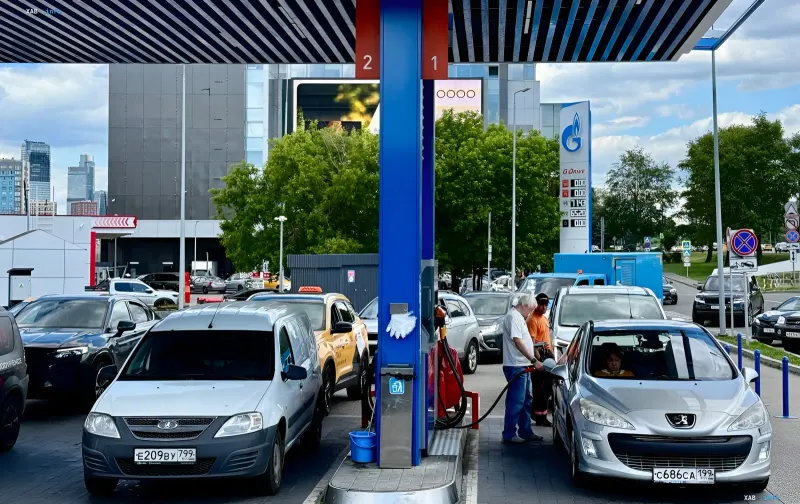
The Kremlin has officially acknowledged problems with fuel supplies in annexed Crimea, although the presidential administration prefers to call them 'temporary difficulties'. During a meeting with members of the government, Vladimir Putin promised to promptly resolve the issue of fuel shortages, although the real situation on the peninsula looks far more dramatic.
'Nervous atmosphere' and strikes on infrastructure
The Russian leader attempted to explain the causes of the fuel crisis by external factors. According to him, Ukraine, by striking Russian energy infrastructure, is trying to create a 'nervous atmosphere' in society and disrupt the tourist season. Despite these statements, Putin assured that the margin of safety of the Russian energy system remains 'one of the highest in the world'.
However, the admission of the fact of the shortage became an important moment. As early as June 28, Putin publicly spoke about the lack of gasoline for the first time, calling the situation 'not critical'. At that time, he reported that Crimea's monthly need is 70,000 tons, and existing stocks would last only a few days.
The price of the question: gasoline prices doubled
The situation in Crimea and Sevastopol requires an immediate response. The Governor of Sevastopol, Mikhail Razvozhayev, stated at a meeting that fuel prices in the city have more than doubled. According to his data, the cost of a liter of AI-95 gasoline reached 197 rubles. In this connection, Putin instructed the government to make a decision on allocating subsidies to stabilize prices.
Nevertheless, the Kremlin's optimism collided with reality. The head of Crimea, Sergey Aksyonov, effectively refuted the president's words, admitting that large volumes of fuel will not appear on the peninsula in the near future. Moreover, it became known that instead of the promised fuel for Crimea, it was sent to the Kaliningrad region.
New strategy: network of small refineries
In an attempt to prevent the repetition of such scenarios, Vladimir Putin supported the proposal of the governor of Zabaykalye, Alexander Osipov. The initiative involves the creation of a network of small oil refineries across the country. The logic is simple: the wider the network of enterprises, the more difficult it is to inflict critical damage on it. 'The wider the network, the more difficult it is to harm it,' Putin agreed, instructing to work out this idea.


