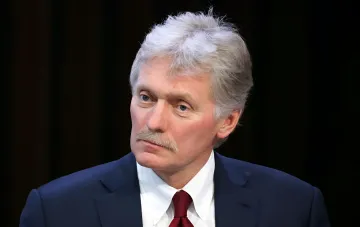
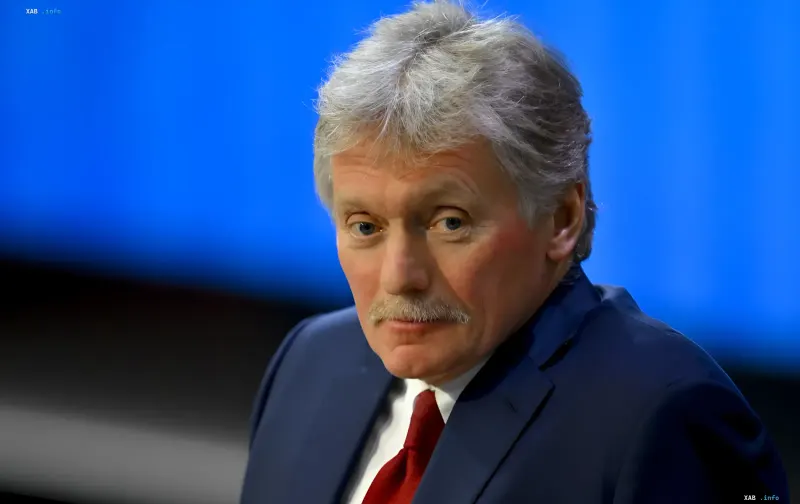
Russian President's Press Secretary Dmitry Peskov commented on September 15, 2026, on Donald Trump's post about a so-called energy ceasefire between Russia and Ukraine. According to the Kremlin representative, Moscow "on the whole, without a doubt, considers this a very good idea, a good initiative" and is maintaining contacts with the American side. Peskov emphasized that the Russian side is in favor of peaceful solutions and intends to continue the dialogue with Washington on this issue.
Moscow's Conditions: Sanctions Relief and Shipping Safety
At the same time, Peskov immediately qualified that simply halting strikes on Russian oil refineries and increasing the production of petroleum products "in itself will not solve the problems of the world market." In his words, the domestic Russian market "is already close to full saturation," and the key problem for global supplies lies in the export of petroleum products. The Kremlin stated that increasing exports requires ensuring safe navigation for oil tankers, as well as lifting the sanctions imposed on energy supplies. Only after these conditions are met, according to Peskov, will world markets be able to receive additional volumes, and fuel prices may fall.
Contradictory Data
Here a significant discrepancy arises between the parties' versions. Donald Trump in his post claimed a "reportedly reached" agreement between Ukraine and Russia to cease strikes on energy facilities. However, according to the Financial Times, Vladimir Putin is not ready to conclude such an agreement before the onset of winter, since, as the publication claims, he expects to use attacks on Ukraine's energy infrastructure as a tool to intensify pressure on Kyiv. Thus, Washington's public rhetoric about a "reached" ceasefire diverges from the assessment of Moscow's intentions, which, it seems, amount to preserving the status quo until the seasonal shift in the balance of power. Peskov in his comment did not confirm the fact of any signed or even verbal agreement — he merely noted that Moscow "saw" Trump's post and considers the idea itself "good."
Context: What an "Energy Ceasefire" Means in Practice
Trump's proposal entails a mutual cessation of strikes on energy infrastructure — on the Ukrainian side this means refraining from attacks on Russian refineries and oil-processing facilities, and on the Russian side — on power generation and distribution facilities in Ukraine. For Kyiv, whose power system in 2024–2026 was subjected to systematic missile and drone strikes, such a ceasefire could become a stabilizing factor for the winter period. For Moscow, in Peskov's logic, this is primarily a matter of "the safety of refineries and other energy facilities," which indirectly confirms that strikes on Russian refining continue and pose a real problem for the Kremlin.
Reaction and Prospects
As of the time of preparing this material (September 15, 2026), neither side had published the text or protocol of any agreement. The Ukrainian side, in the sources provided, did not issue a public comment on Trump's statement. Experts cited by Ukrainian publications note that the conditions set by Peskov (sanctions relief, shipping safety) in fact make a unilateral cessation of strikes by Russia unlikely in the medium term. Thus, the "energy ceasefire" at the current moment remains a public diplomatic framework rather than an operating ceasefire regime in the energy sector.