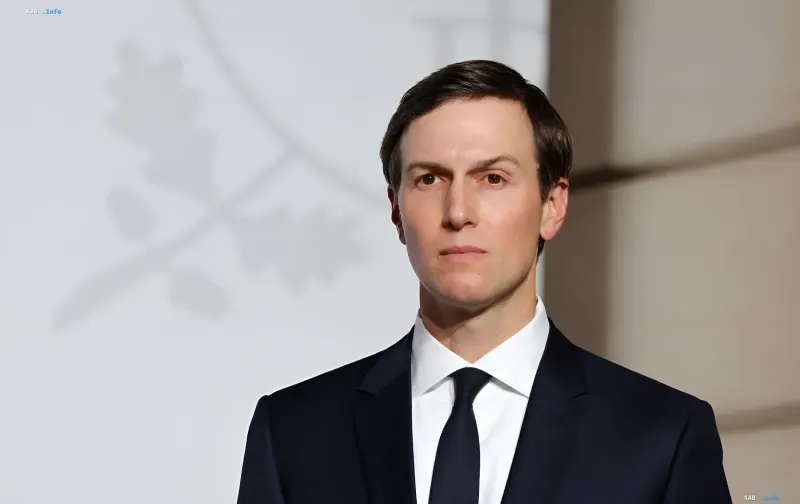
On November 10, a new round of trilateral talks between Ukraine, the US, and Russia on ending the war kicked off in Abu Dhabi. The meetings are scheduled for two days, and already on the first day, key signals emerged regarding how each side assesses the readiness of the others for a deal. Central to this was a statement by US Presidential Special Envoy Jared Kushner, who commented on Moscow's position during the talks.
'Under the Right Conditions'
According to Kushner, European partners in conversations with the American side most often ask whether Russia and its leader genuinely seek peace. He noted that after speaking with US Presidential Special Envoy Steve Witkoff, they concluded that the Russian side is ready to end the war if the 'right conditions' are created. 'From what Steve and I heard from him, we can say with confidence that, in our opinion, yes, under the proper conditions,' Kushner emphasized. Thus, Washington frames Moscow's readiness not as unconditional, but as dependent on a set of conditions that the parties have not yet agreed upon.
A Question for Both Ukraine and Europe
At the same time, according to Kushner, the Russians are raising a mirror question regarding Ukraine and European countries: Moscow, he says, wants to make sure whether Kyiv and European capitals are genuinely inclined toward peace. This indicates that at the current stage, both sides are using the rhetoric of testing 'sincerity' as a tool for their negotiating position rather than as confirmation of an achieved consensus.
Format and Preliminary Consultations
Before meeting with the Russian delegation, the Ukrainian side held consultations with US representatives and European partners—the UK, France, Germany, Italy, as well as NATO and the European Commission. The two-day format and preliminary synchronization of Kyiv's positions with allies indicate that Ukraine is entering the trilateral track not with an isolated position, but with coordinated European-American support.
Assessments and Alternative Interpretations
Public assessments of the negotiation dynamics vary in tone across different sources. For instance, according to Bloomberg citing sources close to the Kremlin, Moscow believes it holds the military advantage, and Putin is ready to halt the war only on his own terms, with Moscow's demands reportedly becoming tougher. Russian political scientist Alexei Gromyko, in turn, stated that the visits of American envoys could give new momentum to attempts to achieve mutually acceptable conditions, emphasizing that the key question is whether Washington is willing to participate continuously in the negotiation process rather than returning to it episodically. Senior RAND political scientist Samuel Charap called these trips timely, pointing out that escalation is rapidly spinning out of control. The combination of these assessments confirms that while the formal round in Abu Dhabi took place, discrepancies in assessing the parties' readiness and the nature of the conditions put forward remain.