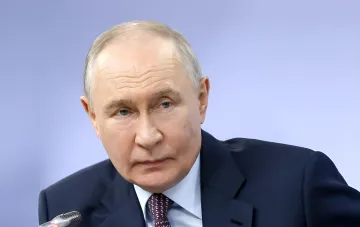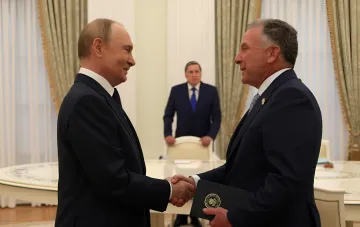
Against the backdrop of the ongoing conflict surrounding Ukraine, a new diplomatic contour is forming: American negotiators Jared Kushner and Steve Witkoff are preparing meetings with Vladimir Putin and Volodymyr Zelensky, which could become a key round in the attempt to reach a negotiated settlement. According to available data, Abu Dhabi is being considered as the venue for the contacts, which in itself is a signal: the parties are choosing a neutral platform outside of Europe, where neither Brussels nor Washington directly pressure the process. It is precisely in this format—through intermediaries rather than direct bilateral contacts—that the current architecture of dialogue is being built.
Kyiv Pre-coordinated Its Line with Brussels
The Ukrainian side is not entering this round alone. Volodymyr Zelensky publicly stated that ahead of the talks in Abu Dhabi, he coordinated his positions with European Commission President Ursula von der Leyen. This means that Kyiv is trying to build a unified European-Ukrainian line before sitting down at the table with the Russian side and American intermediaries. Such preliminary synchronization with the EU is an attempt to avoid a situation where the Ukrainian negotiating position appears fragmented or contradictory regarding European partners.
Moscow's Consent Does Not Guarantee the Meeting Itself
At the same time, the Ukrainian side is showing caution. According to Zelensky's assessment, Putin's consent to negotiations does not yet mean that the meeting will actually take place: there are nuances that make Kyiv wary. This is an important factor: a diplomatic gesture of readiness from Moscow is not identical to the actual organization of contact, and a number of organizational and political conditions remain before a real handshake. That is why Kyiv is in no hurry to announce a breakthrough until the date, format, and agenda are confirmed.
Context: From Istanbul to Abu Dhabi
The current round does not arise in a vacuum. Previously, the diplomatic cycle featured negotiations in Istanbul, telephone contacts between Vladimir Putin and Donald Trump, as well as discussions in Kyiv with American partners on topics of sanctions against Russia, bilateral trade, and defense cooperation. The transition from one platform to another—from Istanbul to Abu Dhabi—reflects the parties' attempt to find a format in which at least framework agreements could be fixed. American intermediaries Kushner and Witkoff play the role of a connecting link between Washington, Moscow, and Kyiv in this process.
Other Topics of the Diplomatic Cycle
In addition to the main negotiating track, the current information cycle also discusses accompanying themes: checks on Russian citizens in German airports, the discussion on lustration in Serbia, and protest sentiments in Crimea. These plots are not part of the negotiation process as such, but they form the general background in which diplomacy unfolds: from the control of movement of individuals to domestic political processes in the region's countries. For the reader, it is important to see that the negotiating track is just one of several parallel lines determining the dynamics of the conflict in 2026.