
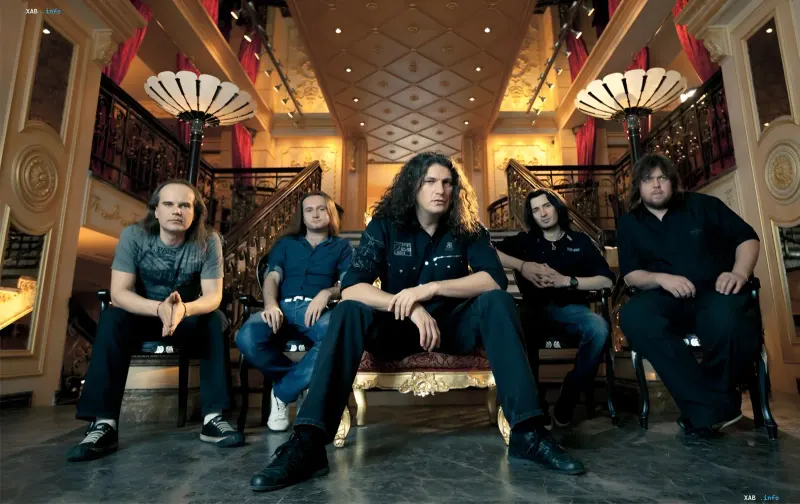
August 17, 2026 — a date that holds special significance for millions of Ukrainians. On this day, Andriy Kuzmenko, known worldwide as Kuzma Skryabin, would have turned 58. Although the musician has been gone for over a decade, his work continues to live, inspire, and unite generations. Style, humor, depth, and sincerity — these are the qualities that made Skryabin not just a rock star, but the true voice of an entire era.
Songs that became part of life
Kuzma Skryabin's work is unique in that each of his songs is not just music, but a story with which every listener can identify. "Old Photographs" ("Старі фотографії"), included in the 2005 album "Tango," became a true anthem of nostalgia. It was sung at parties, house concerts, and with friends around a guitar. Just hearing the first chords is enough for your own "old photographs" to appear in your mind.
"Silence" ("Мовчати") is one of Kuzma's most famous lyrical compositions. Skryabin recorded the song with Iryna Bilyk, and it was their duet that made it particularly recognizable. The single was released in 2003 and immediately became a hit. The song contains tenderness, resentment, and that familiar feeling when too much has been said between two people — or, conversely, the most important things remain unspoken.
Philosophy and humor: two faces of one artist
Kuzma Skryabin knew how to speak about complex things very simply — without pomp and unnecessary words. "People are like ships" ("Люди, як кораблі") is one of the musician's most philosophical songs. Here there is no joke for the sake of a joke — there is a conversation about people, their paths, meetings, and partings. It is precisely such songs that show why "Skryabin" was significantly more than just a popular band.
But if you want to remember Kuzma not as pensive, but as maximally alive — turn on "Minibus" ("Маршрутка"). This song has everything that people loved about him: humor, observantness, recognizable everyday details, and the ability to turn an ordinary ride into a little story. This is Kuzma, who knows how to laugh at himself and at life without losing depth.
Clips as time capsules
The "Colorful" ("Кольорова") music video is a separate dose of nostalgia. It is precisely such videos that are interesting to rewatch today not only for the music but also for the atmosphere of that era. The song and video are included in compilations of Skryabin's main hits. And the video for "Places of Happy People" ("Місця щасливих людей"), filmed in 2011 on the Dnieper-Bug Liman in the Mykolaiv region, has already garnered over 30 million views on YouTube. The director was Kuzma himself — and you can feel it in every frame.
Personal and eternal: songs about loved ones and the country
In Kuzma's work, songs about loved ones hold a special place. "Mom" ("Мам") is one of the musician's most personal compositions. Kuzma dedicated it to his mother, Olga Kuzmenko. The song was released in 2012 and became further proof that behind the stage image of the cheerful and sometimes hooliganish Kuzma hid a very sensitive author.
"My Own Country" ("Сам собі країна") is a song that contains both love for one's land and an honest look at social problems. Therefore, the composition did not remain tied to a specific time — its words sound relevant today. Kuzma knew how to speak about Ukraine without officialese and pomp — and this is his main legacy.
"Dolphins" — the final word
A separate place is occupied by "Dolphins" ("Дельфіни") — a song forever associated with the last period of Kuzma's life. It was precisely the video for "Dolphins" that became the last one the musician presented shortly before his death. Therefore, today this is not just another hit by Skryabin, but a particularly poignant reminder of the artist whom the Ukrainian scene lost too early.
A legacy that does not age
Years after Kuzma's death, his songs did not turn into mere nostalgia. "Old Photographs," "Silence," "People are like ships," "Places of Happy People," "Minibus," and dozens of other compositions continue to be heard at concerts, in cars, at home, and in headphones. Generations change, but the music remains — because it speaks to us in the language of emotions, not words.
Perhaps this is exactly why Kuzma remains his own for different generations. He knew how to make people laugh when it was sad, speak simple words about complex things, and leave the feeling after a song as if you had just talked to an old friend. And this is the most valuable thing he left us.