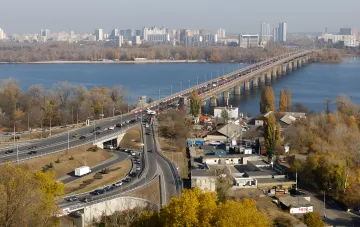
A massive night attack by Russia on the capital on November 20 damaged bridges across the Dnieper, forcing municipal services to adjust traffic patterns between the banks. According to the Kyiv City State Administration (KCSA), the Podilskyi Bridge crossing was partially damaged as a result of the strike. KCSA reported that traffic on the bridge has now been restored. Kyiv Mayor Vitali Klitschko clarified that the damage to the Podilskyi crossing was the result of a ballistic missile strike: in the morning, traffic from the right to the left bank was blocked, but it was restored throughout the day.
How bridge traffic is organized
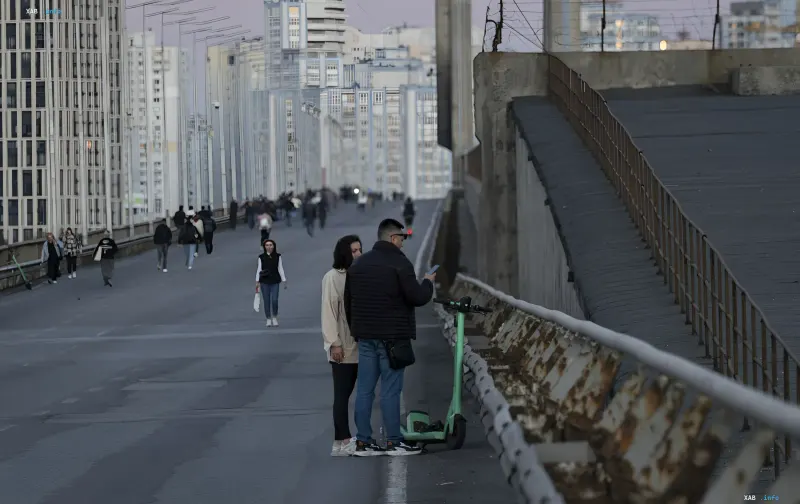
The E. O. Paton Bridge, according to KCSA information, is operating normally; however, several restrictions have been introduced: heavy truck traffic is prohibited, and the crossing is operating with a reversible traffic scheme that changes depending on the time of day. Authorities are asking drivers to consider current information when planning routes through the city, as traffic regulations throughout the day may be adjusted as experts assess the extent of damage following the end of air alerts.
Recommendations for citizens
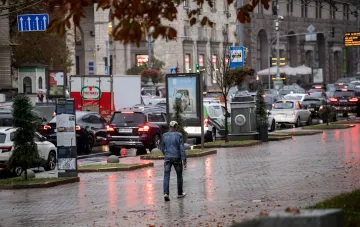
Due to the shelling, crossings in the capital were closed, causing major traffic jams and significantly complicating travel between the banks. Consequently, Kyiv residents are urged to avoid using private vehicles or public transport unless absolutely necessary and to check available routes in advance. According to Klitschko, experts will assess the extent of the bridge damage after the air alert ends, meaning restrictions may fluctuate throughout the day.
Discrepancies in data on the state of crossings
The picture of damage and restrictions published by various outlets differs in detail. For example, according to RBC-Ukraine, citing the KCSA, the primary damage occurred on the Podilskyi crossing, while the Paton Bridge is operating normally. Meanwhile, other media reported restricted modes on the Southern Bridge (traffic in only one direction for limited-weight vehicles), damage to the Darnytskyi Bridge, and the closure of the Northern and Southern bridges after the night attack. These discrepancies usually reflect different times of day: in the morning, restrictions were broader, while during the day, some directions were opened as traffic was restored.