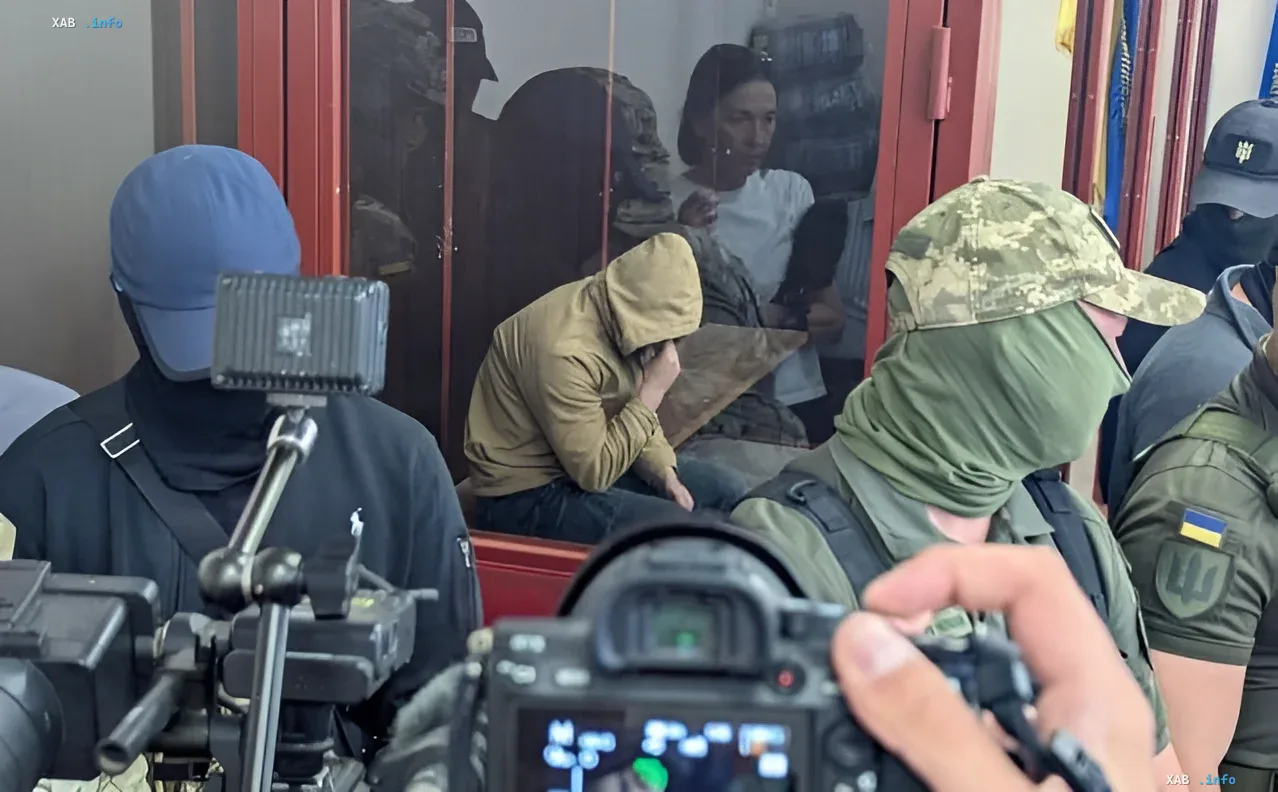
The Pechersk District Court of Kyiv concluded a key hearing in the case concerning the death of Anastasia Berezovskaya. The court granted the request of the Office of the Prosecutor General and selected detention without bail for 60 days as the preventive measure for two defendants: Vladyslav Reut, a serving officer of the Main Directorate of Intelligence of the Ministry of Defense of Ukraine (GUR MoD), and Vitaliy Zhikovych, a civilian.
The decision was made against the backdrop of an investigation into the circumstances of the discovery of the deceased's body on July 3 in a forest strip near Kyiv. The investigation established that Berezovskaya was under the surveillance of international law enforcement agencies due to suspicion of involvement in the bombing of the car of Ukrainian businessman Vadym Ermolaev in Monaco on June 29, 2026.
Defense arguments: "Patriotic duty" versus the law
During the hearing, lawyer Anatoliy Ivanov, representing the interests of Vitaliy Zhikovych, attempted to challenge the qualification of his clients' actions. The defense insists that the alleged offense cannot be classified as a classic criminal crime. According to the lawyer, this is a matter of "eliminating a combatant or hostile element" under martial law.
The lawyer argued his position by stating that accusing a military intelligence officer of illegal actions could negatively affect the morale of military personnel and volunteers. Furthermore, the defense emphasized Zhikovych's civilian status, asserting that he could not have influenced the decisions of a career officer.
Prosecution position: conspiracy and witness elimination
The pre-trial investigation bodies — the National Police and the SBU — together with the prosecution, adhere to a different point of view. The investigation insists on qualifying the actions as intentional murder committed by prior conspiracy.
According to the prosecution's version, Vladyslav Reut directly inflicted the gunshot wounds, while Zhikovych coordinated the actions on site. The motive considered is the elimination of Berezovskaya as an undesirable witness in other financial and criminal proceedings. Investigators recorded large transactions from Zhikovych's crypto wallets to the deceased's accounts shortly before the incident in Monaco, which, in their opinion, confirms a mercenary motive.
Defendants' versions and agencies' positions
Vladyslav Reut partially rejects the investigation's version. He claims he did not know his companion's intentions and did not plan the murder. According to the officer, Zhikovych personally used the weapon, and Reut assisted in concealing evidence and burying the body involuntarily, under physical threat to his family.
The leadership of the relevant special services — GUR MoD and SBU — issued official statements fully supporting the investigation's position. The agencies emphasized that the actions of Reut and Zhikovych were purely personal initiative ("unauthorized action") and had no relation to the execution of official special operations or state assignments.
Legal context: why "unauthorized action" is punished by law
The court debate revealed a fundamental contradiction between notions of "justice" in wartime and the letter of the law. According to the Criminal Code of Ukraine, the lawful destruction of an enemy is recognized only as the actions of military personnel in the zone of military operations and only within the framework of carrying out lawful orders from the command.
The independent administration of justice, so-called "reprisals" or the liquidation of individuals on peaceful territory, does not fall under the norms of International Humanitarian Law. Such actions are classified as a general criminal offense against human life and health. The penalty for such acts provides for punishment up to life imprisonment, regardless of the victim's status or the motives of the perpetrators.


