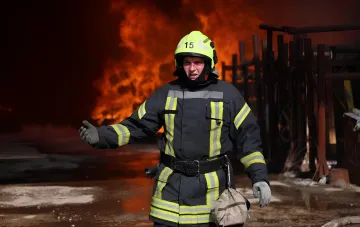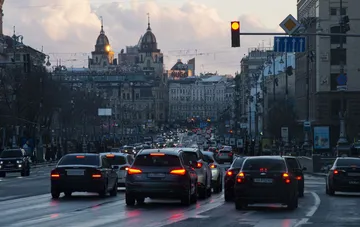
In the corridors of the YES Annual Meeting 2026 conference, organized by the Viktor Pinchuk Foundation, Kyiv Mayor Vitali Klytsko presented an updated picture of the capital's civil defense system. According to him, the city has more than 4,000 shelters of various types, which are currently being repaired, completed, and opened. The statement came against the backdrop of the escalating situation in summer 2026 with missile and drone strikes on Kyiv, when the availability of shelters for residents became a top priority.
The scale of the shelter network in the capital
The key figure cited by the mayor is more than 4,000 shelters of various types across the city, which has a population of over 3 million people. Klytsko emphasized that work is being carried out simultaneously in several directions: routine maintenance of existing facilities, construction of new ones, and their commissioning. This figure has become a benchmark for assessing the city's readiness for continued aerial attacks and for planning further procurement of protective infrastructure.
Mobile shelters at transit stops
The main innovation announced by the mayor was the program to install mobile shelters at public transport stops. In his assessment, each such shelter is designed for approximately 30, and at most 40, people. Kyiv has already purchased this batch, and the first part — according to Klytsko, "as far as I remember, 40 or 50 units" — will be delivered to the city within the next month. The mayor stated that the program will continue, expanding the network of mobile protective points across the capital.
Summer 2026: escalation and the metro access scandal
The context for these statements was Russia's active use of ballistic missiles against Kyiv this summer, which sharply worsened the problem of shelter availability. In late July 2026, a scandal broke out: according to reports, people who wanted to take cover were allegedly not allowed into the metro. In response, Prime Minister Serhiy Haidai ordered an inspection of shelters across Ukraine and to ensure that they could be accessed even before an air raid alert was issued.
Changes to safety protocols
Meanwhile, the Russians intensified attacks on Kyiv with kamikaze drones: near-round-the-clock strikes effectively paralyzed the city's operations. In connection with this, the Cabinet of Ministers revised the safety protocols. In particular, in Kyiv the metro service between the banks was partially resumed, the curfew was shortened, and the air raid alert was divided by levels of danger, in order to reduce the load on the city's infrastructure and on residents.
The cost of attacks and the mayor's position
Against the backdrop of these measures, the mayor of Kyiv also drew attention to the economic losses: in his estimates, each attack on the city costs the capital approximately 500 million hryvnias. Klytsko stated that the enemy is trying to destroy the capital of Ukraine, and that is precisely why the city continues to expand and repair shelters, as well as to introduce mobile protective solutions in places of mass gatherings — primarily at transit stops.