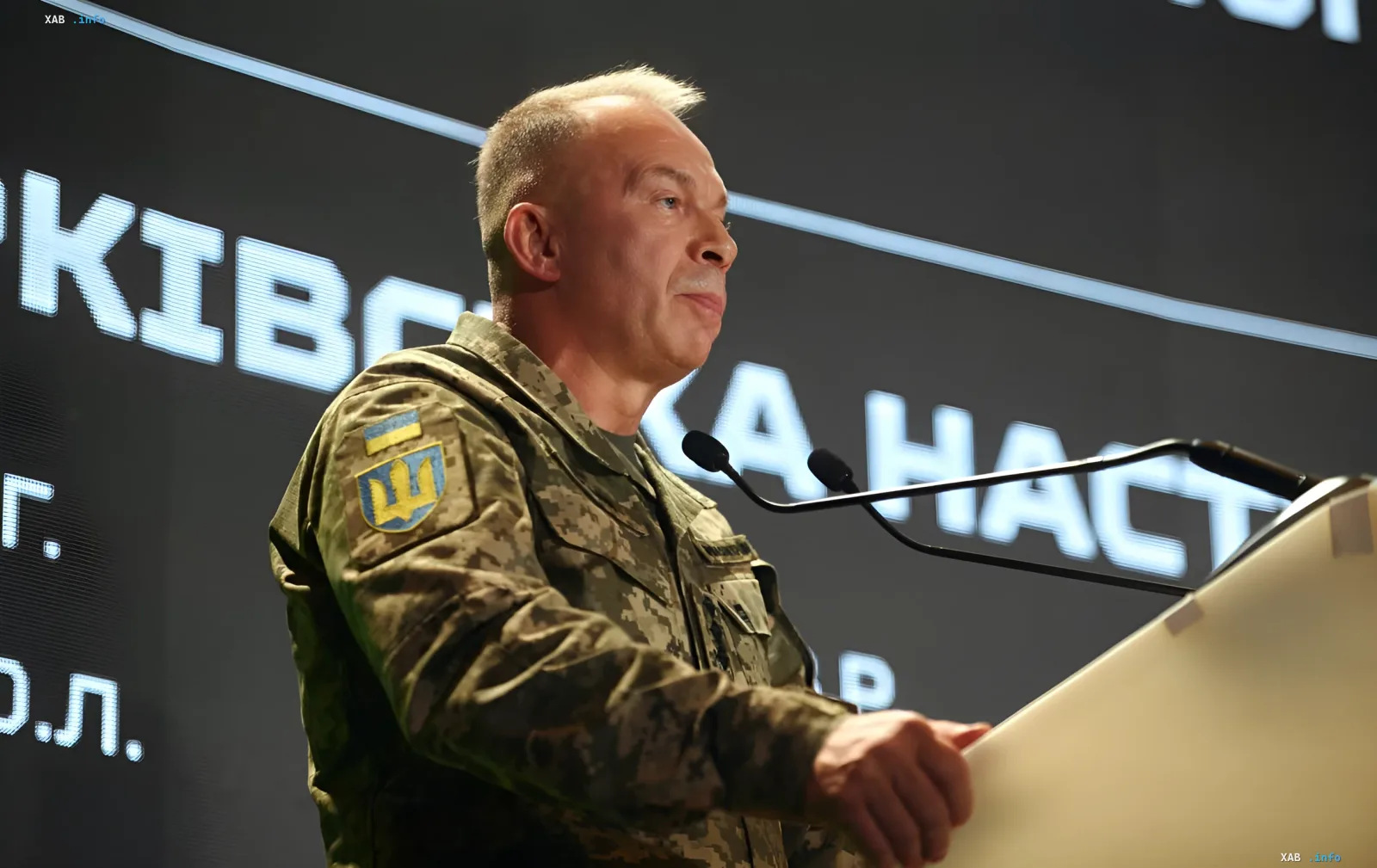
On September 12, a presentation of the monograph "The 2022 Kharkiv Offensive Operation" took place at the National Museum of the History of Ukraine in the Second World War. The publication recreates the prerequisites, preparation, course, and results of the operation, during which in September 2022 the Defense Forces of Ukraine liberated Balakliia, Izium, Kupiansk, and hundreds of other settlements in the Kharkiv region. The event was organized by the Kyiv School of Public Administration named after Serhiy Nyzhnyi.
Who prepared the publication
The monograph was prepared by researchers from the Research Center for Humanitarian Issues of the Armed Forces of Ukraine: Ihor Yevseiev, Vladlen Maraev, and Oleksandr Skryabin. The authors worked with combat reports, General Staff materials, and operational information, which allowed them to reconstruct the course of events based on primary documents rather than solely on journalistic assessments.
Planning and preparation of the operation
General Oleksandr Syrskyi, who in 2022 commanded the Kharkiv direction, spoke about the concept of the operation, the preparation of three brigades, and working under conditions of an acute ammunition shortage. According to him, when the task to prepare for the Kharkiv Offensive Operation was received, "no one actually believed in its success." Approximately one month was needed for preparation: three brigades had to be withdrawn from their units, transferred to the Kharkiv direction, fully planned for, and the supply issue resolved. "We understood all the risks, but we saw the possibility of achieving a significant result," the general noted.
Conditions of ammunition shortage
According to Syrskyi, a key difficulty in the preparation was logistics. During the preparation of the operation, the troops received only 20–30% of the minimum amount of ammunition laid down in the plan. Despite this, the command considered it possible to carry out the offensive, relying on precise planning and coordination with local structures.
Results and significance of the operation
As a result of the Kharkiv Offensive Operation, the Defense Forces liberated approximately 11,500 square kilometers of territory and more than 500 settlements. As emphasized in the monograph, the experience of this operation was subsequently used when planning other offensive actions, which makes the publication not only a historical but also a methodological document.
Assessment by international partners
A separate assessment of Syrskyi was given by David Petraeus, a retired U.S. Army general and Director of the U.S. Central Intelligence Agency in 2011–2012. He recounted that he first met the general in Kramatorsk in 2019 and was "immediately struck," noting his competence, professionalism, the respect of soldiers and officers, as well as his modesty as a leader.
Reaction of politicians and the mayor of Kharkiv
The discussion was joined by Ruslan Stefanchuk, Chairman of the Verkhovna Rada, Kharkiv mayor Ihor Terekhov, and British entrepreneur and philanthropist Lord Michael Ashcroft. Stefanchuk called the book "a testament to the Ukrainian struggle, professionalism, and to what we are capable of when we act decisively, precisely, and together." Ihor Terekhov thanked the defenders for the fact that "today Kharkiv is a Ukrainian city," and reported that after the first days of the war, when about 320,000 people remained in the city, it is now home to approximately 1.4 million residents.