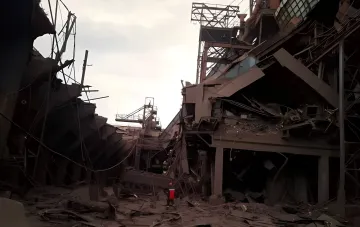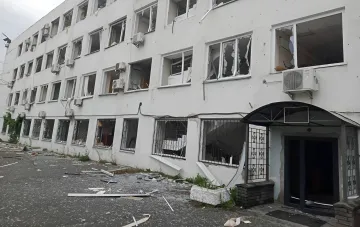
The autumn of 2026 has become a turning point for the capital's real estate market. Frequent drone strikes on bridges across the Dnipro, public transport disruptions during air raids, and damage to three metropolitan combined heat and power plants have created a comprehensive daily logistics crisis. According to the LUN platform, the median rental price for a one-room apartment in Kyiv fell by 11.1% from September to October 20, dropping from 18,000 to 16,000 hryvnias. Meanwhile, in western Ukraine, where internal migration continues, the number of available houses plummeted by 60% over two months. The market has essentially split into two poles: overheated demand in the regions and a cooled-down market in the capital.
Cooling Figures: What Is Happening to Prices in Kyiv
LUN statistics record a steady downward trend in rental rates not only over recent weeks but throughout the entire year. On the Left Bank, Desnianskyi district (−10% over 12 months) and Dniprovskyi district (−4%) suffered the sharpest drops. On the Right Bank, similar dynamics are characteristic of Obolonskyi (−7%) and Pecherskyi (−5%) districts. In the residential neighborhoods of the Left Bank—Poznyaki, Osokorki, Kharkivskyi array, and along Bazhan Avenue—a tangible surplus of supply has formed: according to analysts at the Zagorodna portal, more than 100 apartments are simultaneously listed in the same price segment, whereas a year earlier only 20–30 similar lots were on the market. The average time to rent out an apartment in Kyiv is about seven days, indicating a lively yet noticeably softer market.
“Weekend Families”: The New Practice of Dual Renting
Bridge closures during air raids have given rise to an unconventional yet increasingly common practice in Kyiv: renting two apartments simultaneously. One part of the family stays on the Left Bank, while the other stays on the Right Bank to avoid spending hours on a daily commute across the Dnipro. Realtor Oleksandr Boyko, commenting to RBC-Ukraine, notes that tenants are willing to pay only a few percent extra for such a “convenient solution” due to limited budgets. Moving out of the city—to Boryspil, Vyshneve, or Obukhiv—is mainly considered by those who work remotely or already own a car; for them, price and home autonomy become the decisive factors.
No Mass Migration Between Banks, Experts Say
Despite alarming rhetoric, neither realtors nor analysts record a sharp relocation of residents from the Left Bank to the Right Bank. According to Boyko, rental prices for one-room apartments have decreased on both banks, indicating an overall cooling of capital demand rather than internal migration. Alena Babko, Head of External Communications at LUN, confirms that there is no mass exodus from the Left Bank, and the increase in supply and price adjustments are occurring across all of Kyiv. Internal migration has indeed continued since mid-August—people are preparing for winter, changing districts, moving to the region or the west—yet the market remains active. Requirements have changed: tenants increasingly ask how to get to work when bridges are closed and prefer housing near metro stations or directly next to offices.
Bargaining Has Become the Norm: 10–15% Off the Listed Price
Realtors call large-scale bargaining the main qualitative change in the capital's market. According to Boyko's observations, owners are conceding more often than a year ago. In practice, the discount amounts to 10–15% of the listed price, rather than symbolic hundreds of hryvnias. The most noticeable drop is in the middle segment and in areas with high supply, where the number of inquiries on listings decreased by a third in September. At the same time, budget apartments with adequate pricing are snapped up without significant bargaining, while in the high-end class, owners bargain less on price but are more willing to compromise on terms: contract duration, furniture packages, and payment schedules.
The Western Pole: Scarcity and Rising Rates
While available apartments accumulate in Kyiv, the opposite picture is unfolding in western Ukraine. According to LUN, the number of vacant houses in the western oblasts has decreased by 60% over the past two months. Internal migration, which began in mid-August, continues to fuel demand in the regional market. People preparing for winter choose locations based on safety and a convenient commute to work, creating a shortage of affordable housing in settlements with developed infrastructure. With the onset of frosts, analysts estimate that pressure on the rental market in western regions may increase, while in Kyiv, conversely, rate correction will continue until the stability of transport and energy infrastructure is restored.