
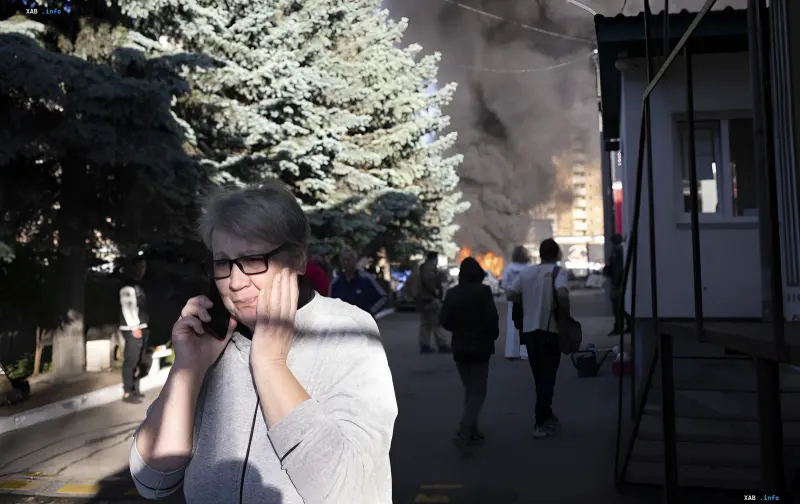
Kyiv continues to deal with the aftermath of a massive Russian night-time strike. The number of casualties from the attack keeps rising, reaching the alarming figure of 81 people. This was reported by Timur Tkachenko, Head of the Kyiv City Military Administration.
As of 12:00, six deaths among the capital's residents had already been confirmed. However, the final figures may change: rescue teams are still working at various locations, trying to find people under the rubble and assist the injured.
Destruction in different districts of the capital
Strikes hit various districts of Kyiv. Residential buildings, administrative structures, and medical facilities were damaged. A car dealership for the Chinese electric vehicle manufacturer Zeekr burned down completely — one of the most noticeable consequences of the attack in the city's commercial sector.
The main blow was delivered by Russia precisely to the capital. According to Ukrainian sources, the enemy used about 70 missiles and nearly 700 drones. Most were shot down by the air defense system, but dozens of ballistic missiles still reached their targets — intercepting them remains a difficult task for modern air defense systems.
New threats: "Zircon" missiles and attack on Kharkiv region
Particular concern is caused by the increased use of hypersonic "Zircon" missiles by Russia during today's attack. These missiles travel at speeds several times faster than sound, making them extremely difficult to intercept. Ukraine's air defense currently lacks sufficient systems capable of effectively countering such targets.
Security analyst Anton Zemlyanoy, commenting to RBK-Ukraine, noted that although "Zircions" are hard to shoot down, their mass deployment requires huge resources and is not always cost-effective for the enemy. Nevertheless, their use is becoming more frequent, indicating an escalation in Russian strike tactics.
In addition to Kyiv, in the morning Russia struck one of the key "Naftogaz" facilities in the Kharkiv region. Drones were used first, followed by missiles. The attack demonstrated that the enemy continues to deliberately destroy Ukraine's energy infrastructure, aiming to destabilize the operation of critical systems.
What's next?
The situation in Kyiv remains tense. Rescuers continue working at sites of destruction, medics are assisting the injured, and authorities are trying to assess the scale of damage. Final data on casualties and destruction will only be known after all search-and-rescue operations are completed.
For residents of the capital, it is important to remain vigilant and follow recommendations from local authorities. Amid ongoing attacks, citizen safety remains the top priority.


