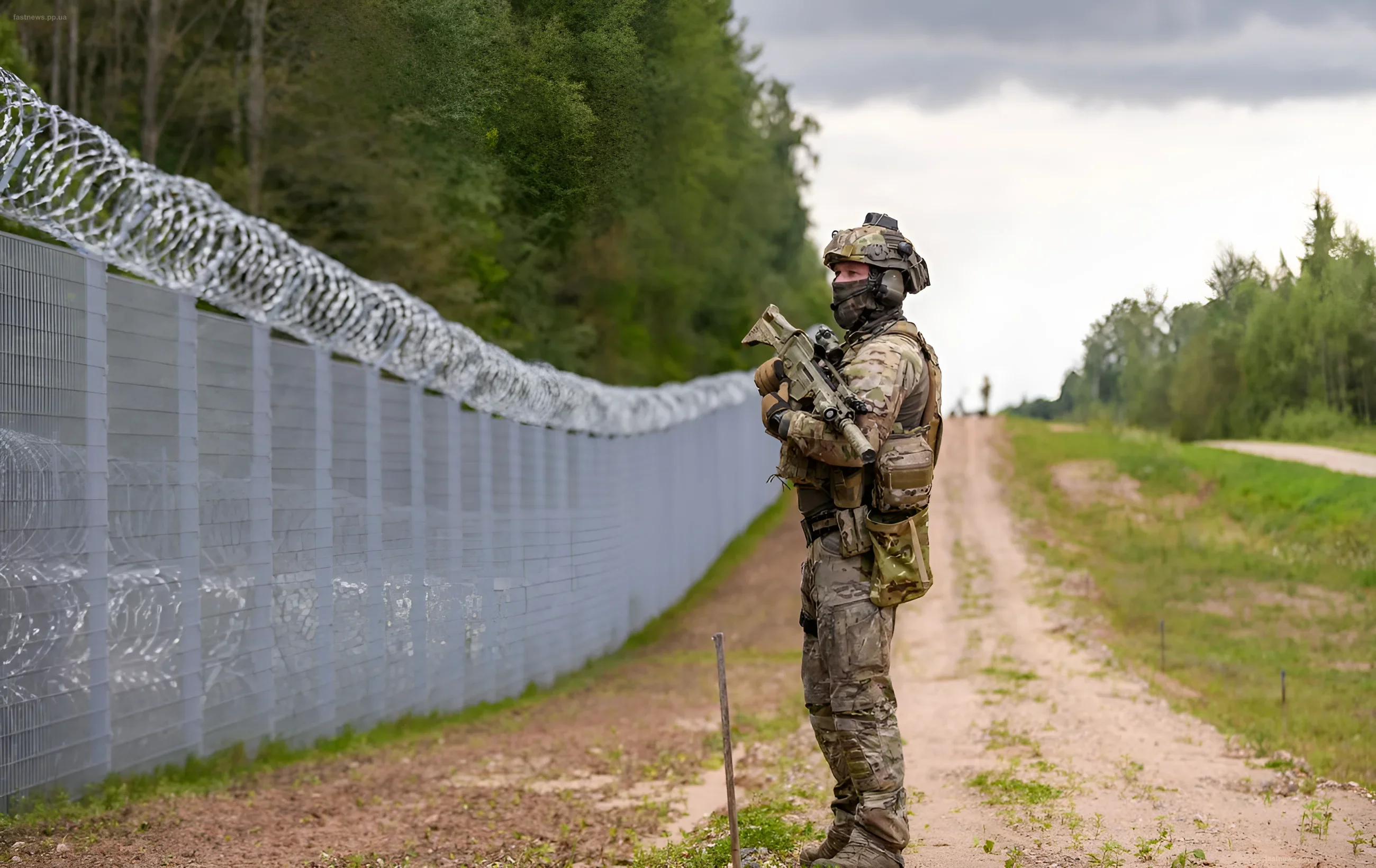
Along Latvia's eastern border, where dense forests meet the sky, a massive defensive system is taking shape. The country's National Armed Forces have begun installing heavy anti-tank barriers known as "dragon's teeth" and preparing anti-tank ditches. This is not merely perimeter reinforcement but a fundamental transformation of the landscape into a strategic frontline.
Tons of Concrete Against Tank Wedges
Engineered obstacles are being arranged in three rows, forming a strip approximately 10 meters wide. Each element is a 1.5-ton concrete monolith designed to stop any wheeled or tracked vehicle. The gaps between the "teeth" are calculated with mathematical precision: too narrow for armored vehicles to pass, yet allowing free movement for infantry and civilians.
Although logistics and production of the barriers began in 2024, physical installation on the ground reached full scale in 2025. This became possible thanks to the adoption of a new Law on the Creation of Anti-Mobility Infrastructure, which allowed the expropriation of private land for national defense purposes. Landowners receive fair compensation calculated by independent assessors, overcoming bureaucratic deadlocks of the past.
Lessons of War: Why Land Cannot Be Given Up
The strategy of the "Baltic Defensive Line" is based on harsh conclusions drawn from combat operations in Ukraine. Officer Andris Riksts, overseeing the project, emphasizes: the main goal is not just to delay the enemy, but to destroy them at the approaches, preventing the capture of territory.
"We see from the example of Ukraine: once land falls under enemy control, it is practically impossible to reclaim it. Endless drone and missile attacks do not strip sovereignty as long as people remain in their homes. We must maintain physical control over the land," explains Riksts. In modern warfare, control over territory remains a decisive factor, not just dominance in the air or cyberspace.
Geopolitical Context: Europe on the Brink of a Storm
The large-scale works in Latvia are a reaction to growing anxiety in Europe. The total length of Latvia's borders with Russia and Belarus is about 450 km. This year, more than 8 km of this line are planned for reinforcement. NATO experts and officials warn that Russia may attempt to test the alliance's cohesion within the next 12 months by striking the Baltics or other vulnerable points.
The situation is exacerbated by political fluctuations in the US and new military doctrines in Europe. Germany has officially recognized Russia as the primary threat, and Polish Prime Minister Donald Tusk has warned of a possible attack as early as this year. Meanwhile, the Center for Countering Disinformation at the National Security and Defense Council of Ukraine notes that some of these fears are fueled by hybrid provocations from Moscow aimed at stoking panic. Nevertheless, Latvian authorities prefer not to take risks and are preparing for the worst-case scenario, turning the border into an impenetrable barrier.


