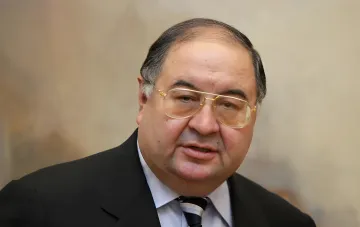
On September 22, 2026, the European Union officially lifted the sanctions restrictions against Russian oligarchs Alisher Usmanov and Mikhail Fridman, including their exclusion in the package extending anti-Russian sanctions for three years. Latvia, which, according to Prime Minister Andris Kulbergs, tried to prevent this decision, found itself at the center of a diplomatic scandal. The following day, on September 23, Kulbergs publicly explained for the first time the logic behind Riga's vote, acknowledging that the country was faced with a choice he called "tough." This is reported by RBC-Ukraine, citing the Latvian outlet Delfi.
"A tough choice": how Latvia found itself in a dilemma
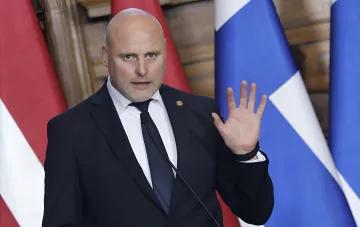
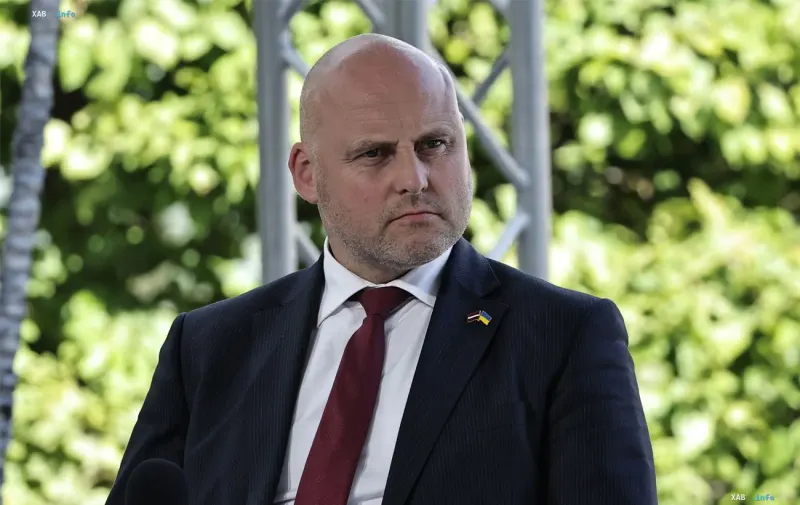
According to the Prime Minister, the question of extending sanctions against Russia was supposed to be resolved in such a way that Riga would not be left "alone with this problem." Kulbergs emphasized that Latvia sought to achieve an outcome in which it would not become the only European country to vote against the exclusion of two oligarchs from the sanctions list. However, in his assessment, this did not happen. "The choice was tough: either a very bad situation or just a bad one," the PM summed up, meaning that Riga was effectively forced to choose between lifting sanctions against two specific individuals or against 2,600 people whose restrictions were also part of the package under discussion. In the end, Latvia abstained from voting against, while also not supporting the decision.
Baltic split: Riga's surprise at the position of Vilnius and Tallinn
Kulbergs did not hide that he was surprised by the position of Lithuania and Estonia, which agreed to the exclusion of Usmanov and Fridman from the EU sanctions list. The Prime Minister emphasized that the Baltic countries have historically acted in coordination on issues of security and sanctions policy, and therefore this episode needs to be "settled" at both the bilateral and multilateral levels. According to him, during the discussion of the issue in EU structures, Latvia's interests were effectively ignored, which, in Riga's view, is unacceptable for an ally within the bloc.
National sanctions as a retaliatory step
Against the backdrop of Usmanov and Fridman's exclusion from the European sanctions list, all three Baltic countries — Latvia, Lithuania, and Estonia — announced the introduction of national restrictions against both oligarchs. Thus, even despite the lifting of European sanctions, restrictions against Usmanov and Fridman continue to apply at the national level in the Baltic countries themselves. This step, in essence, neutralizes the effect of the repeal on the territory of the three states and demonstrates that Riga, Vilnius, and Tallinn do not intend to fully abandon pressure on Russian businessmen linked to the Kremlin.
Kyiv demands a new approach
The EU's decision to lift sanctions against Usmanov and Fridman triggered a sharp reaction in Ukraine. President Volodymyr Zelensky and Foreign Minister Andriy Sybiha expressed disagreement with this step immediately after the repeal was announced. According to available data, Kyiv intends to propose a new approach to the EU on the issue of pressure on Vladimir Putin's entourage, in order to avoid similar "package" decisions in the future, in which the exclusion of certain individuals becomes a hostage to the extension of restrictions against thousands of others.
Contradictory data
The formulations used by various sources contain a significant terminological inconsistency. In a number of reports, including the introductory part of RBC-Ukraine's publication, it is stated that Latvia "tried to block" the lifting of sanctions. However, Kulbergs himself clarifies in his comment that the country "did not change its position and did not support the decision," but at the same time "was forced to abstain instead of voting against." In EU diplomatic practice, "blocking" and "abstaining" are fundamentally different actions: the former implies active opposition, the latter — passive disagreement. Thus, Riga's actual behavior during the vote was softer than it is presented in the headlines. Moreover, if in the context of Baltic coordination Kulbergs expresses surprise at the position of Lithuania and Estonia, the subsequent joint introduction of national sanctions by all three countries somewhat blurs the image of a "split" — formally the positions were different at the EU level, but at the national level the Baltic capitals again acted as a united front.