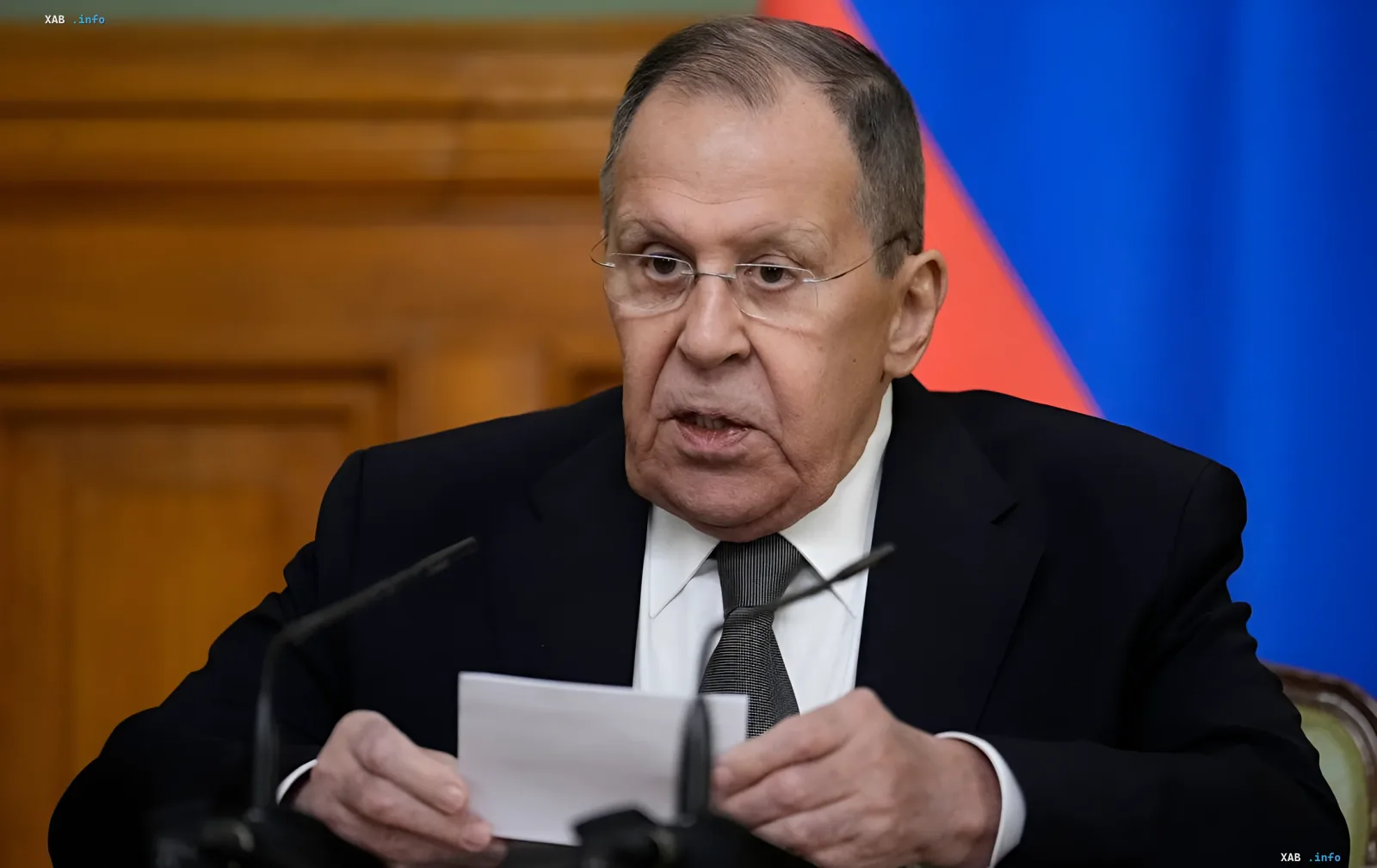
On 16 September 2026, Russian Foreign Minister Sergey Lavrov once again addressed the European capitals with a public military threat. According to TASS, as cited by RBC-Ukraine, the Russian diplomat stated that in the event of an attack by Europe on Russia, "this would be a completely different war, and it would be a very short one." The statement came against the backdrop of a number of European countries openly declaring their readiness to repel a possible Russian invasion, which, by Moscow's logic, is interpreted as an "attack."
The threat of a "short war" and the thesis of a "declaration of war"
In his speech, Lavrov, in his customary manner, attempted to distance Russia from any preparation for a conflict with Western countries, assuring that Moscow is "not interested" in such a scenario. However, he immediately followed this with direct threats aimed at Europe and repeated Vladimir Putin's key thesis: any deployment of Western contingents in Ukraine would be regarded by Moscow as a declaration of war. Thus, the diplomatic formulation "we are not preparing for war" sits alongside a public warning of a "short" and, by the Kremlin's design, decisive campaign against Europe.
The "initial tasks of the SMO" as a condition for a peaceful settlement
Particular attention should be paid to the formulation in which Lavrov effectively defined the parameters of any future settlement: "A settlement in Ukraine entails the fulfillment of the initial tasks of the special military operation." In essence, this means that, in Moscow's view, "peace" is possible only if the occupation results of the invasion are preserved. At the same time, the Russian Foreign Minister continued to shift responsibility for the war onto Kyiv's allies, portraying the Kremlin's own actions as a response to the "expansionist policy of the West."
Accusations against Zelenskyy and claims of "interference" in the elections
In the same vein, Lavrov accused Ukrainian President Volodymyr Zelenskyy of allegedly "destroying everything Russian." In addition, the Russian diplomat claimed that the West is allegedly attempting to directly interfere with the voting of Russian citizens in the elections to the State Duma — both abroad and within the Russian Federation. These claims are not supported by any publicly verifiable evidence and come against the backdrop of preparations for the domestic Russian elections.
Contradictory data
There are notable inconsistencies in the statements made by the Russian side and in the way the same facts are presented by different outlets. On the one hand, Moscow recently publicly declared its readiness for new negotiations on a settlement, and Lavrov himself spoke of a "new approach" by the United States to peace talks. On the other hand, in parallel, a threat of a "short war" was issued, along with the thesis that a settlement means the fulfillment of the "initial tasks of the SMO" — that is, the continuation of hostilities, not their cessation. These two lines are hard to reconcile: the position "we are ready for negotiations" contradicts the position "peace is possible only after the completion of the SMO's tasks." Moreover, the claim of "Western interference" in the voting in the State Duma elections is one-sided and not confirmed by independent sources, unlike the fact of Lavrov's speech itself, which has been recorded by a number of Russian media outlets.
Context: the negotiation track and Kyiv's position
Lavrov's speech comes against the backdrop of Moscow's attempts to run the negotiation and military tracks in parallel. Earlier, Russia unexpectedly declared its readiness for new negotiations on settling the war, and Lavrov publicly spoke of a "new approach" by the United States to the peace process. At the same time, Ukrainian President Volodymyr Zelenskyy earlier made a public address to Vladimir Putin. Under these circumstances, the threat of a "short war" reads as an element of pressure on the European capitals and Kyiv's negotiating position, rather than a signal of de-escalation.