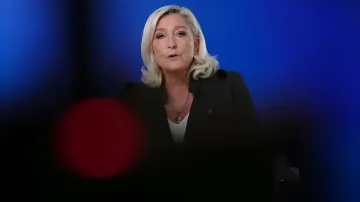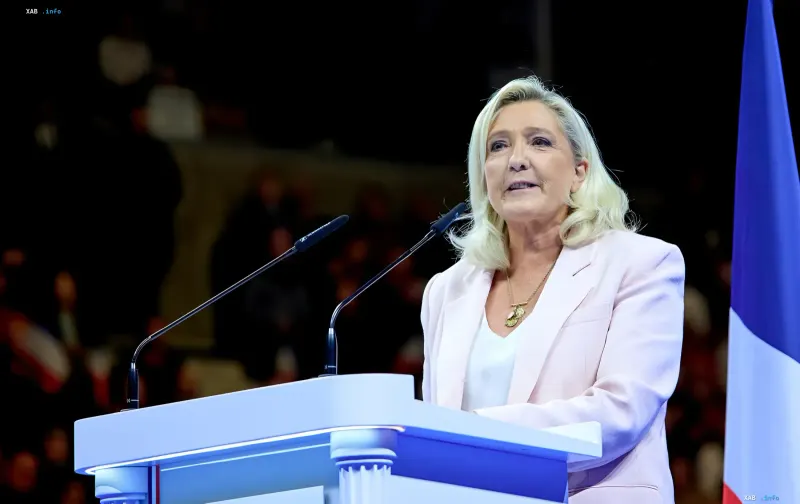
Amid preparations for the spring 2027 presidential election, National Rally candidate Marine Le Pen has once again outlined a strict budgetary program: if victorious, she intends to halve France's net contribution to the European Union budget and halt direct financing for Ukraine. According to a person close to the politician, Le Pen has also signaled that she may refuse to ratify the final EU budget agreement. These statements came mere hours before EU member state leaders are set to gather in Brussels on November 26 and 27 for their first discussion on the seven-year budget proposals.
Blow to the EU Budget: What Le Pen is Promising
According to Financial Times data, Le Pen aims to cut France's net transfer contribution to the overall EU budget by 50%. In addition, she intends to completely stop allocating funds to Ukraine under bilateral programs. A source close to her added that Le Pen is prepared not to ratify the final EU budget agreement unless it is revised in Paris's favor. The FT emphasizes that Le Pen would only be able to carry out these threats if the National Rally wins a parliamentary majority in the French parliament following the April 2027 elections.
France Demands 35 Billion for Agriculture
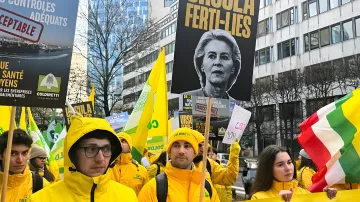
The French government, in turn, is demanding 35 billion euros in additional agricultural subsidies in the EU budget starting in 2028. According to FT estimates, this demand benefits the incumbent government while simultaneously complicating Le Pen's task of revising or canceling the achieved deal: if Paris agrees to a large agricultural package, it will be harder to publicly "roll it back" after ratification. Thus, France is attempting to lock in its interests in the text of the agreement before the political configuration changes.
Berlin "Proofing" Ukraine Financing Against Le Pen
Germany, as reported by FT, is seeking to enshrine future funding for Ukraine directly in EU budgetary legislation. The goal of this mechanism is to guarantee that any additional support for Kyiv cannot be blocked by a veto from France or any other member state. According to one official, the wording of the German demand is designed to make support for Ukraine "Le Pen proof." Separately, Politico reported that Germany has developed a backup plan allowing the EU to allocate over 100 billion euros to Kyiv — an amount the European Commission had already included in the draft seven-year budget.
Timeline: Why Ratification Might Miss the Elections
EU officials aim to reach a budget agreement by the end of 2026. Following this, member states will begin negotiations with the European Parliament, which must give its consent to the agreement and adopt a series of legislative acts. Only then will EU countries begin the ratification procedure, which in many states, notably France, involves a parliamentary vote. However, the French parliament goes into recess at the end of February 2027, making it unlikely that the ratification process will be completed before the April presidential elections. This means that even if Le Pen wins, the budget agreement adopted in 2026 will remain in effect for a certain period until formally revised.
Nuance in Le Pen's Position: Bilateral Aid vs. EU Mechanism
At the same time, Le Pen's public statements draw a distinction between bilateral and multilateral support for Ukraine. On one hand, she reaffirms her intention to end direct French financing for Kyiv. On the other hand, she has stated that France will participate in a joint EU loan for Ukraine worth 90 billion euros (about $99.2 billion) if she wins the spring 2027 presidential election. Thus, Le Pen does not rule out Paris's participation in the collective mechanism, but refuses any national contribution beyond it. Previously, she also categorically opposed Ukraine's EU membership, stating that Ukraine's future "under no circumstances involves membership in the European Union."
Internal French Reaction and Summit Context
The inner circle of President Emmanuel Macron, according to BFMTV, accused Le Pen of undermining France's own interests through her intention to completely halt aid to Ukraine. On November 16, Le Pen met in Paris with Ukraine's Ambassador Volodymyr Omelchenko, after which she reaffirmed her stance on ending financial support. Earlier in October, she stated her readiness to "discuss" the issue of French aid with the Ukrainian president. All these statements came against the backdrop of preparations for the November 26–27 Brussels summit, where EU leaders will discuss specific budget proposals for the first time. The outcomes of this summit will largely determine how successfully Paris and Berlin can "protect" the seven-year budget from potential revisions following a change of power in France.