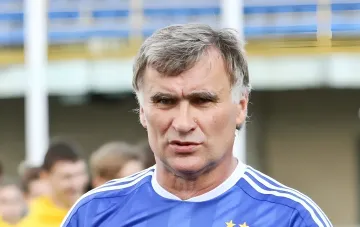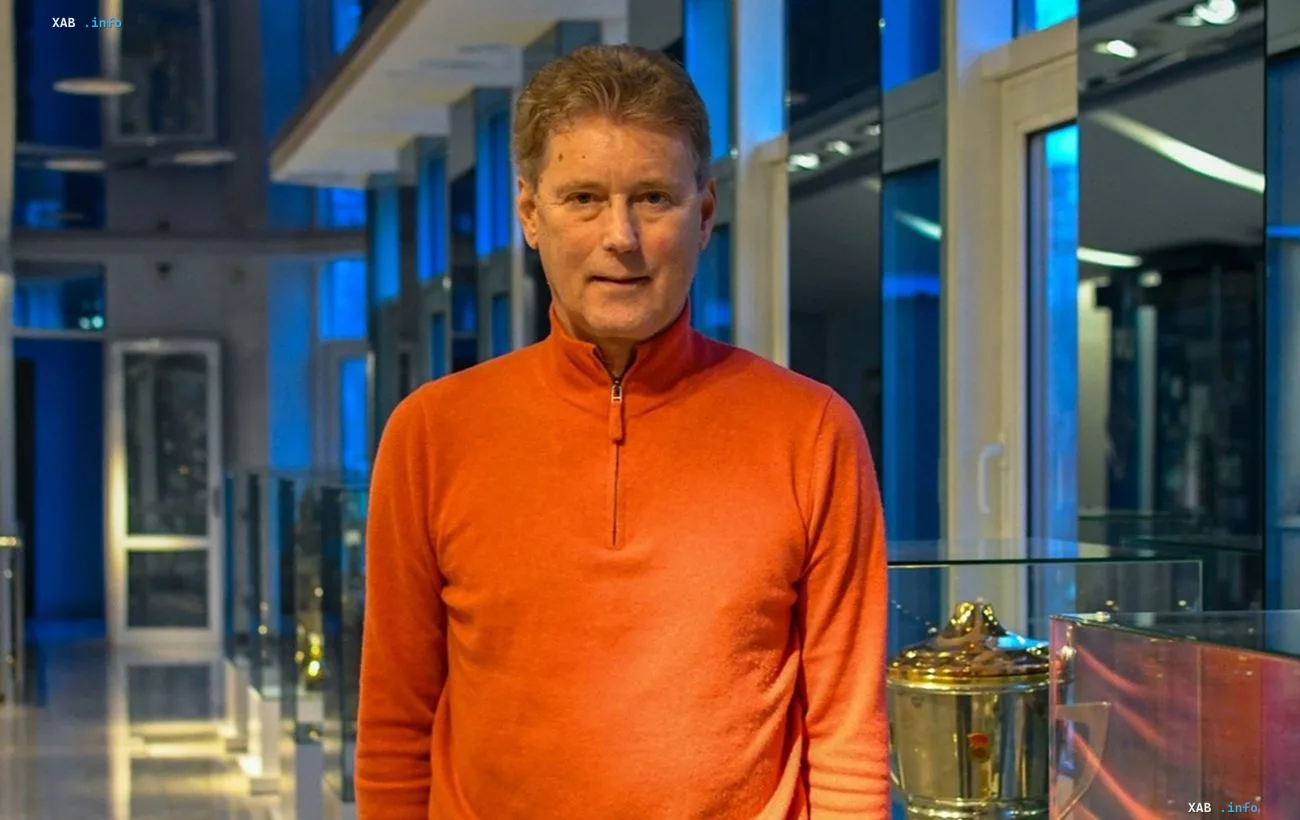
Leonid Buryak is a figure who is traditionally placed alongside the greatest in Ukrainian and Soviet football. Five USSR championship titles, seven domestic cups, the Cup Winners' Cup, the UEFA Super Cup, a bronze medal at the 1976 Olympics, around 400 matches in the USSR championships and 56 appearances for the national team — figures that in themselves convey the scale. But behind these lines of statistics, as he himself admits in conversation, stands above all a boy from Odesa's Luzanivka, for whom football began 'wherever you could: on the street, on the sand, on the pitches'. Buryak emphasizes that back then he did not think about a profession — he simply loved playing very much, and it was precisely the Odesa football atmosphere, in his words, that 'remained part of my character and of how I related to football'.
The mother who saw that football would never disappear
Buryak's memories of his childhood are tied to his mother, who worried: her son came home tired, with his clothes and shoes ruined, and for a family where 'every pair of shoes matters', that was a real burden. At the same time, in his words, she saw how important football was to him, and 'over time she understood that football would never disappear from my life'. The transition from childhood play to a conscious path, in his assessment, came when he 'began to understand that I could build my future on it': there were training sessions, teams, competitions, and then 'Chornomorets', where it became clear that 'if you want to achieve something, you have to work much harder than others'.
The transfer to Dynamo, which was not simple
The key episode of Buryak's biography, he calls 1972, when he was already playing regularly for Chornomorets' first team, and the legendary former Kyiv Dynamo footballer Andriy Biba repeatedly came to persuade him to move to Kyiv. It was not easy to agree right away: in Dynamo's midfield at the time played national team players — Muntian, Kolotov, Veremeyev, Troshkin — and Buryak himself was 'told straight out: think carefully about who you are coming to Kyiv as and whether you can play immediately'. Nevertheless, the prospect of testing himself at the highest level proved more compelling than the competition, and he made the decision.
The debut goal and Lobanovskyi's 'mechanism'
Buryak's debut for the Kyiv team, in his words, was special: he came on as a substitute in a match against Ararat and scored immediately. 'I came on when the team was losing, and I managed to score. After that, of course, it became psychologically easier', he recalls, but immediately adds: one goal 'does not guarantee anything yet', and at Dynamo you had to 'prove every day that you have the right to play'. The main thing in working with Valeriy Lobanovskyi, Buryak calls his attitude to football, 'for which there were no small details': the coach wanted the team to act as a single mechanism. 'When you are young, you take some of those demands simply as the coach's work. And only later, when you start coaching yourself, many things become understandable in a completely different way', Buryak admits, adding that today he better understands decisions that in his youth he perceived differently.
Bayern, Müller and the 50th anniversary of the legendary victory
Among the most memorable moments of his career, Buryak singles out the matches against Munich's Bayern for the UEFA Super Cup, whose 50th anniversary of the victory fell last year. Bayern were the reigning European Champions' Cup holders, and, in his recollections, before the match Lobanovskyi spoke separately about Gerd Müller and personally instructed Stepan Reshko to mark him as tightly as possible: 'Reshko in effect did not let Müller get away from him, and he did not score'. In important matches, Buryak emphasizes, 'everyone knew their job', and the most important thing was understanding the common goal. The result — victories in Munich (1:0) and in Kyiv (2:0) — became for Dynamo 'a huge victory'.
The coaching career and the people who stayed by his side
After ending his playing career, Buryak worked as a coach, led Ukrainian and foreign clubs, and worked with the Ukraine national team. In the public sphere this part of his path is assessed ambiguously: in editorial materials and blogs (including on Obozrevatel) Buryak's coaching biography is often presented through the prism of disappointments and 'misses' past major tournaments, which contrasts with his playing legend. Buryak himself in the interview focuses not on the figures of coaching results, but on the people who 'stayed by the legend's side' and on reflecting on the path traveled. It is important that the assessment of the coaching career in blogs is an editorial interpretation, not a documented fact, so in the article it is given as context, not as a statement.