
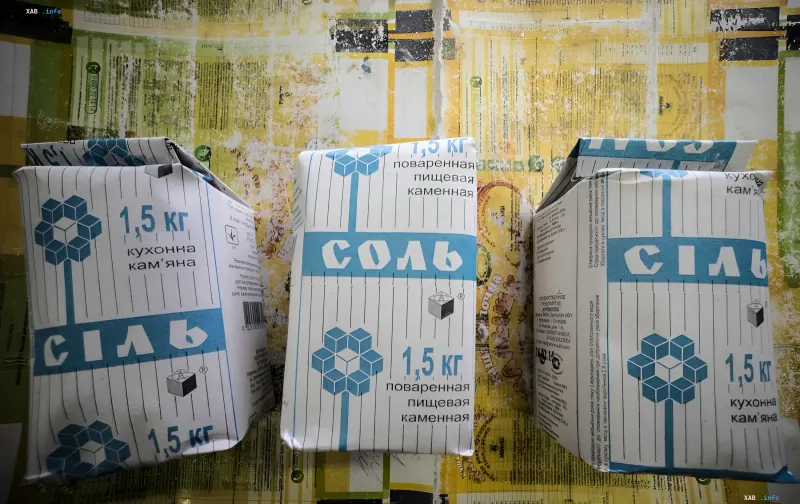
In 2025, the Ukrainian salt market seemed to have entered a phase of relative calm. Statistics record a 26.6% decrease in import volumes, and a 29% drop in monetary terms. However, behind these figures lies not so much a triumph of restored production as a complex adaptation to new realities, where old giants no longer operate and logistics routes have changed forever.
Blow to the monopoly and the collapse of the old model
In the spring of 2022, Ukraine lost 'Artemsol' — an enterprise that dominated the market with a share of about 90% and a capacity of over 7 million tons per year. The occupation of Soledar in the Donetsk region dealt a crushing blow to the salt industry. The country faced the need for instant restructuring: either develop in real-time or face a shortage.
The reaction was immediate. In 2022, salt imports almost tripled — to 284 thousand tons, while procurement costs jumped sevenfold. But while food salt remained accessible to the population, the industrial sector and road services faced a crisis.
Volyn road workers for the 2022–2023 season had only 20% of the necessary stock of technical salt. Khmelnytskyi region needed 2,000 tons — and also did not receive them. Services were forced to urgently seek alternatives and overpay for imported supplies.
Reorientation of supplies: from Belarus to Egypt
Before the war, the main external supplier of salt for Ukraine was Belarus — in 2021, it accounted for more than 71,500 tons out of a total import of over 100,000 tons. After 2022, this model collapsed completely.
First, Turkey took the lead, but already from 2023, Egypt became the main supplier — currently accounting for about 50% of all imports. Among other key partners are Turkey, Romania, and Poland.
Not only geography changed, but also logistics: the closure of Black Sea ports, reorientation to routes through the EU and the Danube, expensive freight, and military risks significantly increased delivery costs. If the average price of an imported ton before the war was about $90, by 2022–2023 it exceeded $220.
Rising prices and hidden factors of stabilization
According to the Ministry of Finance, the average price of salt in Ukraine has risen by approximately 24% since the beginning of the full-scale invasion — from 29 UAH/kg in 2022 to 36 UAH/kg in 2026. Such dynamics fit into the general rise in food prices and does not look anomalous.
However, the National Association of Mining Industry of Ukraine (NAMIU) warns: it is premature to celebrate. The reduction in imports is not due to the rapid recovery of the Ukrainian salt industry, but due to significantly less optimistic factors:
- Reduction in the number of end consumers due to the forced migration of millions of Ukrainians and the occupation of part of the territories.
- Slowing down or stopping the work of large industrial consumers of technical salt — metallurgical and chemical giants.
- Warm winters, which reduced the needs of road services for anti-icing materials.
- Record inventory levels among importers, accumulated in 2024.
New players and prospects for self-sufficiency
Ukrainian salt producers are gradually increasing their presence in the market. For example, the Black Sea Salt Plant, launched in May 2026, already produces up to 15,000 tons of food salt per month. In the future, the enterprise plans to switch to its own raw materials from the Kuyalnik Lagoon. Theoretically, this will allow closing the entire domestic food segment.
The Tereblia deposit in Zakarpattia, despite a prolonged corporate conflict, has resumed mining and is already supplying technical salt for the 2026–2027 season with a projected potential of 450,000 tons per year.
NAMIU forecasts that in 2026, salt imports will continue to decline and may drop to 300–380 thousand tons. But a full return to the pre-war model will not happen — and this may even be for the better. In the medium term (3–5 years), full self-sufficiency is realistic, but the path to it lies through adaptation, not through restoring old structures.


