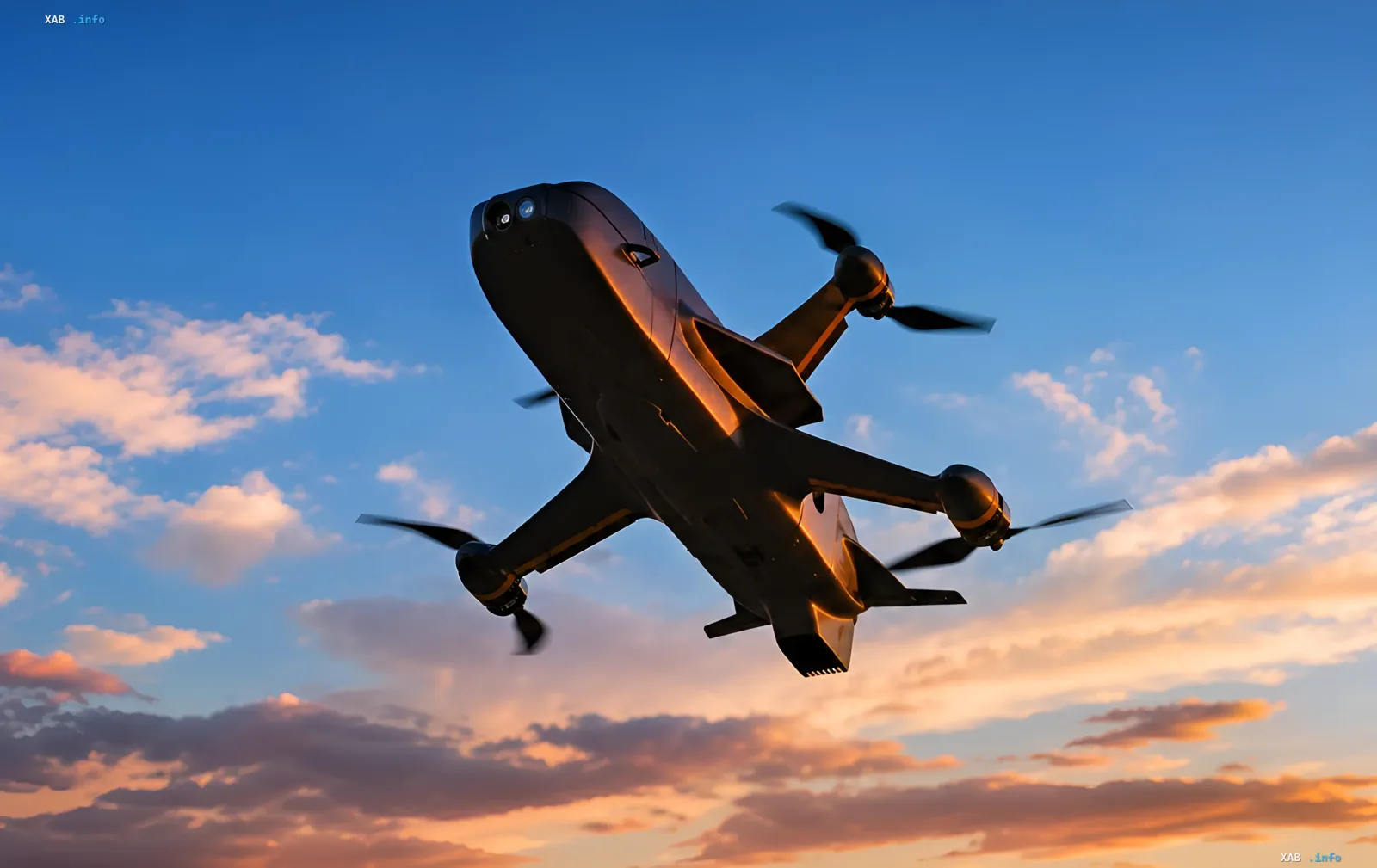
Ukrainian company F-Drones has unveiled a new interceptor drone, the LITAVR, capable of destroying aerial targets and engaging ground objects. The device was developed with a focus on full technological independence: from engines to software.
According to data from the Ministry of Defense of Ukraine, cited by RBK-Ukraine, the project launched in the fall of 2024. Successful tests and codification were already conducted in the summer of 2025. Since autumn 2025, the drone has begun entering the troops as part of mass production.
Technical specifications and autonomy
LITAVR is positioned as a high-speed platform for interception. The declared maximum speed is 350 km/h, and the operational range is 40 km. However, the Unmanned Systems Forces unit recorded a record flight at a distance of more than 80 km from the starting point. The maximum flight altitude reaches 9 km.
An important aspect of the development was the rejection of imported components. F-Drones independently develops electronics, engines, regulators, and flight controllers, gradually reducing dependence on Chinese technologies. Navigation is carried out using its own "non-GPS" system, which makes the device resistant to signal jamming.
Automatic targeting system
The main feature of the "Litavr" is the Last Mile (or Pixel Lock) technology — an automatic terminal guidance system. At the final stage of the attack, the drone independently identifies the target and guides itself to the strike. The pilot only needs to control the speed, while the automation handles the other parameters.
For battlefield observation, the device is equipped with day and thermal imaging cameras. The operator can switch between modes in flight depending on weather conditions and time of day. Integration with radar complexes and pilot support are provided through the LARAG software complex.
Combat application and control
The drone's design implements a remote control system, allowing the operator to control the device from hundreds and thousands of kilometers away from the interception point. If the target is not detected, the pilot switches the initiation board to safe mode and returns the drone to the base.
The warhead is located in the nose section of the fuselage and is supplied in two versions. The autonomous interception technology has already undergone combat testing in the Kharkiv region with the support of the Brave1 defense cluster. Previously, it was reported that Ukrainian interceptor drones had learned to autonomously shoot down Russian "Shahed" drones.
The development of the domestic drone manufacturing industry continues: in parallel with military developments, civilian solutions are appearing on the market, such as the KF100 Max quadcopter, which competes with global brands, offering up to 50 minutes of autonomy and a built-in cargo drop system.


