

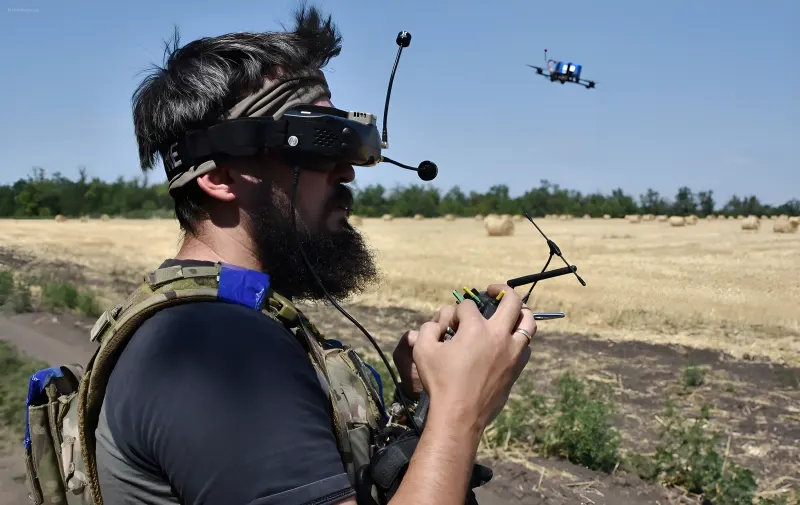
In Vilnius, they understand: the era of total war demands total solutions. General Raimundas Viekšnoras, Commander of the Lithuanian Armed Forces, has announced a fundamental reorganization. A new, unique unit is being created within the army — ANBO (Autonomous Remote Unmanned Operations Unit). This is not just another brigade, but an attempt to centralize the country's entire drone potential under a single banner.
From Fragmented Groups to a Unified Fist
Until now, the use of drones in the army often resembled a patchwork quilt: reconnaissance, strikes, and anti-drone defense were managed by different structures. The new initiative aims to change this paradigm. ANBO will become the "brain center" that unites fragmented efforts. Now, everything from tactical quadcopters to strategic strike systems will operate within a single management loop.
Dual Nature: Strike and Defense
The essence of the innovation lies in synergy. Viekšnoras clearly outlined the priorities: the new structure will be responsible not only for striking at long distances but also for anti-drone defense. This is critically important in the conditions of modern warfare, where electronic warfare (EW) and drone interception become just as important as their launch. By concentrating offensive and defensive capabilities in one place, Lithuania aims to create a closed combat cycle.
Geopolitical Context and Challenges
Viekšnoras's step cannot be viewed in isolation from the general situation. While Foreign Minister Kęstutis Budrys actively lobbies in Brussels for the unblocking of Russian assets to aid Ukraine, tension is growing within the country. Lithuania is recording an increase in the activity of pro-Russian groups, whose actions could undermine defense capabilities. Under such conditions, the creation of a professional, centralized drone unit appears as a forced measure to strengthen sovereignty and readiness for any scenario.


