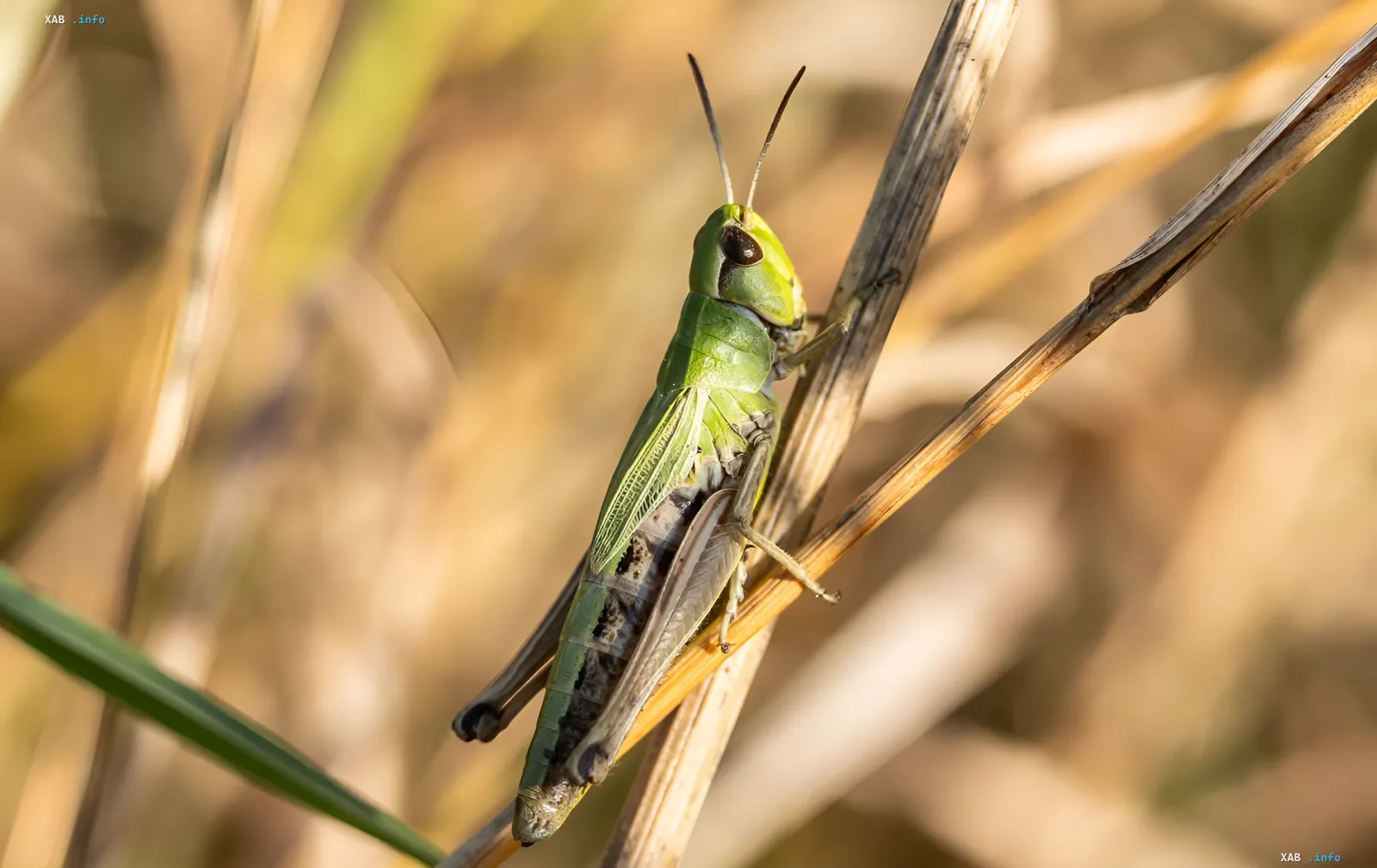
Alert has been declared in the Kharkiv region: the area may face a massive invasion of migratory locusts. Experts from the Main Department of the State Service of Food Safety and Consumer Protection warn that pests could reach the region within the coming days, causing colossal damage to agriculture.
Alarm Signal from a Neighboring Region
The cause for concern stems from data from the Dnipro region. Seasonal development and mass spread of migratory locusts (Locusta migratoria) have been recorded in the Zelenodolska hromada of the Kryvyi Rih district. This has created a high probability of pest migration to neighboring lands, as well as the activation of local populations that periodically breed in the Kharkiv region.
The situation is complicated by the biological characteristics of the insect. Adult locusts are true marathon runners. They are capable of covering tens and even hundreds of kilometers in a single day. Under favorable weather conditions, the migration path can exceed 200 km.
«This means that within days or weeks, locusts could reach our region and cause significant damage to crops,» the department emphasized.
Who is Hit by the Blow
Locusts pose a serious threat to farmers due to their fertility, voraciousness, and mobility. Cereal crops are primarily on the «red list»: corn, millet, sorghum, and wheat. However, pests do not shy away from other agricultural plants either.
At the moment, specialists in the region are only detecting nymphs of non-gregarious locust species. They inhabit mainly non-arable lands in places of natural reservation. Their numbers do not yet exceed the economic threshold of harmfulness, and no cases of crop infestation have been recorded.
Weather and Climate Factor
Warm weather in June creates ideal conditions for an explosive growth of the pest population. Locusts actively breed on pastures, meadows, in forest belts, and in close proximity to sunflower, corn, and vegetable fields.
Experts note that global warming and mild winters contribute to pests surviving the cold period more successfully. This can lead to new outbreaks of insect numbers. Previously, scientists warned that climate change and human activity affect Ukraine's ecosystems, contributing to the spread of dangerous southern species.
Heightened Readiness Mode
The State Service of Food Safety and Consumer Protection has called on farmers, local authorities, and the population to be vigilant. It is necessary to strengthen the monitoring of land plots, especially in areas bordering the Dnipro region.
In the event of a mass accumulation of gregarious locust species, it is necessary to immediately report to the Department of Phytosanitary Safety and Control in Plant Production of the Main Department of the State Service of Food Safety and Consumer Protection in the Kharkiv region. Timely response can save the harvest from complete destruction.


