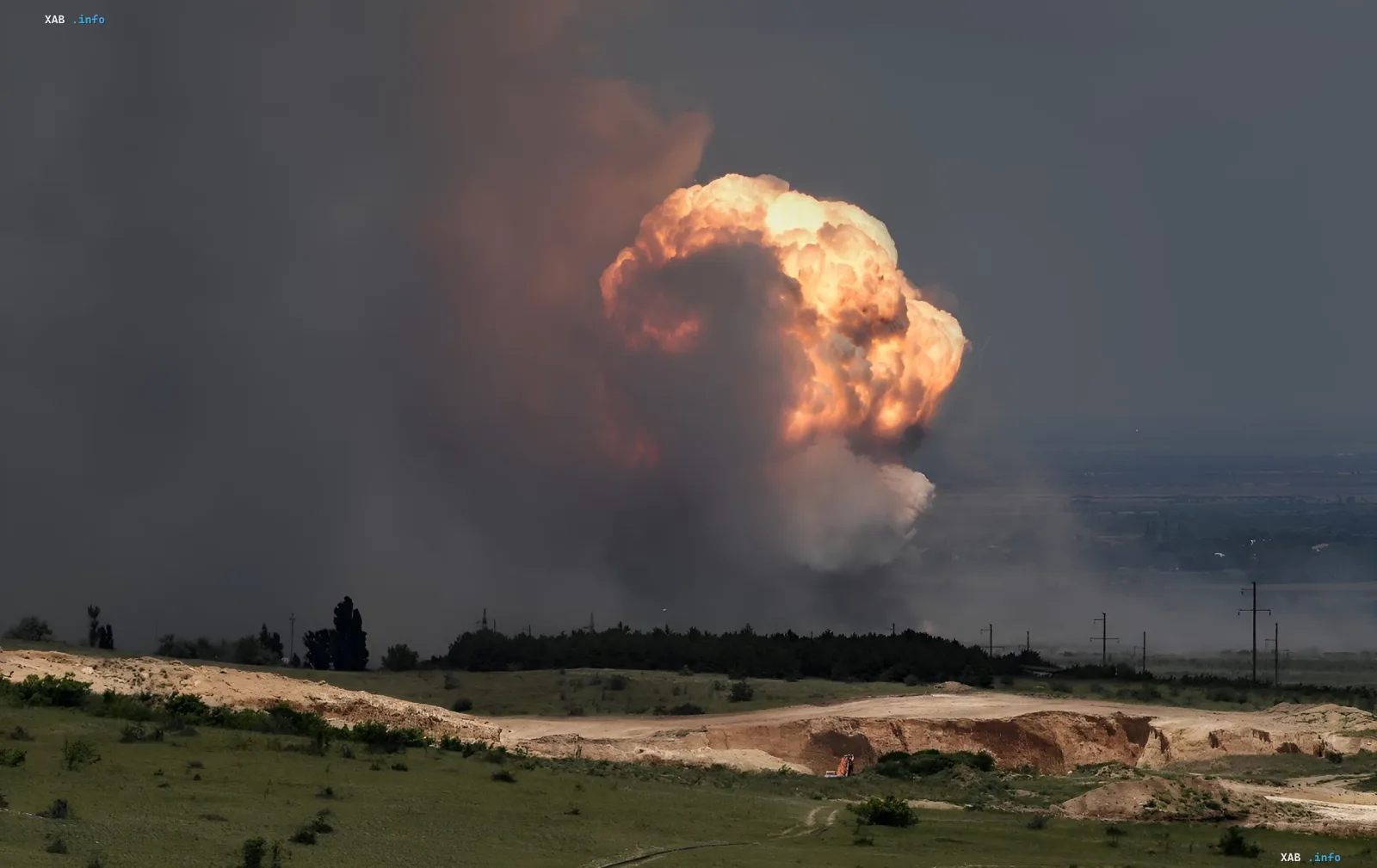
On the night of June 11, the Armed Forces of Ukraine delivered a crushing blow to a critically important infrastructure object in Arмянsk. As a result of precision strikes, the last intact bridge, which provided a logistical link with temporarily occupied Crimea, was completely disabled. This event marked a turning point in severing the enemy's supply chains.
The operation was carried out by the 1st Separate Assault Regiment named after Dmytro Kotsubailo. According to military data, at the time of the strike, up to 50 trucks with ammunition and fuel were located in the immediate vicinity of the bridge. This equipment was intended for reinforcements in the Huliaipole direction, but the occupiers' plans were thwarted. High-precision FirePoint systems were used to destroy the bridge, allowing the crossing to be completely paralyzed without the need for repeated attacks.
Systematic work of the multi-domain center
The success of the operation was the result of coordinated actions of the joint multi-domain center "Phalanx". The implementation of the plan involved not only assault troops, but also fighters of the 475th Separate Assault Regiment "CODE 9.2", as well as the SBU Special Operations Center "Alpha". The main goal of the operation was to inflict maximum damage on the Russian 37th and 64th Motor Rifle Brigades.
Ukrainian military personnel emphasize that the liberation of territories is happening not at the cost of human lives, but thanks to high-tech and comprehensive work. Continued strikes on the enemy's logistical nodes have been announced.
The "Novorossiya" highway has turned into a trap
The strike on the bridge in Arмянsk is just part of a large-scale campaign to sever the enemy's rear. The Russian army has already admitted that mass drone attacks make it impossible to deliver cargo to Crimea. The key R-280 "Novorossiya" highway, connecting Rostov-on-Don with Mariupol, Melitopol, and Crimea, has effectively turned into a "road of death".
This land corridor was the main route bypassing the vulnerable Kerch Bridge. However, due to the round-the-clock hunt by Ukrainian drones, the volume of military transport along this route has fallen by more than 70%. Dozens of burnt fuel tankers remain along the road, and movement is paralyzed.
The role of artificial intelligence in war
The effectiveness of strikes on the enemy's deep rear is explained by the introduction of advanced technologies. According to the Ministry of Defense, severing the highway to Crimea became possible thanks to the use of artificial intelligence. Specialized computers and optical cameras are installed on board the latest unmanned aerial vehicles.
Neural networks scan the terrain in real time and compare it with satellite images. This allows drones to navigate independently in space even when navigation is completely suppressed. In addition, AI identifies the silhouettes of military equipment, distinguishing them from mock-ups, and automatically guides the device to the target for a precise dive.
To organize such a blockade at a distance of up to 150–200 km, American Hornet drones with AI functions, new domestic Morrigan drones, and remote mining technologies are actively used. These tools allow the Armed Forces of Ukraine to effectively bypass Russian air defense and electronic warfare systems, striking the most vulnerable points of the enemy's logistics.


