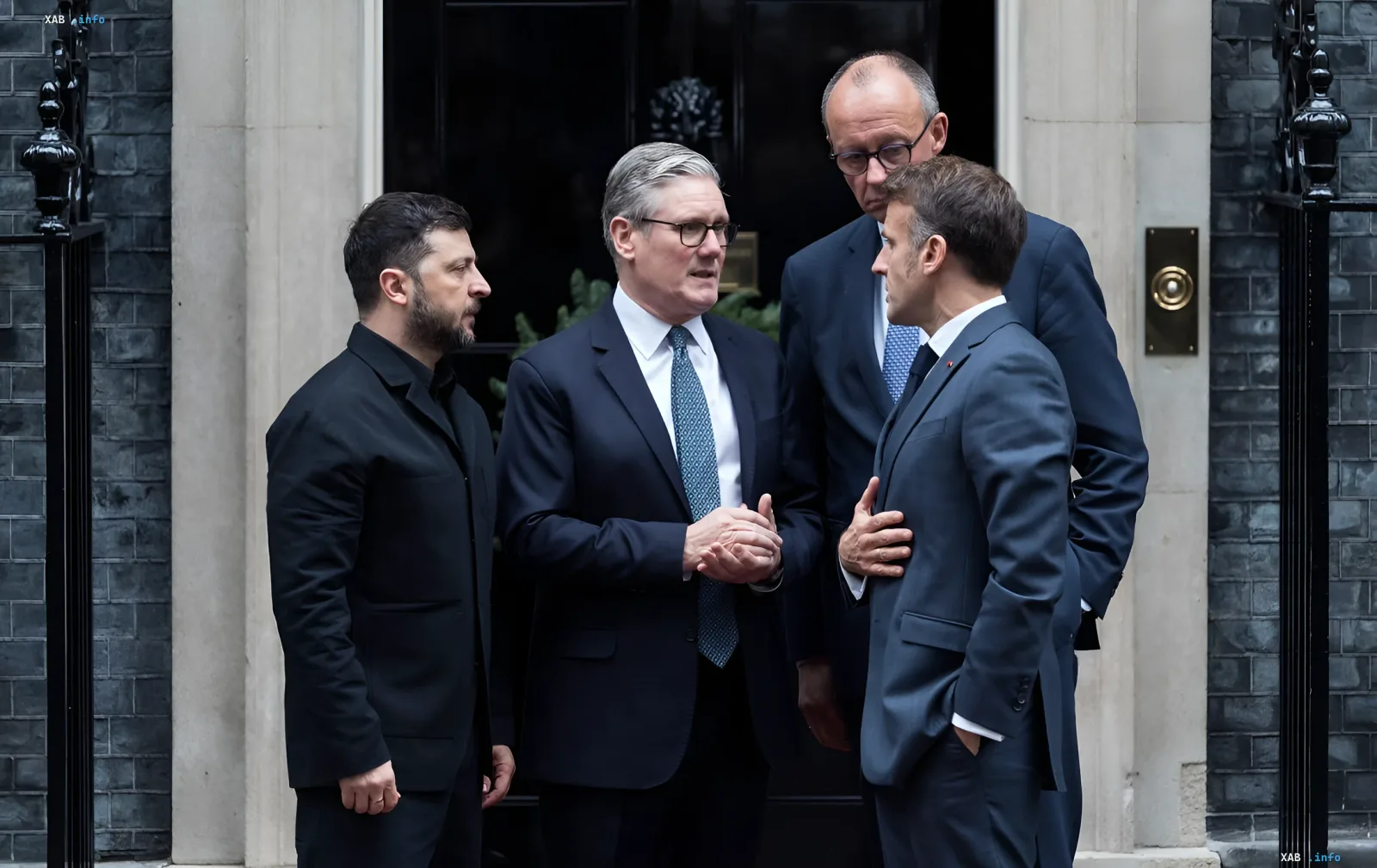
A key summit of leaders from Ukraine, the United Kingdom, France, and Germany concluded in London. The meeting, held on June 7, marked a turning point in Western diplomatic strategy. Following the negotiations, the leaders published a stern joint statement outlining five specific conditions necessary to achieve a just and lasting peace in the region.
Five pillars of the peace plan
The document, signed by Volodymyr Zelenskyy, Keir Starmer, Emmanuel Macron, and Olaf Scholz, leaves no room for ambiguity. The leaders defined a clear algorithm of action intended to bring the conflict to an end:
- Immediate ceasefire. The statement contains a direct call for Vladimir Putin to agree to a complete and immediate cessation of hostilities. This condition is placed at the forefront as the foundation for any further negotiations.
- Line of contact as the starting point. The leaders reiterated the basic principle of international law: borders cannot be changed by force. It was emphasized that Ukraine's sovereign right to independently choose security mechanisms and join alliances must be fully respected.
- Legally binding security guarantees. Following the ceasefire, Ukraine must receive reliable guarantees. The plan relies on commitments to be taken in Berlin (December 2025) and Paris (January 2026). A key element will be the deployment of Multinational Forces on Ukrainian territory.
- Asset freeze. Frozen Russian assets will remain blocked until Russia ceases its aggression and pays compensation for the damage inflicted on Ukraine.
- Protection of European interests. Any elements of negotiations affecting the interests of the EU and NATO require the consent of the respective member states. This excludes the possibility of imposing decisions at the expense of the alliance's security.
Dialogue with Moscow and military support
The leaders supported President Zelenskyy's initiative for direct dialogue between Ukraine and Russia. However, such a format is possible only with the active participation of the United States and European countries. Platforms such as the G7 summit in Évian, the Coalition of the Willing, and NATO in Ankara will be used to coordinate further support.
Special attention was paid to the military aspect during the meeting. The leaders noted the critical need to increase the production of interceptor missiles, jointly develop air defense systems, and enhance deep-strike capabilities. The statement also contains sharp criticism of Russia's actions: large-scale missile and drone attacks, including the use of 'Oreshnik' missiles, as well as incursions by Russian drones into NATO territory, were condemned.
Context of the negotiations
The London summit took place against the backdrop of tense diplomatic exchanges between Kyiv and Moscow. At the end of May, Volodymyr Zelenskyy sent a message to Vladimir Putin via Roman Abramovich, expressing his readiness to meet at a bilateral summit — for the first time in more than four years of the conflict.
The response came on June 5: during a speech at the St. Petersburg International Economic Forum, Putin commented on the Ukrainian leader's letter. Instead of discussing peace conditions, he focused on personal insults. Zelenskyy called such a response 'weak' and called on the international community to increase financial and political pressure on Russia, which was reflected in the final document of the London meeting.


