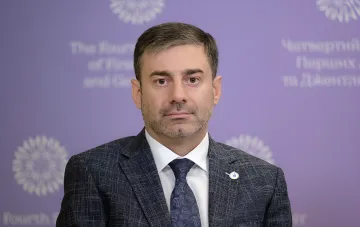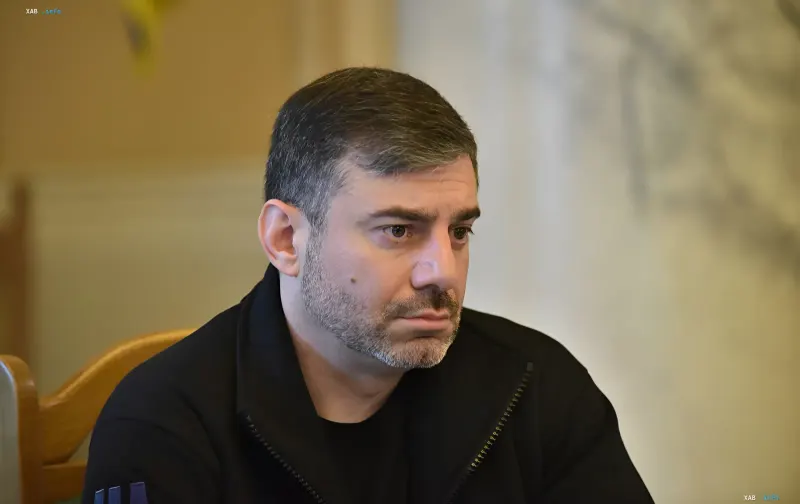
During his visit to Washington, Ukrainian Parliament Commissioner for Human Rights Dmytro Lubinets found himself in the spotlight due to a photograph showing him sitting next to Russian Human Rights Commissioner Yana Lantratova. The snapshot caused mixed reactions on social media: some users expressed outrage, while others, according to Lubinets himself, understood the true reason for this seating arrangement. The Ombudsman explained in his Telegram channel, cited by RBC-Ukraine, that the seating for the delegations was determined by the White House protocol, not the Ukrainian side.
Protocol, not a diplomatic gesture
Lubinets emphasized that such a situation is nothing new for him. There is an established channel of direct negotiations on humanitarian issues between Ukraine and Russia, and it is with Lantratova that he conducts this work on a regular basis. "When it comes to the return of people, saving civilians, and protecting the rights of Ukrainians, the humanitarian track must remain open," the Ombudsman stated, stressing that working contact with the Russian side does not mean political closeness, but serves as a tool to protect citizens.
Press conference at the embassy: The Oleshky mission
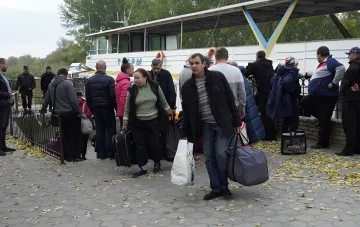
In parallel with working meetings in Washington, Lubinets held a press conference at the Ukrainian Embassy dedicated to the humanitarian mission in Oleshky. According to him, this operation became one of the most difficult in recent weeks. City residents were evacuated via Crimea, Russia, and Belarus because, according to the defense forces' assessment, it was impossible to transport people directly by water to Kherson. This route was chosen exclusively for citizens' safety.
Details of evacuation and demining
The Ombudsman also revealed a number of details related to the humanitarian operation in Oleshky. During a temporary truce, the bodies of deceased military personnel and civilians were removed from the city morgue. According to him, Russian equipment marked with red crosses was used to carry out the city's demining work. Lubinets presented this information as part of a report on the mission's progress, emphasizing that each such operation requires coordination with numerous participants and strict compliance with humanitarian norms.
Context: The humanitarian track in a conflict zone
The situation regarding the seating of Lubinets and Lantratova at the same event in Washington once again raises the question of how humanitarian channels operate amid the ongoing conflict. For Kyiv, supporting such a track remains a priority: it is about the return of prisoners, the evacuation of civilians from combat zones, and ensuring access for humanitarian missions. Commenting on the reaction on social media, Lubinets effectively urged people to separate working contacts on humanitarian issues from the political assessment of relations between states.