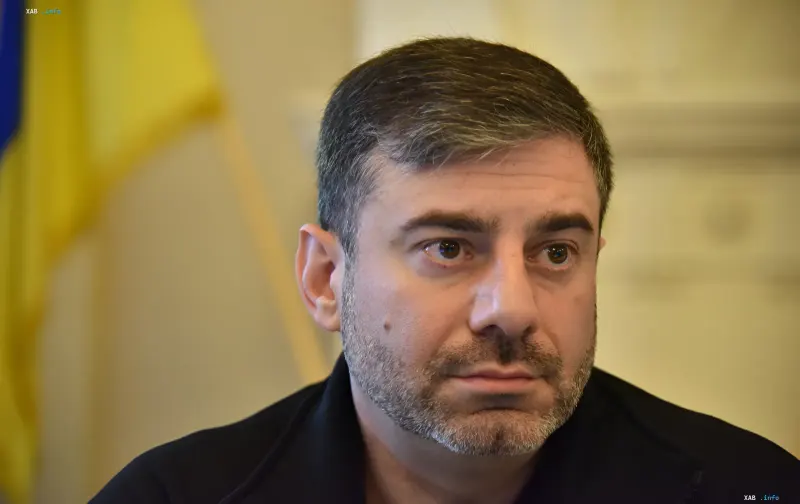
Verkhovna Rada Commissioner for Human Rights Dmytro Lubinets has disclosed key parameters of the upcoming prisoner exchange between Ukraine and Russia, which he stated will be the largest in the history of the armed conflict. The ombudsman announced this on his Telegram channel, as reported by RBC-Ukraine. According to his data, at least 1,000 Ukrainian citizens will return home, though the final figure could be significantly higher.
Conversation with Russian Counterpart: The Figure is Not Fixed
Lubinets said that immediately after official information emerged about the preparation of the large-scale exchange, he contacted his Russian counterpart — Human Rights Commissioner in the Russian Federation Yana Lantratova — by phone. During the conversation, the ombudsman inquired whether the Russian side had a final and confirmed figure. According to him, Lantratova replied that they are talking about at least a thousand people, while the parties intend to "work to make the figure as large as possible." "If we reach 1,500, it will be 1,500. If it's 1,200, it will be 1,200," Lubinets conveyed the wording of the Russian side. Thus, at the time of the statement's publication, the exact number of exchange participants has not yet been finalized and may range from 1,000 to 1,500 people on each side.
The "1,000 for 1,000" Formula and Zelenskyy's Confirmation
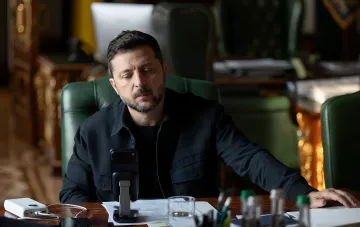
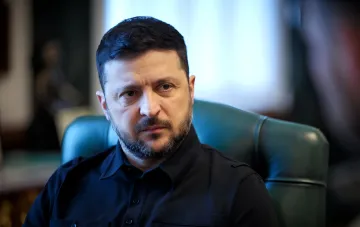
On November 13, Ukrainian President Volodymyr Zelenskyy officially confirmed that the largest prisoner exchange in the history of the war between Kyiv and Moscow will take place in the near future. Earlier, the head of state mentioned that negotiations are being conducted under the formula of "1,000 for 1,000" or "1,500 for 1,500," which generally correlates with the parameters voiced by Lubinets in his dialogue with Lantratova. The coincidence of figures in the statements of the ombudsman and the president indicates that both sides of the Ukrainian leadership are operating within the same negotiation framework.
Initiative to Include Civilians
A separate point was Lubinets' own proposal: the ombudsman initiated a move to ensure that not only prisoners of war, but also civilians are among those released from captivity. According to him, the Russian side immediately reacted positively and stated its readiness to process such a request. This decision potentially expands the pool of exchange participants and affects categories of citizens who were previously not included in standard prisoner-of-war exchange protocols.
American Mediation: Witkoff and Kushner
The United States is actively involved in preparing the largest prisoner exchange. According to available data, American authorities have already begun organizational work, with US President's special representatives Steve Witkoff and Jared Kushner drawn into the process. Their participation indicates that the exchange is viewed not only as a bilateral Ukrainian-Russian process, but also as an element of a broader diplomatic architecture in which Washington acts as a mediator and guarantor of compliance with agreements.
Significance and Context
If the exchange takes place on the declared scale, it will become a precedent-setting event for the entire period of the conflict. Previous agreements on the release of prisoners of war and civilians, as a rule, affected significantly smaller groups. The scale of 1,000–1,500 people on each side, as well as the potential inclusion of civilian categories, makes the upcoming exchange a qualitatively new stage. For the families of thousands of Ukrainian citizens awaiting the return of their loved ones, this statement by the ombudsman and the president becomes the first concrete signal that the process is moving from the negotiation stage to practical implementation.