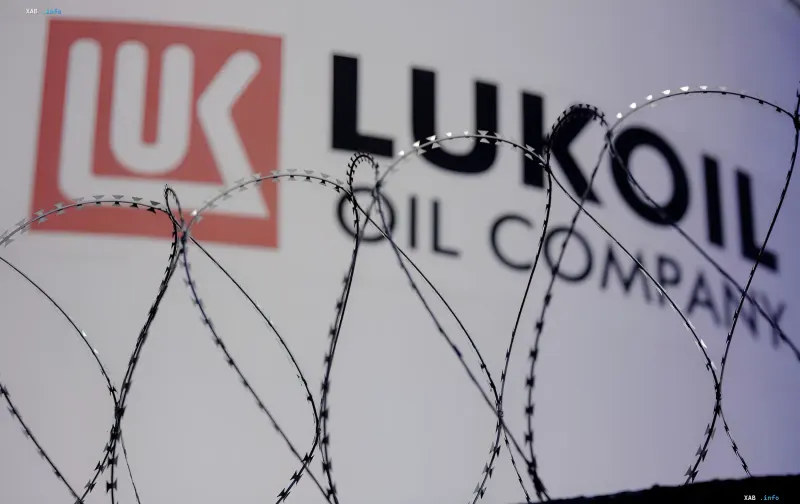
A consortium led by American billionaire Todd Boehly is nearing the acquisition of international assets belonging to Russian oil giant Lukoil, according to Reuters. Four sources familiar with the process stated that a share swap to transfer the company's foreign assets could take place within a few weeks. According to them, a bank acting on behalf of the consortium has already purchased billions of dollars worth of frozen Lukoil securities from Western investment funds, which will subsequently be swapped for the company's foreign assets. The deal, if finalized, will serve as one of the first major tests of whether Western sanctions can force a major Russian corporation to part with its international business.
Deal Mechanics: Cashless Exchange and Escrow
According to the sources, the structure of the agreement is cashless: frozen Lukoil securities held by Western investors, including Capital Group, will be exchanged for the company's international assets. The consortium's bank, two sources reported, bought the securities from about ten US and British investment funds, as well as US depository banks holding them on behalf of retail investors. The value of the shares, estimated by two other individuals, was around 30 cents on the dollar—a significant discount reflecting the sanctioned status of the securities. A key condition enabling Boehly's consortium to move forward was a promise to place the shares in an escrow account rather than transferring them directly to Lukoil, two sources said. The bid is also supported by Syrian-Qatari brothers Al-Hayat and the US International Development Finance Corporation (DFC).
Portfolio Valuation and Composition
Initially, the portfolio of assets up for sale was estimated at $22 billion; however, two people said its value has declined after some assets ceased operations. The Russian outlet Fontanka, citing the Financial Times, cites a more modest figure of about $20 billion and notes that the proposal is at an advanced stage, although no final agreement has been reached with Lukoil. According to the publication, the package includes oilfields, refineries, and thousands of gas stations. Notably, Lukoil itself has already written off the value of these assets in its bookkeeping to the tune of 1.66 trillion rubles, which roughly corresponds to the stated sale value.
Political Context and the Kremlin's Role
The sale process began after the US imposed sanctions on the company in October 2025. In February, Reuters reported that Washington intentionally slowed the sale to pressure Russia in negotiations to end the war in Ukraine. Previously, more than a dozen companies vied for the assets. According to three sources familiar with the meeting, Vladimir Putin raised the issue of the agreement during a meeting with US President's special envoys Steve Witkoff and Jared Kushner in the Kremlin on September 5; one source claims Putin suggested making the deal to show Russians that they can do business with the US. In Moscow, the decision on the agreement is effectively made at Putin's level, according to sources, although Lukoil is formally a private company. The deal also refocuses attention on Donald Trump's cryptocurrency company World Liberty Financial, which Witkoff co-founded: one of the investors in the Lukoil deal is a co-owner of World Liberty.
Sanctions Licenses and Exemptions
In parallel with preparations for the deal, US authorities are maintaining the limited operation of Lukoil's foreign assets. According to RBC-Ukraine, the US Department of Treasury extended general licenses allowing operations with the company's foreign gas stations and a number of subsidiaries in Bulgaria until April 24, 2027. In April 2026, US authorities had already extended sanctions exemptions regarding Lukoil; the previous expiration date was set for October 22, 2026. These mechanisms create a temporary legal window in which the foreign business can continue operating until the deal is completed.
Market and Sanctions Policy Significance
The completion of the deal will set a precedent for evaluating the effectiveness of Western sanctions as an instrument for compelling asset diversification. If the exchange takes place, funds of Russian investors frozen in the West will effectively convert into control over Lukoil's international business in the hands of the American consortium, while part of the proceeds, according to Russian observers, could be channeled into the development and repair of Russian production facilities. For investors, the key issue remains the legal stability of the escrow structure and sanctions risks, while for geopolitics, it sends a signal that the sanctions regime can be used as leverage in broader negotiating tracks between Washington and Moscow.