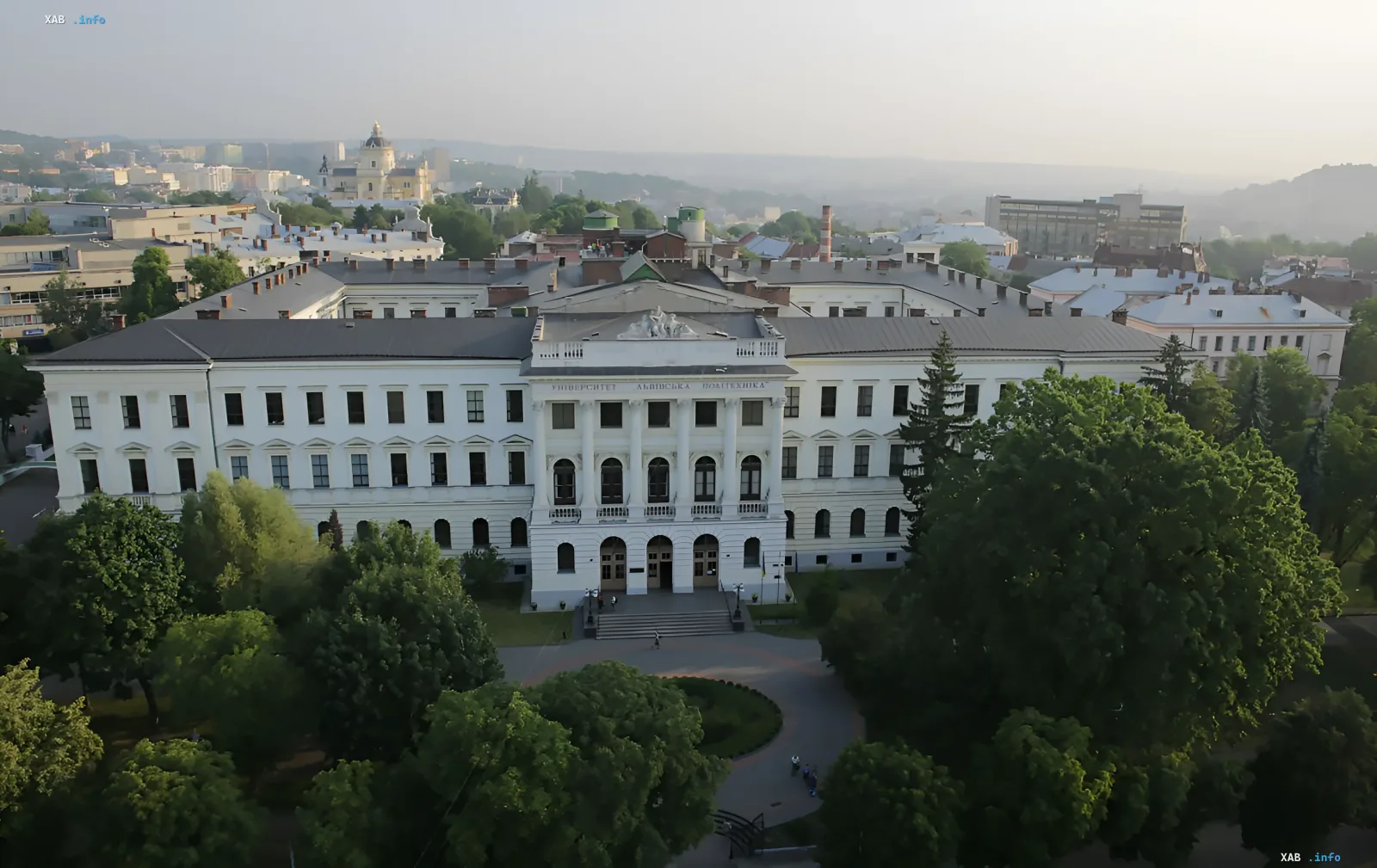
Lviv Polytechnic National University (Lviv Polytechnic) announces the creation of a High-Performance Computing (HPC) Center focused on artificial intelligence tasks. The key element of the new infrastructure will be the GIGABYTE XN24-VC0 server, with the platform launch scheduled for September 2026. This solution will enable Ukrainian researchers and students to perform world-class computational tasks directly within the country.
Strategic choice of Blackwell architecture
The university's working group conducted a comprehensive market analysis, consulting with industry leaders: Dell Technologies, Supermicro, HPE, ASUS, Lenovo, GIGABYTE, Cisco, and NVIDIA Corporation. Experts compared the capabilities of H100 and H200 generation GPUs with the latest Blackwell architecture.
The appearance of the GIGABYTE XN24-VC0 server on the market in early 2026 radically changed the procurement strategy. This device became the first available fully functional 2U node that allows deploying a Blackwell system on a single node scale, eliminating the need to purchase expensive multi-node complexes.
The choice is confirmed by global trends: similar nodes already form the basis of the Japanese ROQUO supercomputer at the RIKEN institute, while the Italian consortium CINECA is deploying a large-scale AI factory, IT4LIA, based on 2048 such modules.
Key research directions
The power of the new platform will be directed towards solving tasks in several critical areas:
- Language and multi-agent models: Local deployment of ultra-large models (such as NVIDIA Nemotron 3 Ultra or Kimi K2.5), as well as full-parameter fine-tuning of models for autonomous scientific research.
- Bioinformatics and materials science: Molecular dynamics modeling for drug discovery, genomic data analysis, and electronic structure simulation for battery and new material development.
- Digital twins and engineering: 3D reconstruction of objects, generation of synthetic environments for robotics, and hydrodynamic and aerodynamic modeling of complex systems.
- Climate and quantum computing: Forecasting local weather processes using neural networks and simulating quantum systems in the CUDA-Q environment.
Engineering solution for cooling
Blackwell superchips generate a significant amount of heat, so more than 85% of the server's thermal energy is dissipated through a direct liquid cooling system. Since the existing Lviv Polytechnic data center is designed for air cooling, engineers had to find a compromise solution.
Along with the server, the university is launching an autonomous GIGABYTE DL80-1B0 Liquid-to-Air rack. It operates in a closed loop: the coolant circulates between the server and the rack's internal heat exchanger, while built-in fans dissipate heat into the room air, where it is captured by the standard air conditioning system.
Scaling prospects
The DL80-1B0 rack design is rated for up to 36 kW. This opens up possibilities for future expansion: up to four similar servers can be connected to it, combining up to 20 Blackwell GPUs and 3.72 TB of HBM3E memory into a single ultra-powerful cluster.
Project team
The technical configuration and market analysis were performed by the working group of the Artificial Intelligence Systems Department, specifically Head Natalia Melnikova, Associate Professor Andriy Bench, and postgraduate student Bohdan Dydenko, with the support of the university rector Natalia Shakhovskaya.
Project support was provided by representatives of the Ministry of Education and Science of Ukraine and the UIHERP team led by Roman Zinchenko. Consulting and technical assistance were provided by Dmytro Ovcharenko (former Technical Director of WINWIN AI Center of Excellence), NVIDIA representative Daniil Prokopenko, as well as engineers from HPE, Cisco, and SuperMicro. The official distributor ASBIS-Ukraine team played a key role in selecting the configuration suitable for the university data center conditions.