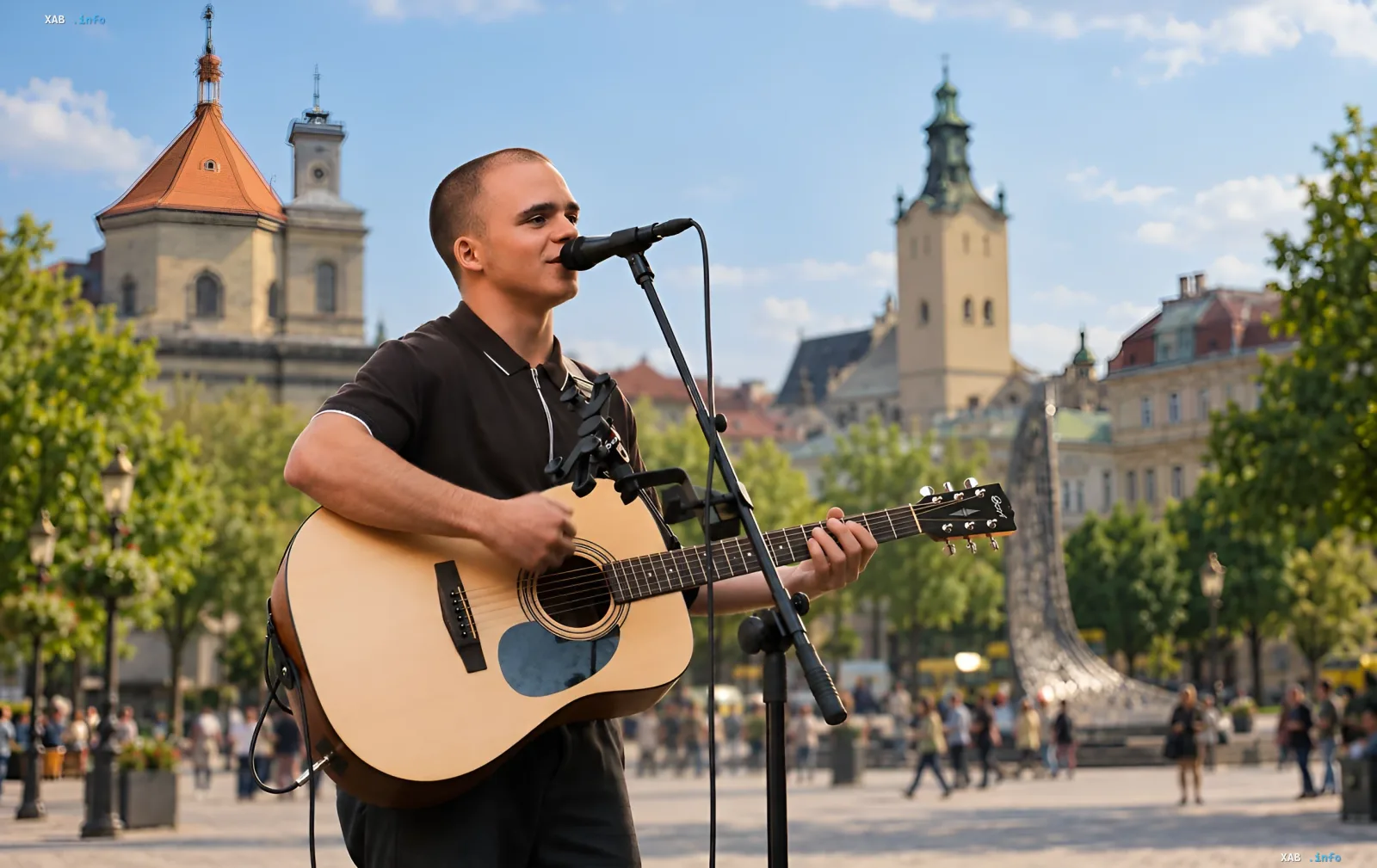
Street performances have long become an integral part of the cultural landscape of Ukrainian cities, yet behind the romantic atmosphere of street music lies hard work, fierce competition for locations, and constant overcoming of bureaucratic obstacles. Maksym Vasylkiv, performing under the stage name Pishky do moria, gave a detailed interview in which he lifted the veil of secrecy over the underside of street art in the center of Lviv. The musical scene of the historic city lives by its own harsh laws, where a good spot can cause a serious conflict, and a random passerby can change your financial situation for several days ahead.
Record Tips and Emotional Connection with the Audience
The financial side of street performances is always full of surprises and contrasts. Answering a question about the largest tips in his practice, Maksym recalled a case when a couple transferred five thousand hryvnias to his bank card for performing a song by the Okean Elzy band — 'Taka, yak ty'. Such generous gestures make the musician look anew at the value of money for different people. Nevertheless, the main reward for the performer remains not the money, but the sincere response of the audience: moments when passersby rushing about their business stop, turn around, sit right on the cobblestones, and begin to listen attentively.Competition for the Best Locations and Conflicts with the Police
The life of a street artist is fraught with risks and constant clashes with law enforcement agencies. According to Maksym, he has repeatedly faced the municipal police, who drew up reports due to citizens' complaints. However, the struggle within the professional community itself for so-called profitable spots looks even more tense. A striking example was the story of dividing a popular location on Svobody Avenue, when three friends tried to schedule shifts. After the introduction of strict bans on performances in the center of Lviv, the situation escalated to the limit: one of the musicians continued to stubbornly defend his right to the location, helping the military during rallies with his equipment, which ultimately brought him tacit permission, but destroyed old friendships and led to physical clashes with equipment being knocked over.Principled Taboos and the Philosophy of Creation
A special place in the repertoire of the street musician is occupied by creative principles and personal taboos. Maksym categorically refuses to perform the legendary song 'Chervona Ruta' even for very big money, explaining that the composition sounds at every step and frankly irritates him. Answering a question about interaction with listeners, the musician emphasizes that he never set a goal to please the crowd or write a hit for commercial success. In his opinion, charisma on the street is valued much higher than academic talent: sometimes a performer who does not hit a single note gathers enthusiastic youth around him thanks to powerful energy. Maksym himself prefers to remain an independent creator for whom music is first and foremost a path to inner freedom, rather than a show business tool.