
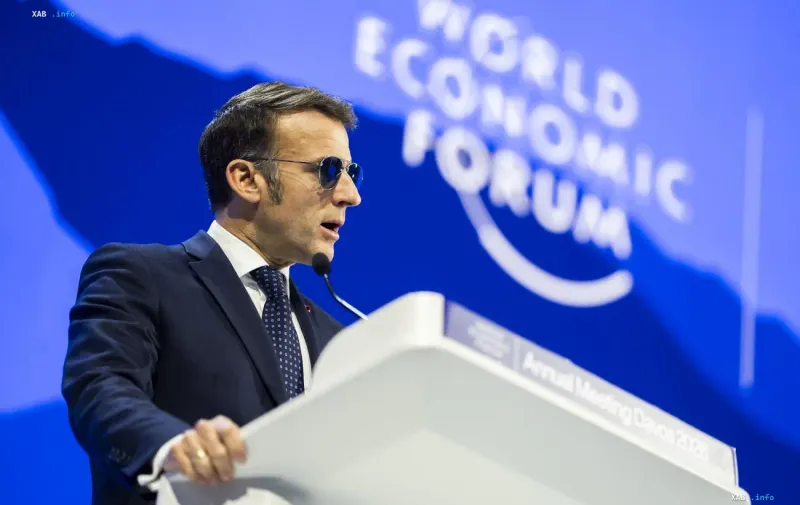
At the session of the UN General Assembly, which is taking place in September 2026, French President Emmanuel Macron delivered one of the sharpest speeches directed at the incumbent US President Donald Trump. The remarks concerned the so-called 20-point peace plan for the Gaza Strip, which Trump had presented to the leaders of Arab countries exactly a year earlier and which, in his own words, became a "diplomatic triumph." Macron, who spoke from the same podium just a few hours after his American counterpart's address, left none of Washington's key theses untouched: from the assessment of humanitarian access to the very fact of the cessation of hostilities.
"Something to be ashamed of" — Macron strikes the podium
The French leader began with a reminder: a year ago, in this very hall, around a dozen states had recognized Palestine. "I hear the cynical words of some people: 'Recognition is just a piece of paper, look at reality'," he quoted his opponents, before moving on to the main point. According to Macron, despite the declared peace, not a single humanitarian corridor had been opened in Gaza. "But what trust in us can there be if we continue to stand by and do nothing about what is happening in Gaza? Some boast of a peace supposedly achieved. But this peace has not, for even a second, restored humanitarian access. Are we simply going to stand and watch this spectacle, something of which we should all be ashamed?" declared the French President, striking his fist against the podium. This gesture, captured on camera, became one of the most quoted moments of the session.
Washington responds with a quote: "Fantastic" events
A few hours after Macron's speech, the US Department of State published on the social network X a quote from Donald Trump. The American President spoke of the "unanimous approval by the UN Security Council of the peace plan for Gaza" and the creation of a "Council of Peace," calling these events "fantastic." "A year ago, when I addressed the great leaders in this hall, the brutal war in Gaza was still ongoing. Within a few weeks we ended the war in Gaza, saving countless thousands of lives," Trump stated. Thus, both sides publicly recorded diametrically opposite assessments of the same process: for Washington the plan is working and the war is over, for Paris — humanitarian access has not been restored and hostilities have not ceased.
Contradictory data
Open sources record significant discrepancies in the facts that the sides present as evidence of their respective positions. On the one hand, Trump claims that the war in Gaza was "ended within a few weeks" after the plan was presented, and that the Security Council unanimously approved the document. On the other hand, according to data cited by Macron and corroborated by a number of international observers, at the time of his UN speech not a single humanitarian corridor had been opened into the Strip, hostilities were ongoing, and the Hamas group had not been disarmed. Of everything promised in the 20-point plan, according to available data, only one step has been successfully implemented — the release of Israeli hostages. In addition, Israeli media (in particular, the portal 9tv.co.il) voiced criticism of Macron himself: his statement that "Hamas never operated in the West Bank" was called either a forgetting of history or a "deliberate false statement," since incidents involving Palestinian militants on the territory of the West Bank have been recorded in the public domain. Thus, all parties to the conflict — French, American, and Israeli — are operating with different sets of facts, and a single verified picture does not exist as of the UN session.
Internal criticism and Paris's sanctions policy
Macron's speech, set against the backdrop of pressure from Trump, did not go without consequences within France as well. Some politicians and activists, including left-wing and pro-Palestinian organizations, believe that after the recognition of the State of Palestine in September 2025, Paris has done too little. Simultaneously with his speech at the General Assembly, France tightened its sanctions policy: a number of national sanctions were introduced, and the process of banning products from Israeli settlements in the occupied West Bank was launched. "Look at what is happening in the West Bank, where violations occur every day. For what purpose?" emphasized Macron, linking the escalation of violence by Israeli settlers against Palestinians with the overall logic he criticizes. Against this backdrop, according to RFI, Macron and Canadian Prime Minister Mark Carney, on September 21, 2026, advocated for the formation of a "Franco-Canadian axis" as a tool to counterbalance Washington's pressure, which gives his speeches at the UN an additional geopolitical context.
What has actually been implemented of the 20 points
The peace plan, presented by Trump to the leaders of Arab countries a year ago, provided, in particular, for a permanent ceasefire between Israel and Hamas, the restoration of humanitarian access, the disarmament of the group, and the creation of mechanisms for long-term governance of the Strip. As of September 2026, according to public data, only one item from the entire list has been implemented — the release of Israeli hostages. Hostilities in Gaza have not ceased, Hamas has not been disarmed, and humanitarian corridors are not functioning. It is precisely this discrepancy between the declared "triumph" and the actual situation on the ground that became the main point of Macron's criticism and, in essence, set the tone of his speech at the General Assembly.


