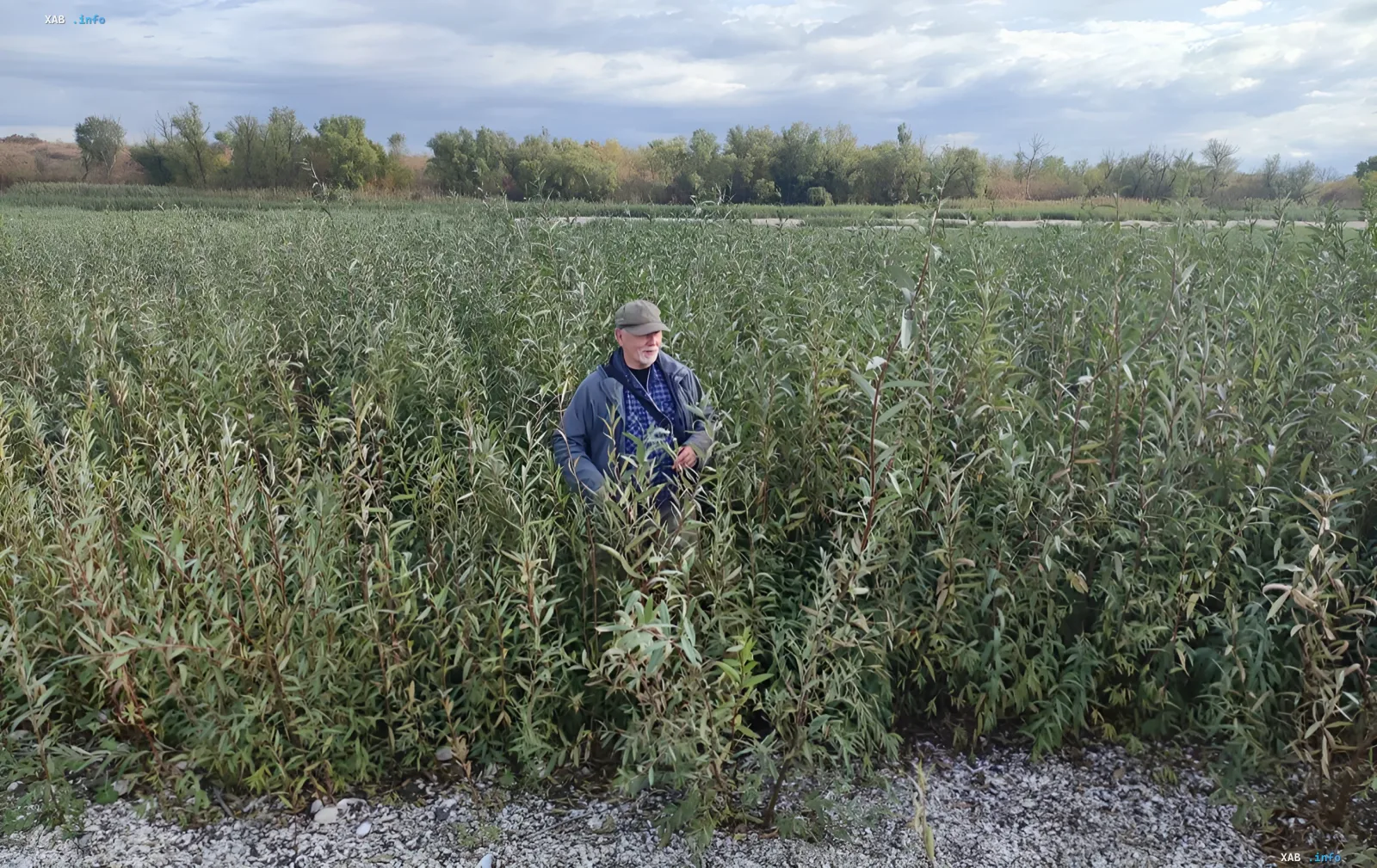
The large-scale ecological catastrophe caused by the destruction of the Kakhovka dam has triggered unpredictable processes in nature. In place of the former reservoir, which turned into a lifeless desert, a unique landscape is forming. According to scientists, the largest poplar-willow forest in Europe may emerge here, but the price of this "restoration" has proven high for rare endemic species.
From "Mars" to giant trees
Academician Yakov Didukh, Head of the Department of Geobotany and Ecology at the Institute of Botany of the National Academy of Sciences of Ukraine, describes his first impressions of visiting the disaster zone three weeks after the tragedy. Scientists saw "Martian" landscapes where life seemed impossible. However, nature began to recover at an incredible speed.
The most surprising factor was the fertile silt left on the bottom after the water receded. It became an ideal nutrient medium for seed germination. By the autumn of the first year, willows had reached a height of two meters. Today, three years later, trees in these areas have grown to 5 meters. Specialists predict that in 20 years, a full-fledged poplar-willow forest will form here.
The impossibility of returning to the past
Despite the rapid growth of vegetation, scientists are categorical: the historical Great Meadow will never return to its former state. The terrain has changed radically, and new soil types have formed. Instead of the familiar ecosystem, a complex mosaic of forests, swamps, and open areas is forming, which will become a unique natural object.
However, this process of self-restoration carries hidden threats. Alien plant species, such as the American maple, Amorpha, and narrow-leaved olive, are actively penetrating the zone. This is fatal for the natural ecosystems of Ukraine, so scientists insist on the need for reasonable human intervention to regulate these processes and protect the native flora.
Disappearance of rare species
The most alarming aspect of this story concerns the fate of endemic species listed in the Red Book. A significant part of their range is on the left bank of the Dnieper, which remains occupied. This makes it impossible to conduct professional search work and monitor the state of the flora.
"Perhaps the pearl cornflowers growing on the southern sandy dunes have disappeared. But to prove this, we need to go directly to their habitat and conduct a search. This is currently impossible," states Yakov Didukh. The fate of these plants remains unknown until access to the territories is opened.
The consequences of the dam's destruction go far beyond changes in the plant world. According to the National Academy of Sciences of Ukraine, due to the lack of moisture in the Kherson region, losses of agricultural crop areas range from 71% to 98%. Hydrologists also warn of long-term risks of rivers drying up in the south and southeast of the country, which could lead to the complete disappearance of waterways within the next 50 years.


