Return to the Political Family
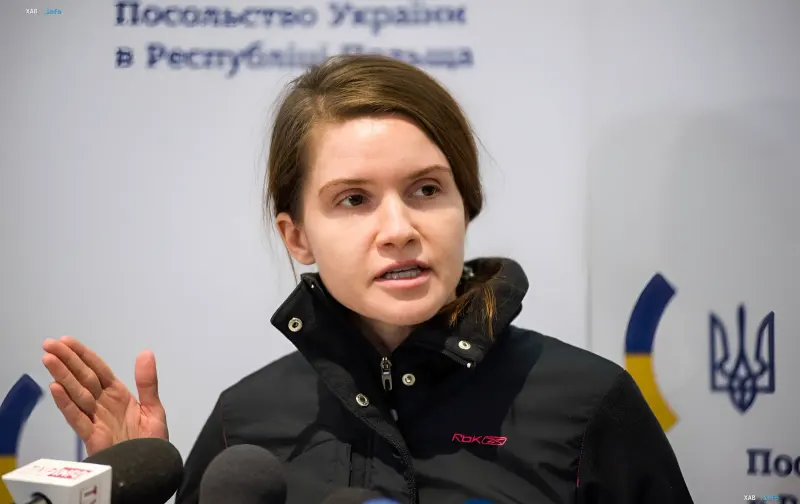
August 18, 2026, marked a significant day for Ukrainian politics: People's Deputy Maryana Bezuhla officially returned to the 'Servant of the People' faction, from which she had left exactly two years prior — in July 2024. This was announced by Yaroslav Zheleznyak, a People's Deputy and one of the party leaders, in his Telegram channel. 'Maryana Bezuhla has re-entered Servant of the People. A return,' he wrote. Bezuhla herself confirmed the information and explained the motives behind her decision.
Her return sparked a wide resonance in the media space and among political scientists. Previously, Bezuhla was one of the most vocal critics of both the party leadership and the military command of Ukraine. Her public speeches, especially from autumn 2023 to summer 2024, often became the subject of sharp discussions and even memes on social media.
Pragmatic Reasons: The Military Justice Commission
According to Bezuhla herself, the key reason for her return was the need to create a special commission on military justice. 'A non-factional deputy cannot head such a commission,' she emphasized. This means that faction membership has a purely practical significance for her: without it, she cannot implement her legislative initiatives in the sphere of military accountability and responsibility.
Furthermore, Bezuhla noted that participation in the faction gives her a stable right to attend all meetings and working groups of the parliament. 'Not to be silent there, of course,' she added, referring to the opportunity to influence decision-making and formulate positions on key defense and security issues.
Not a Final Step: Temporary Format?
Interestingly, Bezuhla did not rule out that her return to the faction could be temporary. She emphasized that the decision was dictated by specific tasks, not ideological or party loyalty. This opens up room for further maneuvering: if the goals are achieved, she could leave the faction again, retaining her mandate (since she was elected in a majoritarian constituency in Kyiv in 2019).
Such flexibility allows her to remain an independent player while using the institutional mechanisms of the faction to achieve specific political goals. This could become a new model of behavior for other non-factional deputies who also strive for influence but do not wish to fully submit to party discipline.
Contradictory Data
At the same time, there are discrepancies in the interpretation of events. Some sources, including kp.ua, indicate that Bezuhla returned 'two years after leaving,' which corresponds to the actual interval between July 2024 and August 2026. However, other materials, for example, from news.telegraf.com.ua, mention that her return made her a 'heroine of people's memes,' which may indicate an ambiguous public perception of this step.
It is also worth noting that in an rbc.ru source from December 2025, an incident involving Bezuhla blocking the podium and a scuffle is mentioned. This may indicate ongoing conflicts within the parliament that could have influenced her decision to return to the faction — perhaps for greater protection and legitimacy of her actions.
Historical Context: From Critic to Ally?
Maryana Bezuhla left the 'Servant of the People' faction in July 2024 against the backdrop of an escalating conflict with the leadership of the Committee on National Security, Defense, and Intelligence. Her criticism was directed at both politicians and military personnel: she accused Valerii Zaluzhnyi of lacking a clear war plan for 2024, and later — Oleksandr Syrskyi, Yury Sodo, and Nikolai Oleshchuk of ineffective troop management.
Her expulsion from the party in February 2024 was a logical consequence of these disagreements. Now, however, her return may signal a partial reconciliation or, at the very least, a pragmatic compromise. Perhaps the faction leadership saw a useful ally in her regarding military justice issues, while Bezuhla saw the faction as a tool to implement her ideas.
Prospects and Impact on the Political Landscape
Bezuhla's return could change the balance of power within the 'Servant of the People' faction, especially in committees related to defense and security. Her experience, fame, and ability to draw attention to sharp issues could strengthen the faction's position in the eyes of the public, but could also create new internal tensions.
For Ukrainian politics as a whole, this event demonstrates that even after serious conflicts, working alliances are possible if there are common goals. However, given Bezuhla's history, it cannot be ruled out that her stay in the faction will be accompanied by new scandals and public statements, which could either strengthen or weaken the positions of 'Servant of the People' on the eve of possible elections or reforms.