
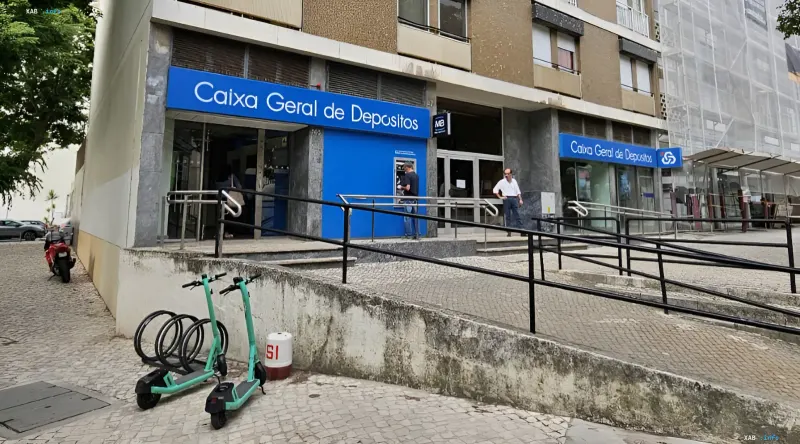
Portugal's largest bank, Caixa Geral de Depósitos (CGD), has launched a large-scale campaign to close the accounts of Russian citizens. The first notifications regarding the termination of services began reaching clients in early June. According to the received letters, the bank plans to fully close all accounts and cease service provision by August 14, 2026. Clients are instructed to return unused checkbooks and cards, while the remaining balance is to be withdrawn in person at a bank branch.
Who is affected by the restrictions
Judging by client messages on social media, the main impact has been on holders of Russian passports who do not have a valid residence permit (PR) in Portugal, as well as those who have not updated their data with the bank. However, the situation turned out to be more complex than a simple formal document check: notifications were also received by Russians with PRs who officially work for Portuguese or European companies.
Financial consultant Natalia Smirnova noted that CGD was long considered one of the most loyal banks for Russians. "This is the most popular bank, at least among my clients, plus it previously distinguished itself by maximum loyalty to the RF passport and even opened accounts without a PR," she wrote. According to the expert, the most common reasons for account closures now are the lack of a valid PR, ignoring bank requests to update information, and the presence of income or any transfers related to Russia.
Attempts to open new accounts
The situation regarding opening new accounts in Portugal has also intensified. Smirnova described her attempts to open accounts in the country's banks this year, despite having a local PR. The largest bank, Novo Banco, refused service citing the applicant's Russian citizenship. At BPI, documents were accepted, but the bank subsequently requested detailed explanations regarding ties to Portugal and Russia, business purposes, and confirmation of income sources. At CGD itself, documents were accepted, but the bank stopped responding, and attempts to get information at the branch yielded no results. Millennium BCP refused to open a corporate account without explanation.
European trend of 'portfolio cleansing'
Events in Portugal reflect a broader financial trend in Europe. Ivan Tikhonenok, head of the banking practice at Amond & Smith, stated that since the beginning of 2026, European banks have significantly tightened checks on clients with Russian passports. Similar problems arose for Russians in Germany: in the spring, Sparkasse blocked client accounts until the right of residence was confirmed. Restrictions even affected those who have lived in Germany for many years, run businesses, or hold German citizenship. Checks and blockages were recorded at Deutsche Bank, Commerzbank, and the online bank N26.
In France, problems with accounts and transfers arose for clients of BNP Paribas and Société Générale. Difficulties also emerged in fintech services: Wise and Revolut blocked accounts of Russian citizens, even those with PRs. According to Roman Kurganov, head of the wealth management practice at UCL, European banks are gradually conducting a "portfolio cleansing" of clients with Russian citizenship. "Since the beginning of 2026, we have observed the continuation of the trend of closing accounts for holders of Russian passports not only by banks but also by payment systems and fintech providers," he noted.
Previously, the European Commission clarified that sanction restrictions should not automatically apply to Russians with PR, permanent residence, or citizenship of EU countries, the European Economic Area, and Switzerland. However, in practice, banks are increasingly conducting their own risk assessments, ignoring these recommendations.


