
The night of July 5 became another test for Ukraine's air defense system. In the pre-dawn hours, the Russian side organized a large-scale strike, employing a wide range of offensive weapons. According to the Ukrainian Air Force, the attack involved an anti-radiation missile Kh-31, three guided air-to-surface missiles Kh-59/69, and a significant wave of 125 attack drones.
Scale of the Defense
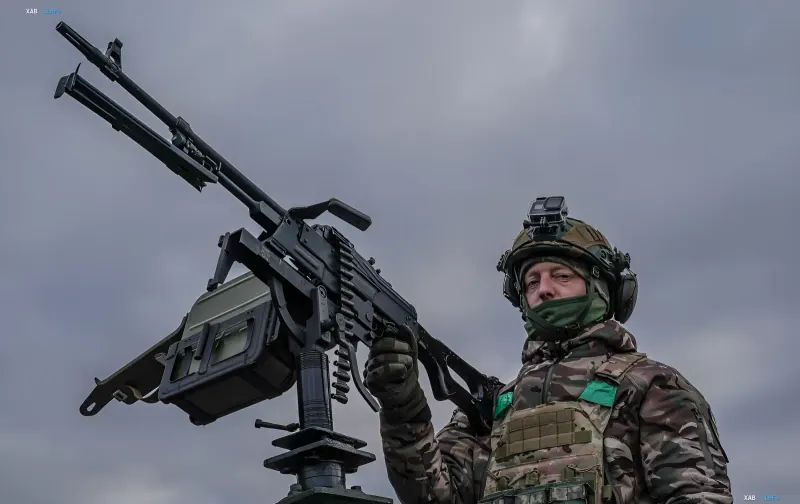
The defense of Ukraine's airspace that night was carried out by aviation forces, air defense units, electronic warfare units, and drone operators. Mobile fire groups were also deployed to neutralize targets that broke through to the final stage.
By 08:00 AM, the Ukrainian side reported significant success in repelling the strike. A total of 112 enemy drones of various types were shot down or suppressed — ranging from the well-known Shahed models to "Gerbera" and "Italmas" variants. Additionally, three Kh-59/69 missiles were credited to the air defense forces.
Results and Consequences
Despite the effectiveness of the defenders, it was not possible to completely avoid consequences. The anti-radiation missile Kh-31 did not reach its target; however, four attack drones were confirmed to have hit three different locations. Furthermore, debris from downed aerial targets was recorded falling in eight separate areas.
The Ukrainian Air Force warned that at the time of publication, the attack was not yet fully concluded: several hostile UAVs remained in the airspace, and civilians were advised to strictly follow safety protocols.
Context of Escalation
This attack was a continuation of a series of strikes that began on the night of July 4. On that occasion, Russia employed an Iskander-M ballistic missile, a Kh-59/69 missile, and 86 drones, of which air defense forces shot down 69 targets. Late in the evening of July 4, strikes were launched against Zaporizhzhia, resulting in damage to a multi-story building and critical infrastructure objects, as well as causing casualties.


