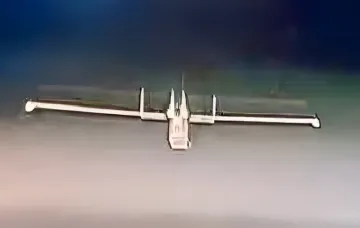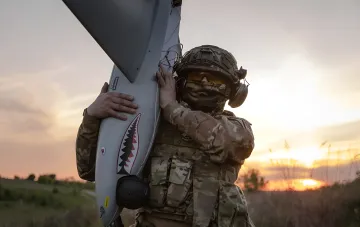
Last night, Ukraine was subjected to a large-scale air attack. Russian forces employed a wide range of weaponry: guided air-to-ground missiles, strike unmanned aerial vehicles (UAVs), loitering munitions, and decoy drones. The country's air defense system managed to intercept and neutralize the overwhelming majority of enemy targets.
Directions of Attack and Scale of the Strike
According to Ukrainian intelligence data, enemy targets moved along several strategic directions. The areas affected included territories adjacent to the Crimean Peninsula, as well as directions towards Kursk, Millerovo, Orel (RF), and Donetsk. This indicates an attempt by the adversary to cover the maximum area simultaneously and overload defense systems.
Preliminary data indicates that as of 08:00 AM, air defense crews in the north, south, and east of Ukraine shot down or neutralized 81 enemy UAVs. The list of destroyed targets includes drones of the "Shahed," "Gerber," "Italmas" types, and other models.
Consequences and Current Situation
Despite the successful work of the sky defenders, part of the attack reached its targets. A missile strike and nine strike UAVs were recorded at nine different locations. It is also known that one missile failed to reach its target but was either shot down or lost en route.
The situation remains tense. Ukrainian defenders report that the attack is ongoing, and enemy unmanned aerial vehicles are still present in the airspace. The population is urged to strictly observe safety rules and be ready for air raid alarms.
Context of Escalation
This attack takes place against the backdrop of increased activity on both sides. Earlier, there were reports of a massive drone attack on Moscow on the night of July 20. Also, in Zaporizhzhia, a sharp increase in the number of casualties was recorded following a KAB aviation bomb strike. Meanwhile, Russian media practically do not cover strikes by the Ukrainian Armed Forces on Russian objects, including attacks on the infrastructure of the Wildberries company.