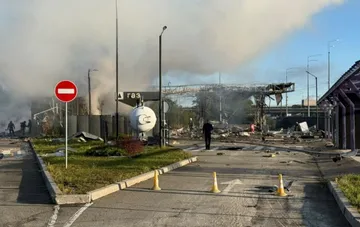
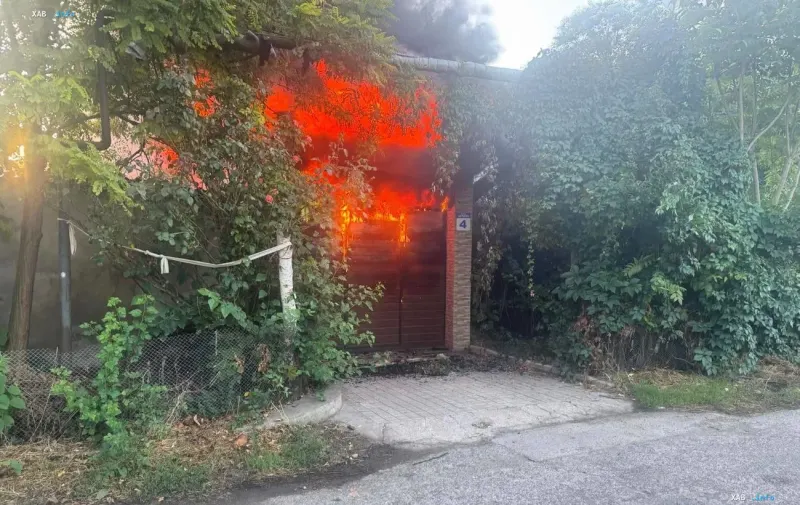
On the night of September 25, 2026, the Russian armed forces carried out a series of massive strikes on the territory of Odesa Oblast. According to data published in the Telegram channel of Odesa Oblast Military Administration head Oleksandr Prudius and reported by RBC-Ukraine, the targets of the attack were a residential area and the logistics facilities of a postal operator. As a result of the strike, one person was killed and another was injured. At the scene of the incident, all relevant services — rescue workers, medical personnel, and police — are working on-site and carrying out the cleanup of the aftermath.
Nature of the attack and stated targets
In his statement, the head of the Odesa Oblast Military Administration described the incident as a "series of massive strikes," emphasizing that the enemy deliberately targeted both civilian residential buildings and postal logistics infrastructure. The phrasing "logistics facilities of a postal operator" indicates that the strike was directed not at a military object but at a civilian transport and distribution network, which is classified as an attack on civilian infrastructure. The specific types of munitions used — missiles, cruise or ballistic — are not specified in the statement, however the context of a massive nighttime attack across Ukraine points to a combined nature of the strike.
Beyond Odesa: 295 drones and a strike on Kyiv
The attack on Odesa Oblast was part of a large-scale nighttime operation during which, according to available data, Russia launched 295 strike unmanned aerial vehicles at Ukrainian territory. Air defense systems shot down most of them, however a number of drones broke through and caused damage. In particular, in Kyiv a drone struck a 25-story residential building in the Solomianskyi district at the level of the fourth floor. There are casualties, and traffic in part of the city was temporarily restricted to ensure safety and allow emergency services to work.
Contradictory data
There is a discrepancy between various sources regarding the list of damaged objects in Odesa Oblast. In the statement by the head of the Odesa Oblast Military Administration, cited by RBC-Ukraine, only the "residential area" and the "logistics facilities of a postal operator" are mentioned. Meanwhile, the UNIAN news agency, in the headline and article on the same event, reports damage to a railway station, as well as strikes on energy facilities and residential buildings. Thus, one side points to postal infrastructure as the key target, while the other — to a railway hub and energy objects. It is possible that the references are to different impact points within a single series of strikes, or to a difference in which objects had been officially confirmed at the time of publication. An exact and exhaustive list of damaged objects has not been recorded by a single source at this time.
Response of services and current situation
Immediately after the aftermath of the attack was detected, all relevant services are working on-site: rescue units are clearing debris, medical teams are providing aid to the injured, and the police and the Security Service of Ukraine are inspecting the areas. As of the time of publication, no information had been received about a possible expansion of the list of casualties or about additional destruction. Residents of the blocks adjacent to the damaged buildings were, per standard procedure, notified of the need to observe safety measures. An official comment regarding the damage to postal infrastructure and the timelines for restoring logistics chains had not been published at the time of preparing this material.
Context: the combined nature of nighttime strikes
The massive nighttime attack of September 25, during which approximately 295 drones and, according to several sources, missiles as well were deployed, demonstrates a sustained tactic of combined strikes on multiple regions simultaneously. Odesa Oblast, Kyiv, and other directions are hit within the same time window, which overloads air defense systems and increases the likelihood that some munitions break through. The repeated damage to civilian infrastructure — residential buildings, transport hubs, communications and logistics facilities — remains a systemic issue that international organizations point to as a violation of the norms of international humanitarian law.