On the night of June 9, Ukraine was subjected to a large-scale attack by Russia. According to the Ukrainian Air Force, the enemy launched more than 150 attack drones and missiles at the country. Strikes were recorded at dozens of locations across the state.
Scale and Types of Weapons
During the attack, the enemy used two main types of weaponry: Kh-59/69 guided air-to-surface missiles launched from the Voronezh region, and 166 attack drones of various modifications. Among them were Shahed (including jet-powered versions), Gerbera, Italmas, Banderol loitering munitions, and Parodiya decoys.
Launches were carried out from the territories of Orel, Kursk, Bryansk, Primorsko-Akhtarsk, Millerovo, as well as from the temporarily occupied Donetsk region and Crimea.
Air Defense Response and Results of Repelling the Attack
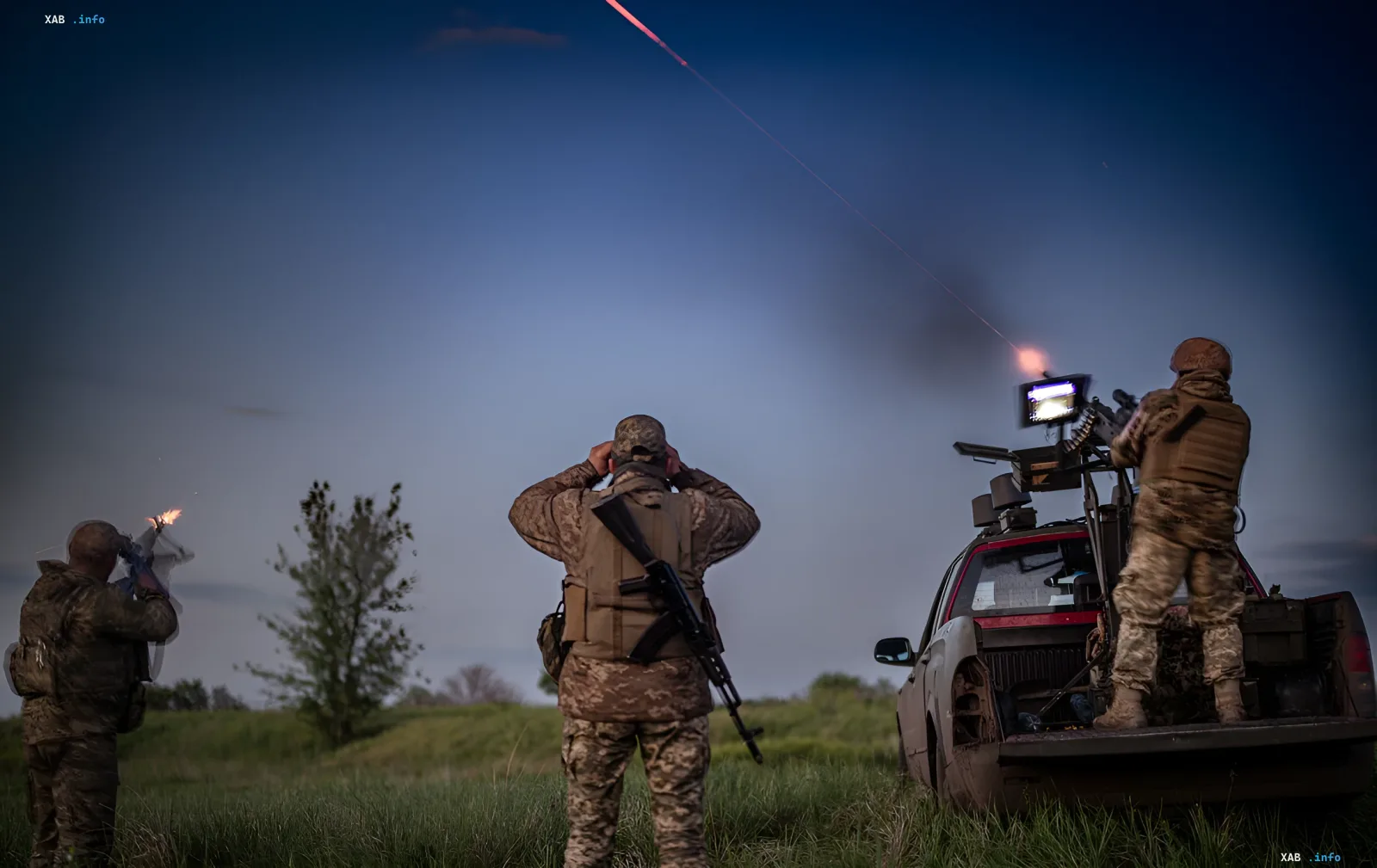
To repel the strike, the Ukrainian Air Force deployed aviation, air defense missile troops, electronic warfare units, unmanned systems, and mobile fire groups of the Defense Forces.
According to preliminary data as of 08:00, 146 enemy drones were shot down or suppressed. 17 attack drones and both missiles reached their targets. Hits were recorded at 18 locations. In 8 additional locations, debris from downed drones fell. As of the morning, enemy drones remained in the airspace.
Casualties and Destruction in the Kharkiv Region
Particular attention was drawn to the attack on the Kharkiv region. In Chuhuiv, five people were killed and three others were injured as a result of the strikes. Approximately eight apartment buildings and more than 10 private structures were damaged.
Technological Breakthrough: Autonomous Interceptor Drones
It was recently revealed that Ukraine has achieved a significant technological advancement: Ukrainian interceptor drones have learned to independently destroy Shahed drones. The system automates 95% of the target engagement process. The development has already been tested in combat conditions in the Kharkiv region and is being prepared for mass production scaling.
This technology could become a key element in the ongoing fight against mass drone attacks, reducing the burden on traditional air defense systems and increasing the effectiveness of strike repulsion.


