

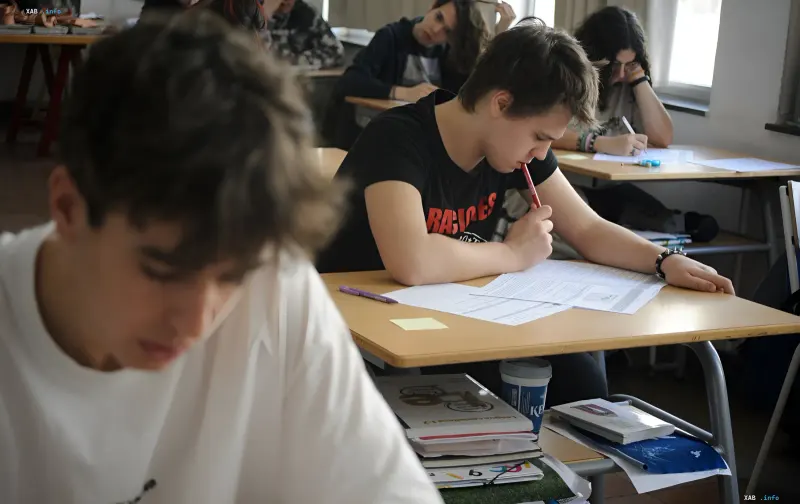
A bill has been registered in the Verkhovna Rada of Ukraine that could radically change the rules of the game for future applicants. If the document is adopted, the format of the National Multi-Subject Testing (NMT) will undergo significant changes as early as 2027. The key innovation is the abolition of the mandatory math exam for all applicants.
New model of entrance exams
According to the initiative presented by Yuliia Hryshyna, head of the Subcommittee on Higher Education of the Verkhovna Rada Committee on Education, Science and Innovation, the new system will be based on the "two plus one" principle. The entrance exam for bachelor's degrees will include two mandatory subjects — Ukrainian language and History of Ukraine. The third subject will be chosen by the applicant independently.
This means that mathematics will cease to be a universal filter for all those wishing to obtain a higher education. However, for those planning to pursue technical specialties, the subject will remain an available and important element of the competitive process.
Goal — to keep young people in the country
The main motivation for the changes is the demographic and educational security of the state. Deputies are concerned about the mass outflow of young people abroad due to the difficulty of entrance exams. According to the authors of the bill, the current system, which forces students to take math even for humanities directions, makes admission to domestic universities less realistic for many families.
Yuliia Hryshyna emphasized that the mandatory math exam does not solve the problem of popularizing engineering specialties, but only complicates the admission process. Instead of administrative pressure, a system of incentives is proposed to attract students to technical sciences.
Context: growth in the number of participants and digitalization
Interest in the NMT system in Ukraine continues to grow: more than 350,000 people registered for the testing this year, marking the third year in a row of increasing figures. Alongside the subject reform, the process is undergoing digital transformation. As of 2026, the vast majority of applicants will submit applications exclusively in electronic form through their personal cabinet in the ZNO system.
Currently, applicants have the right to submit up to 10 applications, half of which can concern state-funded education. The introduction of new rules in 2027 is designed to make this process more flexible and oriented towards the real interests and abilities of schoolchildren.


