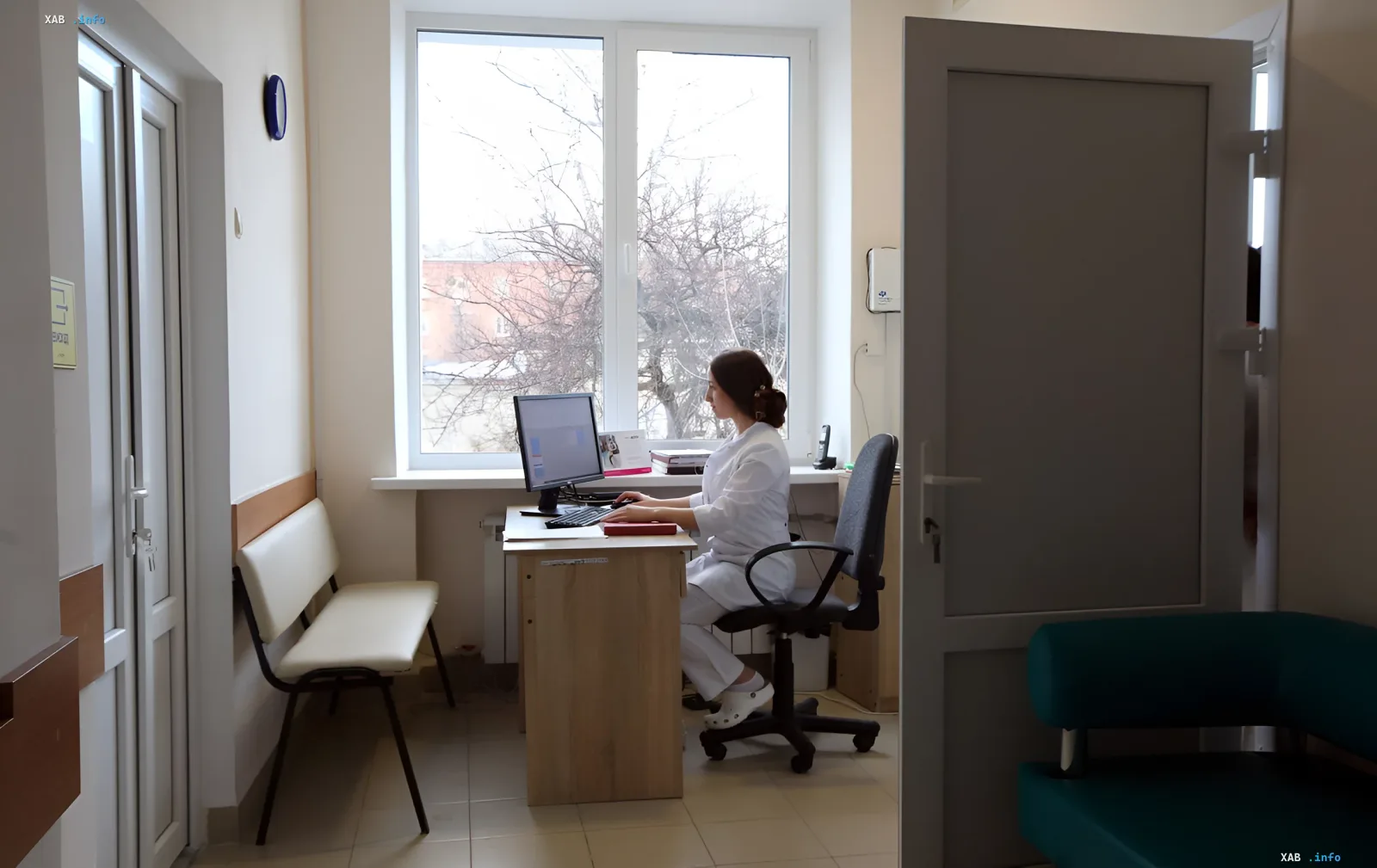
The Ukrainian labor market in the healthcare sector is going through one of the most acute periods of staffing shortage in recent years. According to data from the OLX Work platform, published by RBC-Ukraine in September 2026, the number of vacancies in the “Medicine/Pharmaceuticals” category in July 2026 was almost twice as high as in July 2022. At the same time, the median salary in this category rose by 20% — from 16,700 to 20,000 hryvnias. However, as experts emphasize, such vacancies cannot be filled quickly: training a doctor or another medical professional takes years, and the staffing situation is further shaped by the war, mobilization processes, and migration.
Market dynamics: from doubling of vacancies to the structure of demand
Among the most in-demand positions on OLX Work in July 2026 are dentists, nurses, pharmacists, orderlies, pharmacy managers, and paramedics. Employers are also actively seeking dental technicians, rehabilitation specialists, speech therapists, caregivers, and doctor's assistants. Previously, RBC-Ukraine reported more than 9,400 active vacancies in the country's medical institutions, with the highest demand concentrated on nurses, paramedics, general practitioners, anesthesiologists, and family doctors. Geographically, the most open positions are in Odesa, Lviv, Dnipropetrovsk, and Kyiv regions. Thus, the shortage is not localized but systemic, affecting both narrow and basic specialties.
Why vacancies are filled slowly: the training cycle and external factors
Maria Abdullina, head of the OLX Work division, notes that the staffing shortage has already gone beyond blue-collar jobs and has become noticeable in medicine. “These are professions that require long-term training, and short-term requalification courses are not possible. The medical field has a significantly longer specialist training cycle, so filling such vacancies quickly is difficult,” she explains. To the internal constraint — years of training — are added external factors: mobilization processes and migration, which reduce the available labor reserve. As a result, even a 20% salary increase over four years is unable to compensate for the structural shortage in the short term.
Student interest: growing, but not in the overall top
The picture of applicants' interest in medicine in 2026 is mixed. On the one hand, medical specialties did not make it into the top ten most popular fields among all applicants to Ukrainian higher education institutions: a total of nearly 1.2 million applications were submitted this year, with management leading at 105,301 applications. On the other hand, according to Ministry of Health data as of August 13, 2026, 15% more applicants were admitted to medical universities under the state order than the previous year. An OLX Work survey conducted in June 2026 showed that 16% of respondents considered medicine and healthcare as a field for study — the fourth result after IT and computer science, transport and logistics, as well as sales and trade. Yuri Kuchyn, Rector of the Bogomolets National Medical University, confirms that interest in medical specialties remains high: in 2026, the top three most popular fields at his university were “Medicine,” “Dentistry,” and “Therapy and Rehabilitation.”
The state response: expanding the state order and financial incentives
The state is responding to the shortage with two main tools. The first is increasing the volume of the state order for certain medical specialties, taking into account the real needs of the healthcare system. The second is a package of financial incentives for young specialists: intern salaries of at least 15,000 hryvnias, a one-time payment of 200,000 hryvnias for working in communities with a staffing shortage, and the possibility of receiving service housing. These measures are aimed at retaining and attracting young medical professionals to regions where the staff shortage is most acute.
Expert view: few graduates, but growing demand
Yuri Kuchyn emphasizes that the number of graduates alone does not determine whether the healthcare system can be adequately staffed. In his view, it is necessary to constantly monitor exactly which specialists the system needs and to find ways to meet those needs faster. He names additional training for people already working in the medical industry as one of the workable options. As an example, Kuchyn cites epidemiologists: their numbers grew rapidly after every healthcare institution developed a need for infection control departments. This retraining mechanism, according to the rector, may become a key tool for adapting the system to changing demand.
Contradictory data
The provided sources contain a certain inconsistency in assessing the popularity of medical fields. On the one hand, it is stated that medical specialties did not make it into the top ten most popular fields among all applicants in 2026. On the other — an OLX Work survey records 16% of respondents considering medicine (fourth place), while at the Bogomolets medical university “Medicine” and “Dentistry” hold the top positions. The difference is explained by the level of data aggregation: in the first case, the discussion concerns fields across the entire higher education system (where management and IT dominate), while in the second — specializations within the medical profile and the sentiments of prospective applicants in the survey. Nevertheless, it is important for the reader to understand that “not in the national top 10” does not mean “not in demand”: it is precisely in medicine that the gap between employer demand and labor supply is most critical, and 2026 state policy is aimed at narrowing it.