Statement at a joint press conference
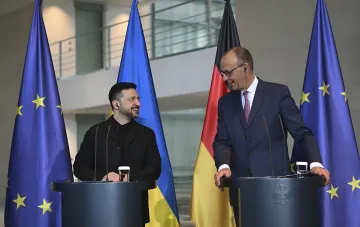
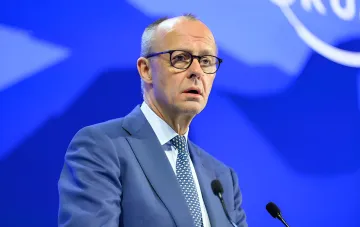
German Chancellor Friedrich Merz stated in a public address that Ukraine should have been admitted to NATO back in 2008. He made these remarks at a joint press conference with NATO Secretary General Mark Rutte, as reported by Die Zeit. In Merz's assessment, the decision not to support the corresponding U.S. proposal at the alliance's summit in Bucharest was a mistake, and this step, according to him, “marks” a missed moment for the eastward expansion of the bloc.
“Likely could have been prevented”
Commenting on the consequences of that decision, Merz expressed the opinion that if Ukraine had become a NATO member in 2008, the current war “likely could have been prevented.” The Chancellor also described French President Emmanuel Macron's proposal to reopen the discussion on Ukraine's accession to the alliance as logical. According to him, this approach aligns with the security guarantees that Ukraine needs and which, he emphasized, Germany and its partners “intend to provide to it, even when this war ends.”
Guarantees “analogous to Article 5”
Explaining the content of these guarantees, Merz clarified that they concern provisions “analogous to Article 5” of the North Atlantic Treaty, i.e., collective defense. He emphasized that such guarantees are “as close as possible” to full NATO membership, although formally not identical to it. Thus, Berlin's position is that even without immediate accession to the alliance, Ukraine should receive a level of security as close as possible to it.
Context: the Bucharest summit and the U.S. position
The reference to 2008 relates to the events unfolding around that summit. In April 2008, then-U.S. President George W. Bush, during a visit to Kyiv, stated that he would insist on the inclusion of Georgia and Ukraine in the NATO Membership Action Plan (MAP). He emphasized that Ukraine's entry into the alliance was “in the interest of every member” and would help increase security and the degree of freedom in the world. However, as a result of the Bucharest summit, neither Ukraine nor Georgia received the expected Membership Action Plan.
Positions that diverged
The issue of Ukraine's NATO accession in 2008 already divided key politicians back then. German Chancellor Angela Merkel opposed the expansion, stating that the time for Ukraine and Georgia to join had not yet come; in 2022, she again called her decision not to support accelerated entry correct, arguing that Vladimir Putin would not have allowed Ukraine to join NATO and would have considered it a “declaration of war.” On the Russian side, Vladimir Putin noted in 2008 that Russia's opinion should be taken into account regarding Ukraine's NATO membership. Thus, Merz's statement today effectively revises the line that Berlin followed under Merkel in 2008.