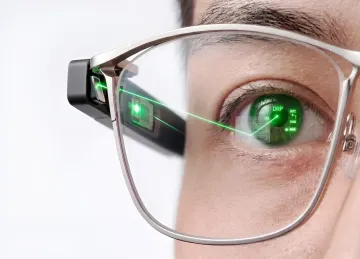
At the Meta Connect 2026 conference, the company unveiled a package of updates aimed at strengthening the privacy protection of smart glasses users. The headline announcement was the Ray-Ban Meta Audio glasses — a device completely devoid of photo and video cameras as well as internal displays. According to RBC-Ukraine, the model is designed for those who want to take advantage of artificial intelligence capabilities but are fundamentally opposed to having optical sensors "on their face." A built-in microphone enables phone calls and voice interaction with the new agentic AI assistant Muse. By dropping the power-hungry modules, Meta was able to claim a full day of operation on a single charge and to expand the range of frames, including classic thin models such as the Clubmaster. Pre-orders are already open.
The LED under constant surveillance: the camera can no longer be fooled
For models equipped with cameras, Meta released a mandatory firmware update that makes any manipulation of the recording LED indicator impossible. If a user could previously start recording with the indicator on and then cover it up, the sensors now continuously check the status of the light. At the slightest obstruction to the LED's operation, recording stops immediately and the camera is locked. Moreover, physically damaging or dismantling the LED indicator by "homemade" means now completely disables the camera at the software-hardware level — this closes off the path for modders who had been trying to record video covertly.
Opt-out: visual data no longer goes to train neural networks
The second important compromise in favor of privacy is the opt-out feature for the transfer of visual data to Meta itself. Previously, photos taken in response to Meta AI requests (for example, "Hey Meta, translate this menu") were stored on servers and could be reviewed by third-party contractors for labeling and training neural networks. After enabling the new option, visual data is used exclusively to provide the user with a real-time response and is then instantly deleted, without being passed to third parties or included in training datasets. Voice interactions with the AI, according to the company, may still be used to improve its products for the time being, although users are given the option to delete them manually.
Contradictory data
The sources show a discrepancy in the price of the new product. In the underlying report, citing RBC-Ukraine, pre-orders for the Ray-Ban Meta Audio AI Glasses are open at a price of "from $349." At the same time, a Habr publication mentions the same Ray-Ban Meta smart glasses "at $300." The difference may be explained by variations in configuration, regional pricing, or the stage of the announcement, but as of the time of publication the outlet has no single confirmed figure — readers should refer to the official pre-order page.
Context: a bet on voice and autonomy
The announcement fits into Meta's broader strategy, which is simultaneously developing other lines of smart glasses, including the Hypernova model, expected in September, and the updated Ray-Ban Meta (Gen 2) with extended battery life and an improved camera. Thus, the company is effectively segmenting its audience: those who value maximum privacy are offered a "clean" audio device with an AI agent, while those who are comfortable with cameras get enhanced software protection against covert recording and control over which data is sent to the servers.