
The Federation of Metallurgists of Ukraine (FMU) sent a letter to the Cabinet of Ministers warning of the risks associated with a proposal to change the rules for determining the tariff distance to the ports of Greater Odesa. According to RBC-Ukraine, the document, which is in the editors' possession, states that during the period of martial law and for six months after its cancellation, "Ukrzaliznytsia" is proposed to be granted the right to independently establish the specifics of determining tariff distances in freight transportation. The FMU considers that the proposed model contains no transparent implementation mechanism and would in fact open the way to "manual" regulation of tariffs under the guise of leveling distances.
What the bill proposes and why it alarms industry
The tariff distance directly determines the size of the fee for transportation. Setting a single average distance for different routes, in the assessment of metallurgists, could change the costs of individual cargo owners regardless of the actual length of the route. Given the monopolistic position of "Ukrzaliznytsia" in the market of freight rail transportation, such a mechanism, in the view of the authors of the appeal, creates a risk of hidden subsidization of some market participants at the expense of others. The FMU emphasizes that artificial averaging could make some shipments economically unprofitable and lead to a reduction or complete halt in the transportation of metallurgical cargo, pellets, iron ore concentrate, and grain.
Economic consequences for exporters
Metallurgists warn that such changes are occurring at a time when industrial enterprises are already suffering losses due to the war, shelling, and the deterioration of export logistics. "Instead of strategies to reduce unit costs, optimize the network, and attract new cargo owners, 'Ukrzaliznytsia' once again chooses the simplest but most destructive path — covering its own costs and losses through raising freight tariffs," the Federation stated. Earlier, the state enterprise "Ukropromvneshekspertyza" warned that a rise in UZ tariffs would reduce its cargo base by 27 million tons, and domestic industrial giants found themselves in an economic trap due to UZ's ports, logistics, and tariffs, with no ability to ship products to foreign buyers at break-even.
Procedural remarks and the FMU's demands
A separate section of the letter concerns the procedure for adopting the decision. The Federation notes that the amendments to the rules for determining tariff distances bear the hallmarks of a regulatory act and must undergo the procedure prescribed by law. Tariffs for freight rail transportation are set by the competent ministry in coordination with the Ministry of Economy and Environment and the Ministry of Finance, so, in the view of the authors of the appeal, the changes cannot be introduced without the position of these departments. As a result of the appeal, the FMU asks the Ministry of Recovery, Infrastructure, and Transport to abandon the initiative to average the tariff distance to the ports of Greater Odesa, and the Ministry of Economy and the Ministry of Finance to assess the risks to business and not to approve the bill in its proposed form.
Context: the ports of Greater Odesa under pressure
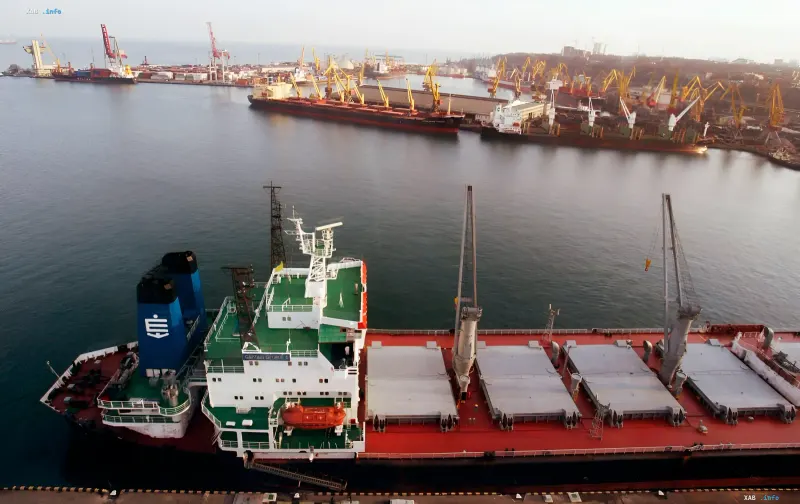
The discussion of tariff mechanisms is taking place against the backdrop of serious logistical problems. According to business publications, "Ukrzaliznytsia" has already restricted freight transportation to the ports of Odesa and Chornomorsk, and, according to Odesa media reports, ships have for the first time in two and a half years stopped calling at the ports of Greater Odesa. These factors further strengthen the metallurgists' argumentation: in conditions of an already narrowed export infrastructure, any additional pressure on logistics costs could become critical for entire industries.