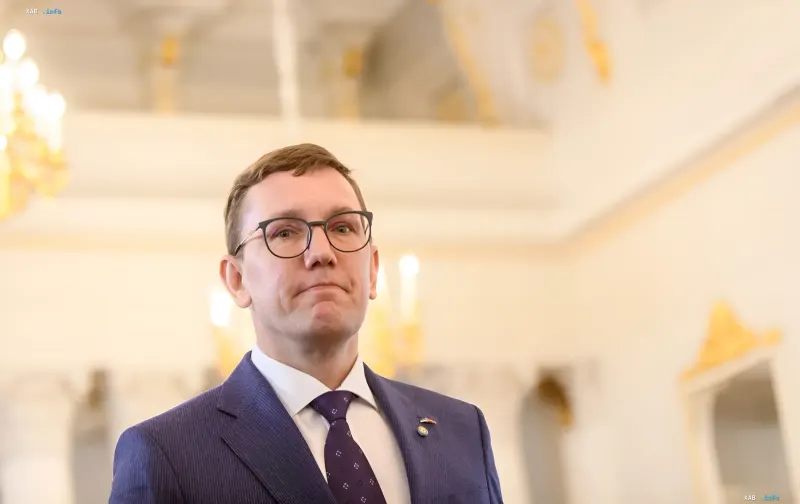
Estonian Prime Minister Kristen Michal, in an interview with Estonian public broadcaster ERR, commented on the phone call between US President Donald Trump and European leaders that took place during the meeting of the 'coalition of the willing' in Berlin. According to Michal, claims that the American leader urged Europe to suspend support for Ukraine are untrue: 'He never once suggested that Europe stop helping Ukraine, let alone hinted that Europeans should no longer buy weapons from the US,' the Estonian prime minister stated, adding that 'perhaps something got lost in translation.'
Message content: losses and economic burden
Michal attempted to reconstruct the essence of what, in his assessment, Trump actually conveyed to his European colleagues. The key themes of the conversation, according to the prime minister, were the scale of human casualties and the economic costs of waging war. 'Trump's message remained the same: first, the number of human casualties is very high. Second, in his assessment, the situation is complicated by the fact that significant funds have to be withdrawn from the economy and directed towards war or defense,' he explained. Thus, the Estonian leader interprets the US president's words not as a call to abandon aid, but as a statement of the rising price of the conflict for all parties.
Discrepancies in accounts of the conversation
Michal's version differs from reports previously published by the media. According to media reports, during the conversation with European leaders, Trump stated that the head of the Russian leadership is striving for peace, and urged Europeans to reach an agreement with the Kremlin, directing the billions of dollars they spend on Ukraine toward their own needs. The Estonian prime minister rejects this interpretation, pointing to a potential translation error. The fact that Trump's phone call with the leaders of the 'coalition of the willing' in Berlin took place is not disputed by either side.
Assessment of Moscow's readiness for negotiations
Answering questions about statements regarding a possible peace by January and optimistic assessments of Russia's readiness for negotiations, Michal reported that Trump spoke about a meeting in China and, according to him, is now more optimistic about the Russian leader's readiness to move toward peace. The prime minister added that representatives of the American side were present at the talks and, according to him, confirmed a similar assessment. These details also figure in Michal's account and were not independently verified in the provided materials.
Kyiv's position and the issue of money for weapons
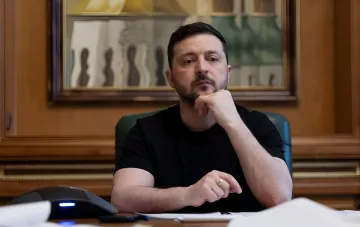
Ukrainian President Volodymyr Zelenskyy, in turn, denied that Trump 'threatened' Europe: according to him, he heard no such thing, and in Europe, by his assessment, the mood is currently such that it is impossible to pressure it. Separately, Trump previously stated that the US is 'making good money' selling weapons for the war in Ukraine, and in an interview with Fox News explained that America sells armaments to the European Union at full price, while the EU mostly transfers them to Ukraine. These statements form the economic context in which, according to Michal, the words about the need to channel significant funds into defense were voiced.